If you read nothing else
- Ice caves in Vatnajokull are only accessible during winter months, from November and usually throughout March, depending on the weather.[1]
- The Skaftafell blue ice cave and glacier hike takes 4 hours, with a live tour guide in English and a group limited to 12 participants.[2]
- Skaftafell is about 327 km (203 miles) from Reykjavik by car via Route 1, a drive that takes approximately 4.5 hours.[3]
- Outside the cave season the Katla Ice Cave in Myrdalsjokull Glacier can be visited year-round, one of the few ice caves in Iceland open in every season.[4]
- Free cancellation applies up to 24 hours in advance for a full refund, and you can reserve now and pay later.[2]
- Top choice Blue ice cave hike from US$167 Duration4 hours[2]Rating4.62 from 848 reviews[2]GuideLive tour guide: English[2]Free cancellationCancel up to 24 hours ahead[2] Check availability
- Glacier hike only from US$106 Duration4 hours[5]Rating4.71 from 1,357 reviews[5]GuideLive tour guide: English[5]Free cancellationCancel up to 24 hours ahead[5] See this tour
- Ice cave and hike tour from US$162 Duration4 hours[6]Rating4.53 from 1,962 reviews[6]GuideLive tour guide: English[6]Free cancellationCancel up to 24 hours ahead[6] See this tour
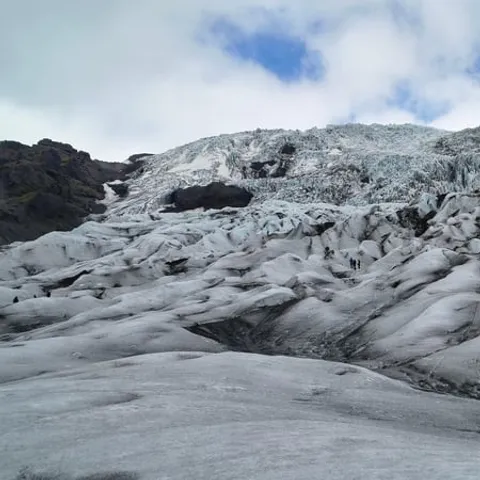
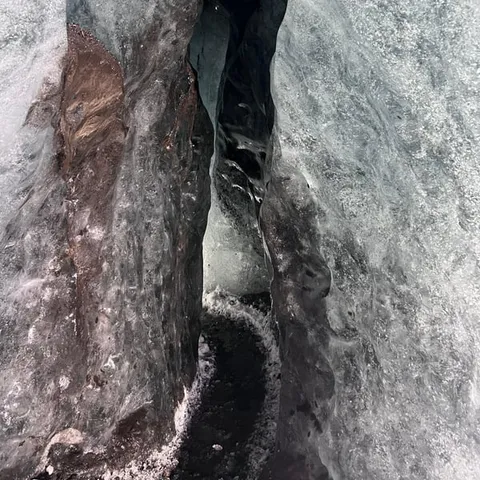
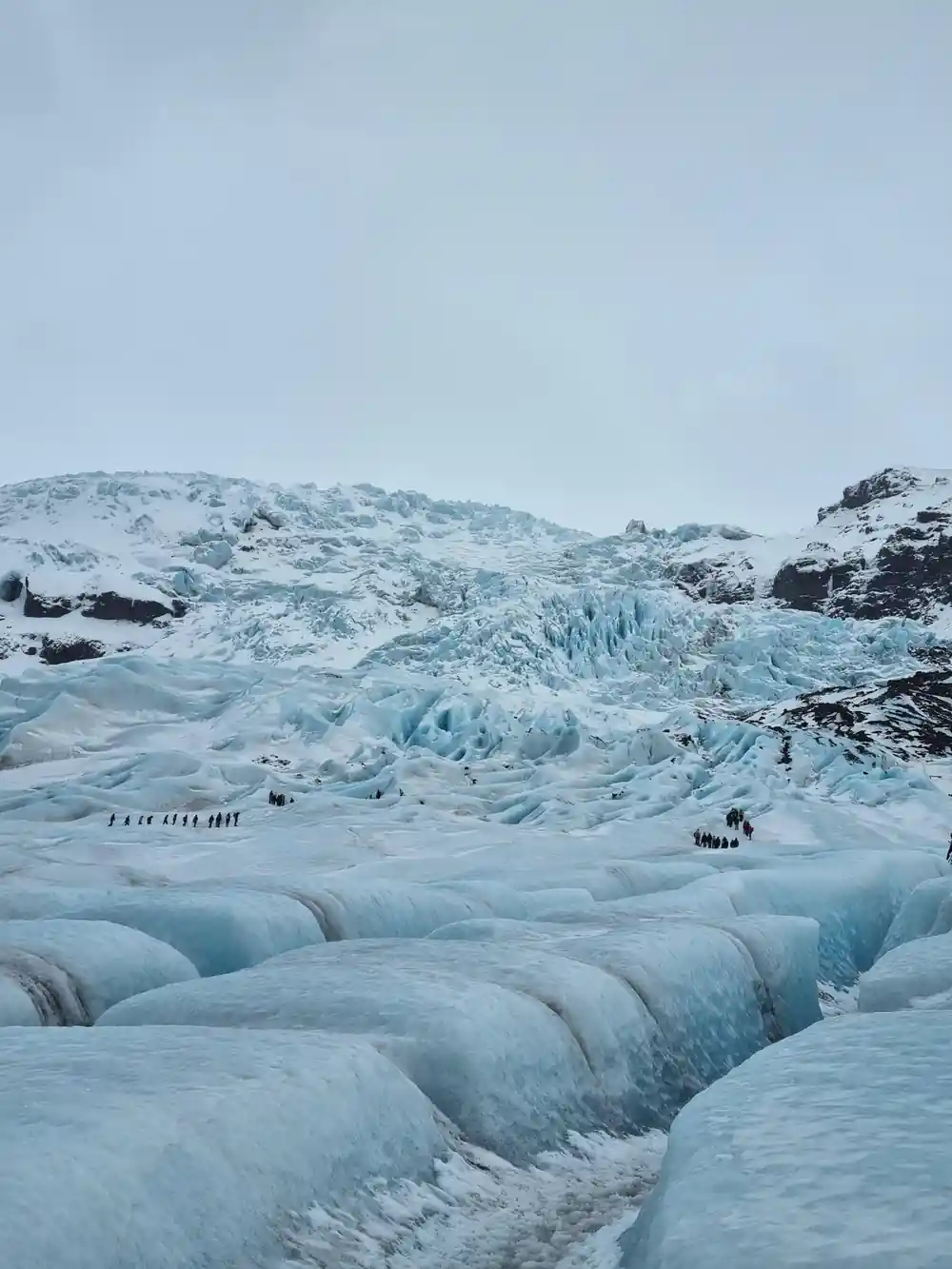
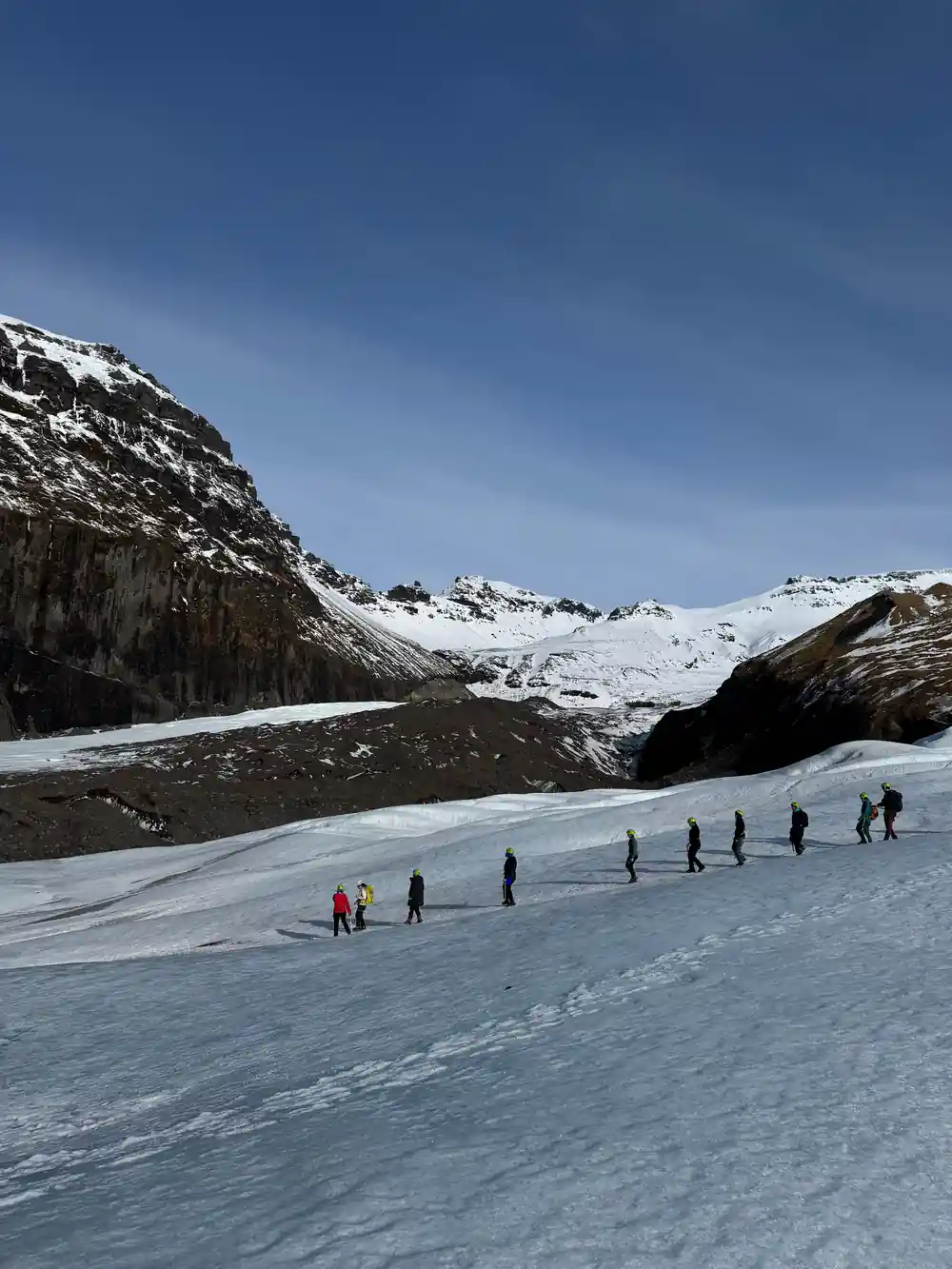
Falljökull Glacier is a striking outlet of the vast Vatnajökull ice cap.
Our verdict: winter for caves, summer for the glacier
Know this first
The blue ice cave season on Vatnajokull
Ice caves in Iceland are a winter affair, and on Vatnajokull the caves in the outlet glaciers are only accessible during winter months, from November and usually throughout March, depending on the weather.[1] That single window shapes every plan. If you want to stand inside a blue cave, you are travelling in the dark half of the Icelandic year, and you will visit the cave your guide judges safe that morning rather than one chosen months in advance. The glacier itself is vast, with a surface area of approximately 8,100 square kilometers (3,127 square miles), and it is the largest glacier in both Iceland and Europe.[9] The ice averages about 380 metres thick, and in places it is almost a kilometre deep.[10]
Vatnajokull National Park was inscribed on UNESCO's list of World Heritage Sites on 5 July 2019.[11] Beneath the ice sit volcanoes, and the three most famous subglacial volcanoes under Vatnajokull are Grimsvotn, Oraefajokull and Bardarbunga.[12] The Skaftafell blue ice cave and glacier hike travels by bus or coach to Vatnajokull and Falljokull and returns the same way, with a live tour guide in English and a group limited to 12 participants.[2] Falljokull is a striking outlet glacier of the vast Vatnajokull ice cap.[13] Small groups matter on ice: there is room to ask questions, and the pace stays human.
Summer on the ice: what replaces the caves
When the cave season ends, the ice does not go away. The caves in Vatnajokull are only accessible during winter months, from November and usually throughout March, depending on the weather.[1] Summer trips from Skaftafell go out onto the glacier surface instead, walking on the ice rather than stepping into a tunnel. If you are weighing an ice cave tour in Iceland outside that window, the honest answer is that the season on Vatnajokull starts in November.[1] A blue ice glacier hike on Vatnajokull from Skaftafell is listed from US$106, runs 4 hours and is rated 4.71 from 1,357 reviews.[5] Summer hikes come in several lengths: a short glacier encounter runs 2.5 hours, while a hike to a remote ice cave runs 6 hours.[14][15]
Summer also reshapes the day around the walk. Daylight is generous, so a morning on the ice leaves the whole afternoon for the south coast, and the Skaftafellsstofa visitor centre opens 9-19 in June to August.[8] Expect a wetter, softer surface than in deep winter, and pack a waterproof shell even on a bright forecast. The temperature in the car park tells you very little about the temperature on the glacier, so dress for wind and for standing still. Waterproof trousers are rarely wasted here, and gloves are worth carrying in a pocket even on a warm day.
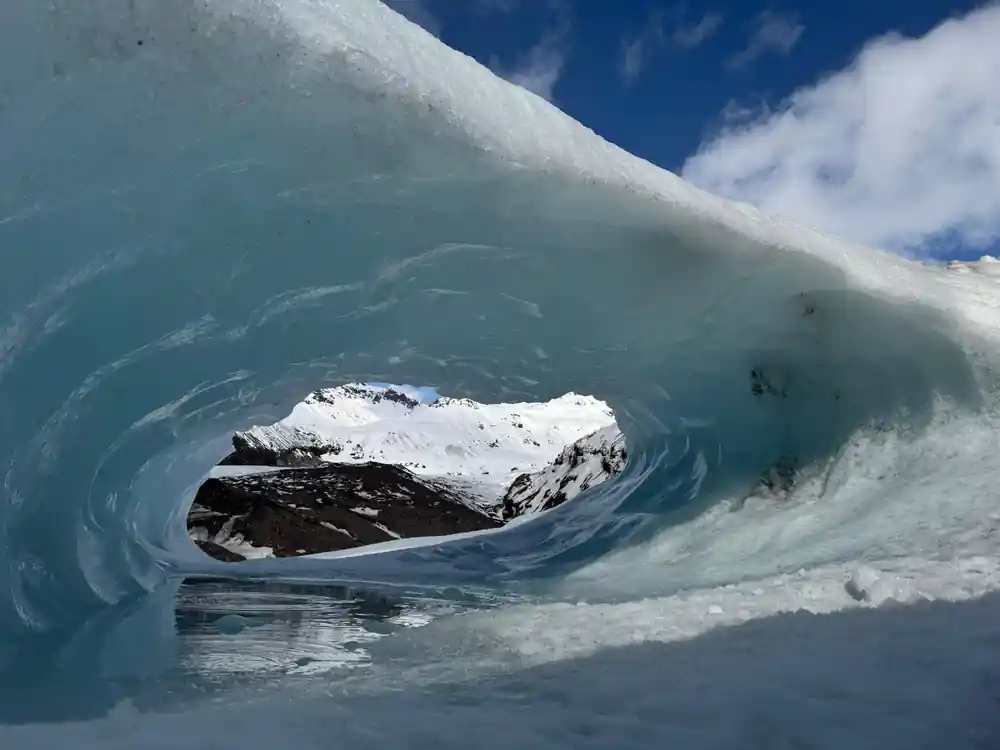
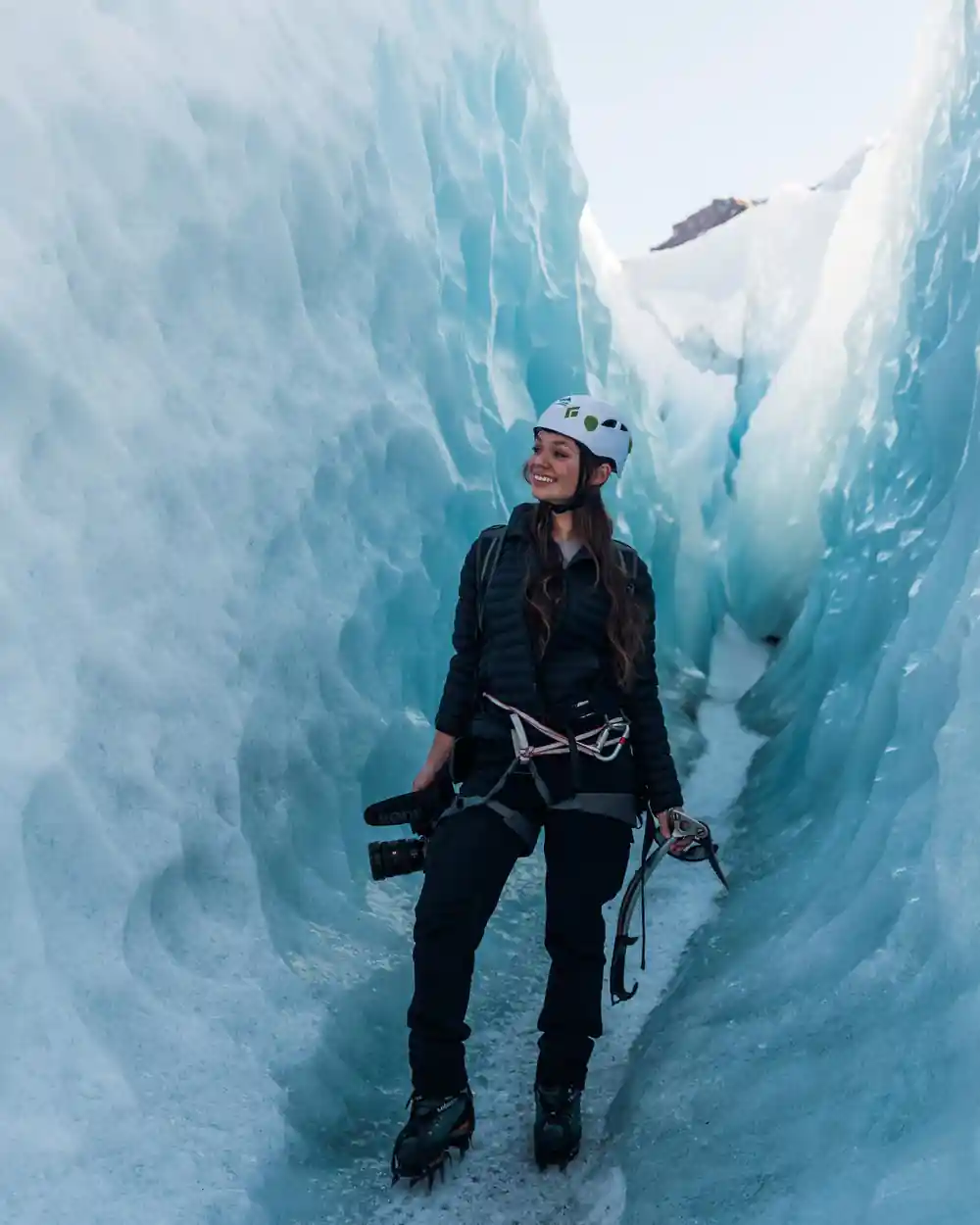
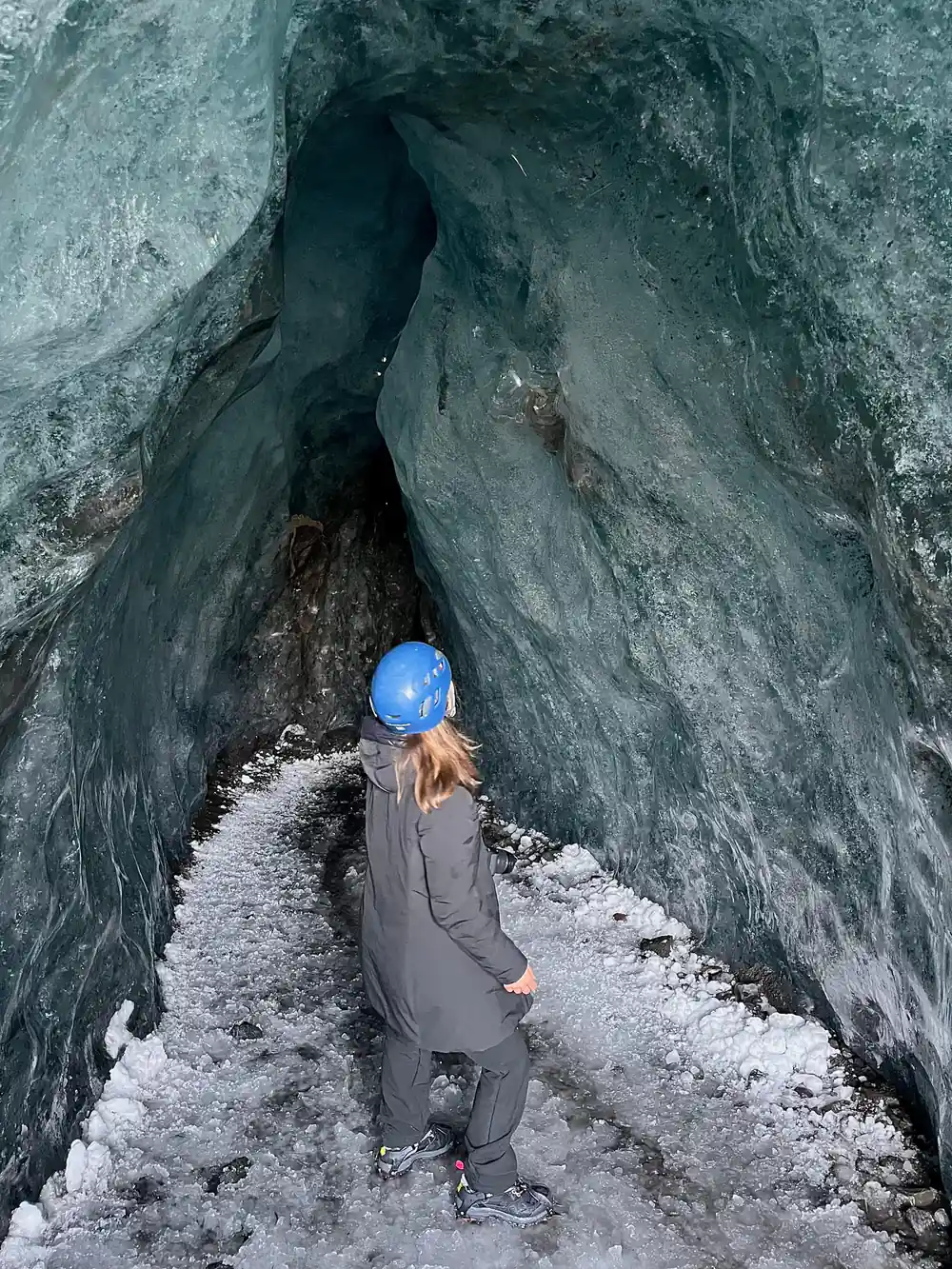
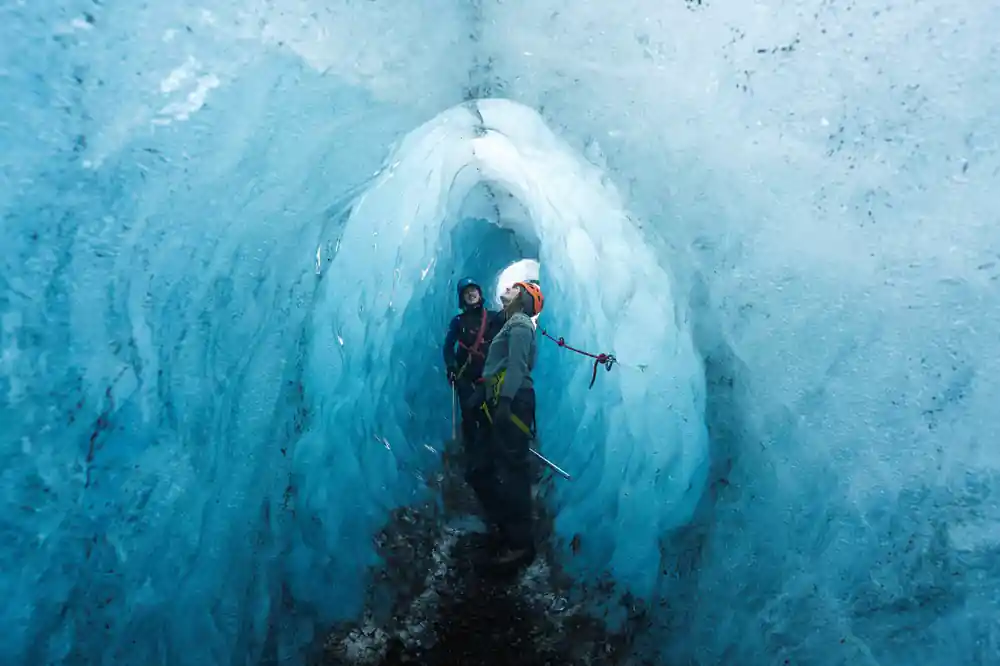
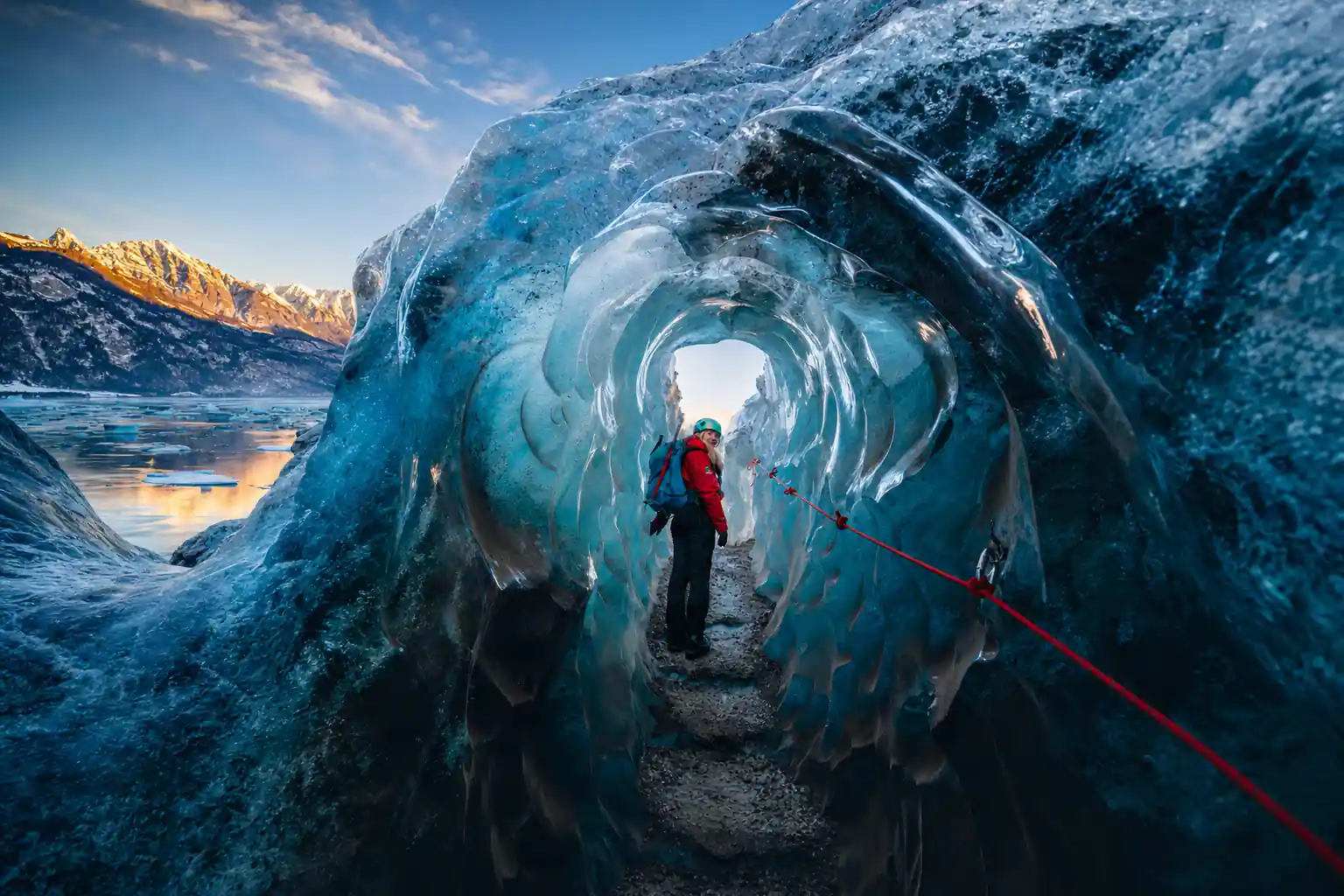
Blue light inside a Vatnajokull ice cave, where the tunnels are rebuilt by meltwater each winter.
Driving times, daylight and fitting it all in
Skaftafell is about 327 km (203 miles) from Reykjavik by car via Route 1, a drive that takes approximately 4.5 hours.[3] From Skaftafell, the direct drive to Jokulsarlon is 35.4 miles (57 km) and takes about 50 minutes in normal traffic.[16] In winter that means an early start from Reykjavik and a return leg in the dark, with road conditions rather than the clock deciding the pace. In summer you have the opposite luxury and can drive out after dinner in full light. Plenty of travellers split the journey with a night near Vik or in the Skaftafell area, which turns a long transfer into a south coast day of waterfalls and black sand.
The Skaftafell blue ice cave and glacier hike takes 4 hours, with a live tour guide in English and a group limited to 12 participants.[2] Parking at Skaftafell is subject to a regional fee, with a passenger car of 5 or fewer seats charged 1,110 ISK.[7] The Skaftafellsstofa visitor centre opens 10-17 in January and February, 9-17 in March to May, 9-19 in June to August, 9-18 in September and October, 9-17 in November, and 10-17 in December.[8] Arrive with time to park, pay, use the facilities and pull on your layers before the group meets, because those hours start when the bus does.
Weather, cancellation and moving your date
Access to the caves always depends on the weather.[1] Nobody can promise a particular cave months ahead. What you can control is how much flexibility you buy. On the Skaftafell blue ice cave and glacier hike you can reserve now and pay later, and free cancellation applies up to 24 hours in advance for a full refund.[2] Book it early in your trip rather than on your last morning, and you leave yourself room to move the date if the forecast turns.
Midwinter holds the highest chance of a rerouted day. Wind, snow and meltwater decide what is safe on the ice, and guides generally prefer an alternative route or an alternative day to taking a group somewhere marginal. The caves themselves change shape as the season runs. If the cave is the reason for your trip, keep two possible mornings free in the Skaftafell area and treat the first one as the one that counts. A shifted morning is a small price for a safe one.
from US$167
The Skaftafell blue ice cave and glacier hike lasts 4 hours, with a live tour guide in English and no more than 12 people.[2]
Why the cave is never the same cave twice
The ice is always on the move. Since the year 2000, Icelandic outlet glaciers have retreated exceptionally fast, and their mass loss is among the highest recorded in the world.[17] Falljokull is a striking outlet glacier of the vast Vatnajokull ice cap, and the ice averages about 380 metres thick, though in places it is almost a kilometre deep.[10][13] Every winter builds a new set of tunnels under the ice, and every summer takes some of them away again.
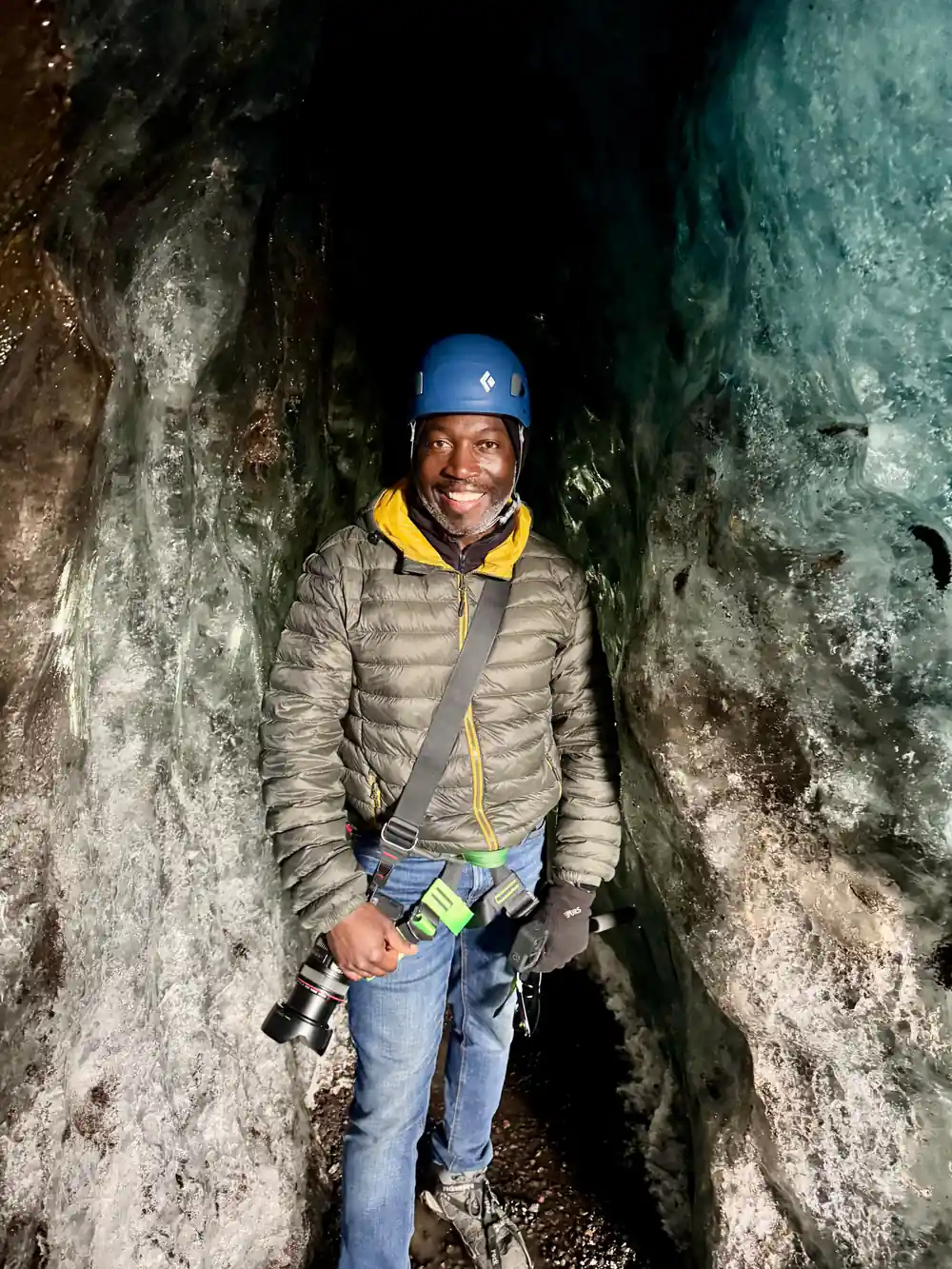
Meltwater does the rest. Streams run over, through and under the glacier, cutting tunnels that widen, sag and finally collapse as the season goes on. A corridor that feels roomy early in the season can be a low crawl later on and gone by spring. Guides scout the ice daily and choose whichever cave is holding up, and the cave you walk into is agreed on the morning of the trip. Your booking names a blue ice cave rather than a specific one, and that is the point: compressed ice, filtered light and a blue that photographs differently every time you turn around.
Best months for blue colour and photography
The cave season runs from November and usually throughout March, depending on the weather, and that is the window for the deep blue images everyone comes for.[1] Inside it, the light changes more than the ice does. The working day is short early in the season and stretches out towards spring, and flat overcast weather often beats sunshine: soft light keeps detail in the ice instead of burning out the brightest faces. Fresh snow on the glacier and cloud overhead are the combination most photographers hope for.
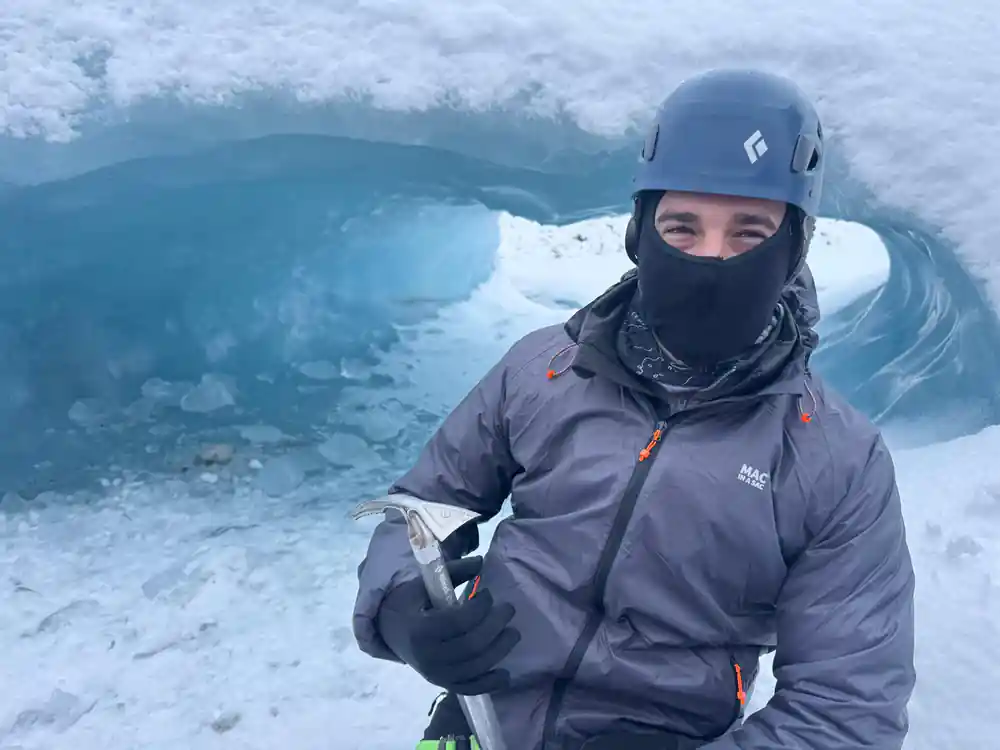
Take a wide lens, something to steady it and a cloth for the mist your breath leaves on the glass. Tours here are guided for good reason, and the small group limit of 12 participants on the Skaftafell blue ice cave and glacier hike means you can stop for a picture without holding up a queue.[2] Your guide speaks English, so ask where the light falls best that day.[2] The strongest frame is often the one with someone in it, small and warm against all that blue.
Pairing the cave with the lagoon and the aurora
Skaftafell works well as a base for the south-east. The direct drive to Jokulsarlon is 35.4 miles (57 km) and takes about 50 minutes in normal traffic, and on the lagoon the amphibian boat tour lasts 30-40 minutes.[16][18] Above the coast, Hvannadalshnukur reaches 2110 m / 6900 ft.[19] A morning on the ice plus an afternoon at the lagoon makes a full day, even in midwinter when the light is short and the ice is at its best.
The long winter nights are the other reason to come between November and March.[1] After a day on the glacier you still have hours of darkness for aurora watching, so keep a spare camera battery warm and your expectations loose. If you would rather not drive back in the dark, Fosshotel Glacier Lagoon is four-star superior accommodation a stone's throw from Skaftafell.[20] Book the cave first, sort the bed second, and let the weather fill in the rest.
How long ice cave and glacier tours in this area run
Durations as listed for these GetYourGuide tours:[2][15][21][22][23].
From-prices for the main ice cave and glacier tours, in US dollars
From-prices in US dollars for these GetYourGuide listings:[2][5][21][24]. Child prices are not listed.
When to go, and what is open when you get there
Planning your ice cave day
Pick your season
Ice caves in Vatnajokull are accessible from November and usually throughout March, depending on the weather.[1]
Book the cave hike
The Skaftafell blue ice cave and glacier hike takes 4 hours and is limited to 12 participants.[2]
Plan the drive
Skaftafell is about 327 km (203 miles) from Reykjavik via Route 1, a drive of approximately 4.5 hours.[3]
Sort parking and facilities
Parking at Skaftafell for a passenger car of 5 or fewer seats is 1,110 ISK.[7]
Add the lagoon
The direct drive from Skaftafell to Jokulsarlon is 35.4 miles (57 km), about 50 minutes in normal traffic.[16]
Pack for ice
Layers, a waterproof shell, gloves and boots you can walk in on ice. Keep a cloth for your camera lens.
Hold a date on the Skaftafell blue ice cave and glacier hike
from US$167Reserve now & pay later