If you read nothing else
- Ice caves under Vatnajökull's outlet glaciers are accessible only during winter months, from November and usually throughout March, depending on the weather.[1]
- Wind, cloud and visibility on the ice. Expect the route to be adjusted, and dress for wet weather even when the morning looks calm and still.
- Skaftafell is about 327 km (203 miles) from Reykjavík by car via Route 1, a drive that takes approximately 4.5 hours.[2]
- Parking at Skaftafell carries a regional fee, with a passenger car of 5 or fewer seats charged 1,110 ISK.[3] The visitor centre keeps seasonal hours.[4]
- The Skaftafell blue ice cave and glacier hike listing includes free cancellation up to 24 hours in advance for a full refund.[5]
- Top choice Blue Ice Cave & Hike from US$167 Rating4.62 from 848 reviews[5]Duration4 hours[5]CancellationFree cancellation, 24 hours[5]GuideLive tour guide: English[5] Check availability
- Ice Cave and Glacier Hike from US$162 Rating4.53 from 1,962 reviews[6]Duration4 hours[6]CancellationFree cancellation, 24 hours[6]GuideLive tour guide: English[6] See this tour
- Blue Ice Glacier Hike from US$106 Rating4.71 from 1,357 reviews[7]Duration4 hours[7]CancellationFree cancellation, 24 hours[7]GuideLive tour guide: English[7] See this tour
Opening hours January - February: 10-17 March - May: 9-17 June - August: 9-19 September: 9-18 October: 9-18 November: 9-17 December: 10-17
Glacier weather at Skaftafell: is it worth it?
Wear and carry
- Warm base layers and a fleece under a waterproof shell
- Boots with ankle support, plus gloves and a warm hat
- Sunglasses and sunscreen, because snow and ice throw glare
- A small pack with water, a snack and a dry spare layer
Plan the day
- Check the forecast in the morning and again before you set off
- Look at road conditions and webcams before driving the Ring Road
- Parking at Skaftafell costs 1,110 ISK for a passenger car of 5 or fewer seats[3]
- Choose a listing with free cancellation where you can
How glacier weather at Skaftafell behaves
Skaftafell sits on the southern edge of Vatnajökull, an ice cap of around 8,100 square kilometres (3,127 square miles) that is the largest glacier in both Iceland and Europe.[8] The tours from here walk on Falljökull, an outlet glacier of that same ice cap.[9] You spend the day in the narrow band where ice, mountains and sea air meet, and the weather can feel like two different days in one.
Expect change rather than a settled forecast. A morning can start grey and still in the car park, turn bright out on the ice, then close in with sleet within the hour. Summer days are long and often mild down at the visitor centre, while winter light is short and the glacier stays cold enough to hold its blue ice. Rain at the visitor centre and snow up on the ice on the same day is entirely normal.
Plan for weather instead of trying to predict it. Take a waterproof shell even on a blue-sky morning, keep a dry layer in your pack, and accept that the route may be adjusted as conditions change. Leave slack in your itinerary too: a slow, wet drive back towards Reykjavík is the thing most likely to spoil an evening that looked straightforward on the map.
Coast and ice cap: two different weather zones
The coastal strip and the glacier plateau behave differently, and the distance between them is short. Vatnajökull National Park weather is often at its most changeable right here, where green birch scrub and grassland below the ice give way to white ground within a short drive. The car park, campsite and visitor centre sit on flat ground; a walk from there puts you on the glacier's tongue, where the air is colder and the wind has nothing to slow it down.
The ice cap shapes its own weather. Air moving over a plateau of this size cools and condenses, so cloud can sit on the glacier while the coast stays clear, and the opposite happens just as often. Vatnajökull's ice averages about 380 metres thick, and in places it is almost a kilometre deep.[10] Underneath it lie subglacial volcanoes, among them Grímsvötn, Öraefajökull and Bardarbunga.[11]
The landscape is recognised far beyond Iceland: Vatnajökull National Park was inscribed on UNESCO's list of World Heritage Sites on 5 July 2019.[12] Read the forecast for the plateau as well as for the coast, then dress for the colder of the two. If you are deciding what to pack, the ice cap usually wins the argument.
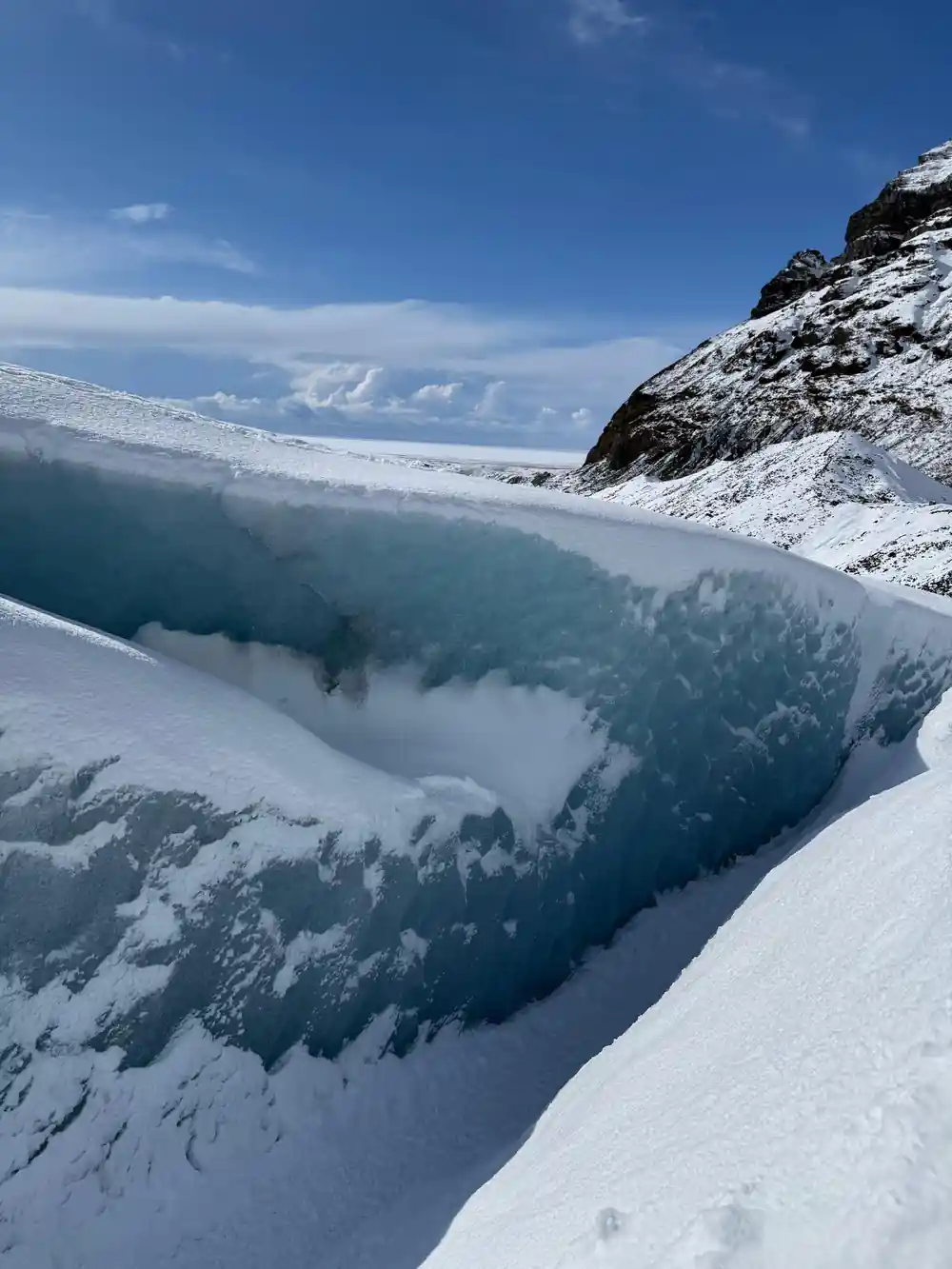
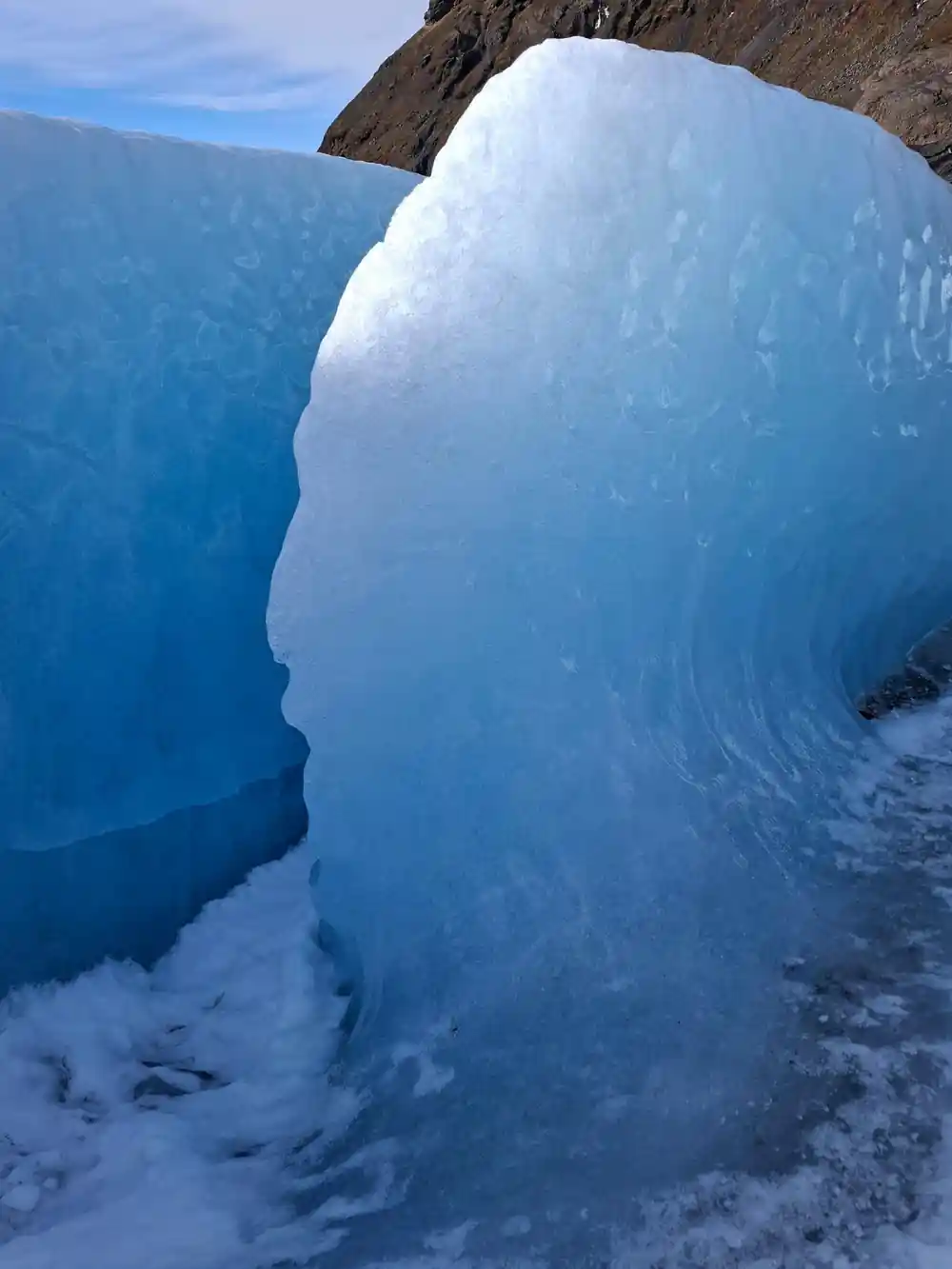
Blue ice under Vatnajökull, where the weather decides the day
Wind, fog and whiteout on Falljökull
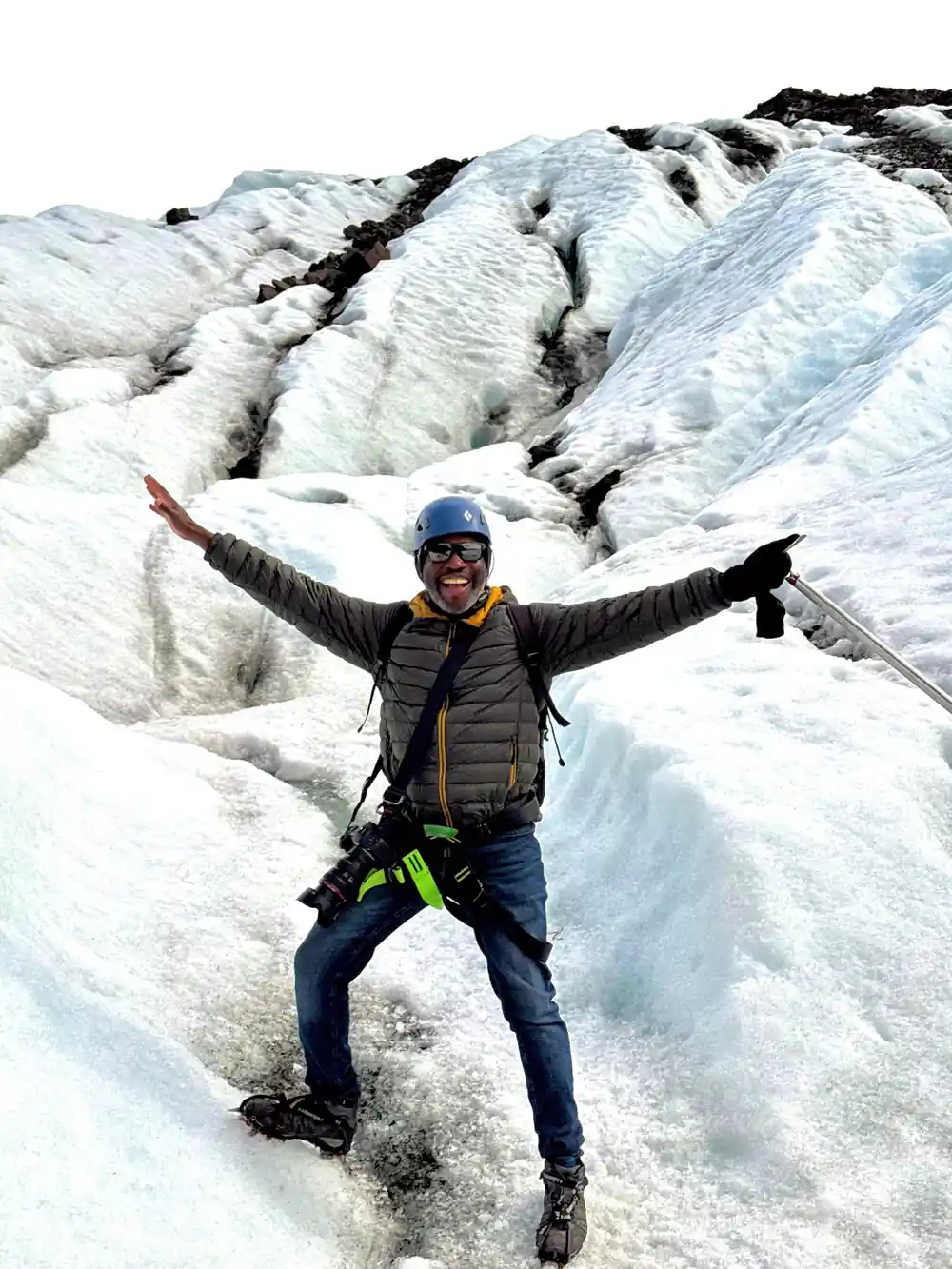
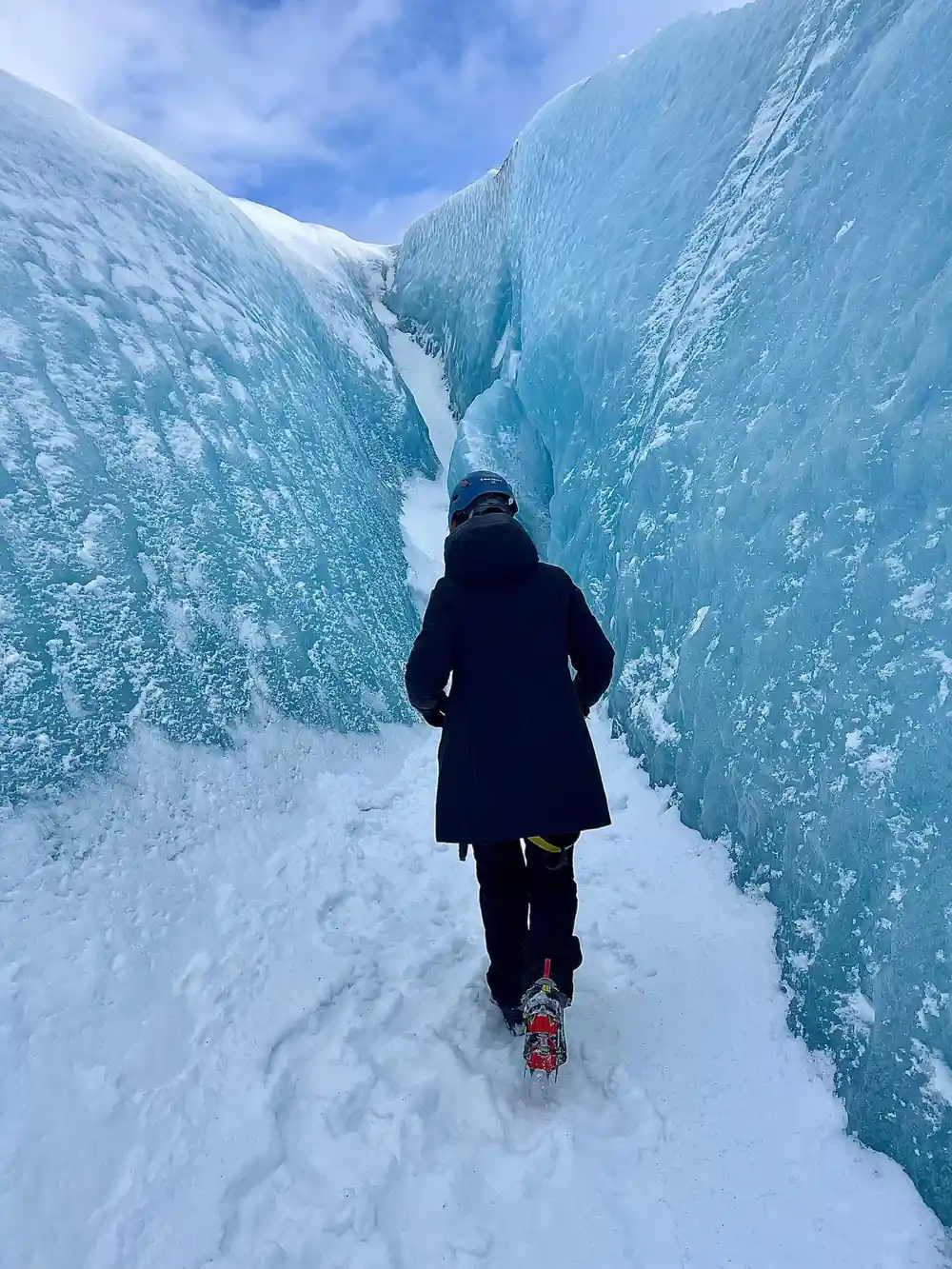
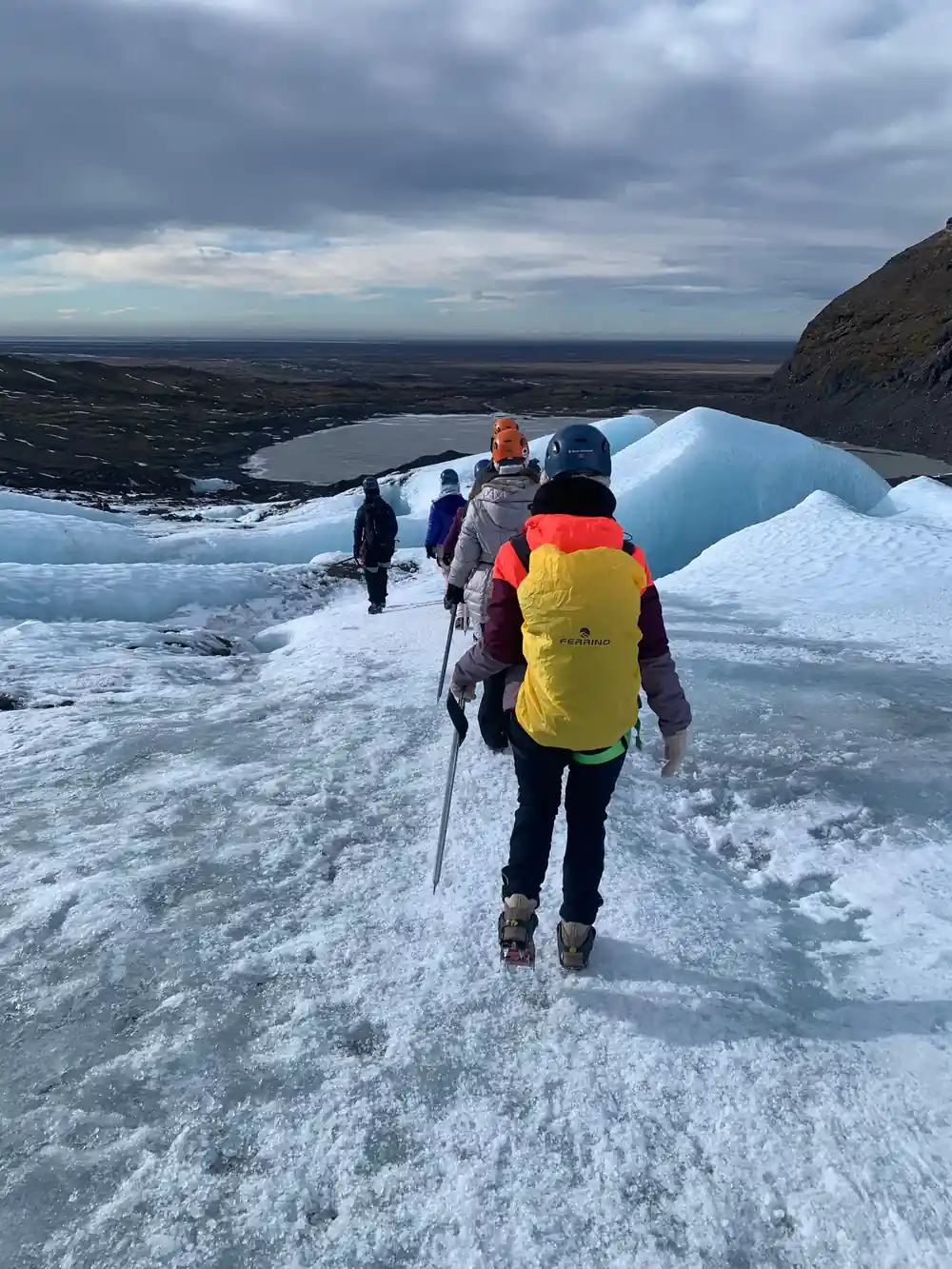
Wind is the first thing to watch. Out on the open ice there is no shelter at all, and gusts that feel manageable beside the bus can be much stronger on the glacier. Crampons and a rope help you stay upright and attached, but they do not stop the wind pushing you off balance, so give yourself room, keep your weight low on exposed sections, and hold on to your hat.
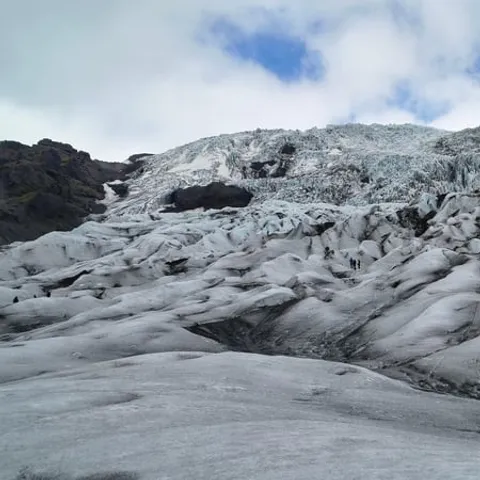
Fog and low cloud are the second. When cloud sits on Falljökull, ice and sky merge into one white sheet and the horizon disappears. In those conditions the safest thing is to stay close to the person in front, keep the rope taut, and follow your guide's line rather than the one that looks most photogenic. A whiteout is not the moment to wander off for a better angle.
Visibility also matters at the cave entrance, which can be harder to find in blowing snow than in sunshine. The walk between the vehicle and the ice is often the part people underestimate. Keep your phone or camera in a pocket you can open with gloves on, because fumbling with a zip in a cold wind is nobody's favourite part of the day.
Route 1, access and getting to Skaftafell
Skaftafell is about 327 km (203 miles) from Reykjavík by car via Route 1, a drive that takes approximately 4.5 hours.[2] Much of it is easy driving, but the last stretch crosses broad outwash plains where the road is fully exposed to wind and drifting snow, and where conditions can be nothing like the ones you left behind in the city.
From Skaftafell, the direct drive to Jökulsárlón is 35.4 miles (57 km) and takes about 50 minutes in normal traffic.[13] Plenty of travellers pair the two, walking on the glacier in the morning and looking at icebergs on the lagoon later the same day. In winter, build extra time into that plan: a closure or a slow convoy can add hours rather than minutes.
Parking at Skaftafell is subject to a regional fee, with a passenger car of 5 or fewer seats charged 1,110 ISK.[3] The Skaftafellsstofa Visitor Centre opens 10-17 in January and February, 9-17 in March to May, 9-19 in June to August, 9-18 in September and October, 9-17 in November, and 10-17 in December.[4] It is a sensible first stop for conditions, toilets and a look at what the rangers are reporting.
from US$167
The Skaftafell blue ice cave and glacier hike, booked from this site, runs as a small group limited to 12 participants.[5]
Which forecasts and road sources to watch
Check the weather and the roads as two separate things. The Icelandic Met Office gives forecasts by area and by hour, and its outlook for the glacier plateau is the one that matters, not just the figure for the coastal village. When you look at the Vatnajökull National Park temperature on a forecast, check which station it is reporting from, then read wind speed and direction, precipitation and visibility for the whole day rather than the next couple of hours.
For the drive, the road administration's site shows current conditions, closures and webcams along the Ring Road, including the exposed stretches east of Vík. SafeTravel carries alerts and travel advice, and glacier updates from the national park and from your operator usually appear in the evening before a tour. Save these to your phone before you leave Reykjavík, while you still have signal and time to read them properly.
Read every reading with the terrain in mind. A wind speed that sounds ordinary in town can feel very different on open ice, and clear skies at the coast do not tell you what the plateau is doing. Check again on the morning of the tour, and once more at the meeting point; an overnight forecast is a guide rather than a promise.
If your Skaftafell departure is called off
Conditions can change the plan at short notice. Sometimes the news comes the evening before; sometimes it is clear only at the meeting point, when the wind on the ice turns out stronger than the forecast suggested. If a glacier walk is the main reason for your trip, keep a spare day on the south coast if you can, and treat the first attempt as the one that counts.
The Skaftafell blue ice cave and glacier hike is listed as a small group tour limited to 12 participants, with a live tour guide in English and a duration of 4 hours, running from a bus or coach out to Vatnajökull and Falljökull and back.[5] It is listed from US$167, with reserve now and pay later and free cancellation up to 24 hours in advance for a full refund.[5]
That flexibility is worth having on a weather-dependent trip. Keep your phone charged, check your email the evening before, and make sure you know how to reach your operator. If the day is lost, there is plenty nearby: the icebergs at Jökulsárlón, the waterfalls along the coast road, or a long lunch in Höfn while you wait for another window.
Rain, snow and the ice cave season
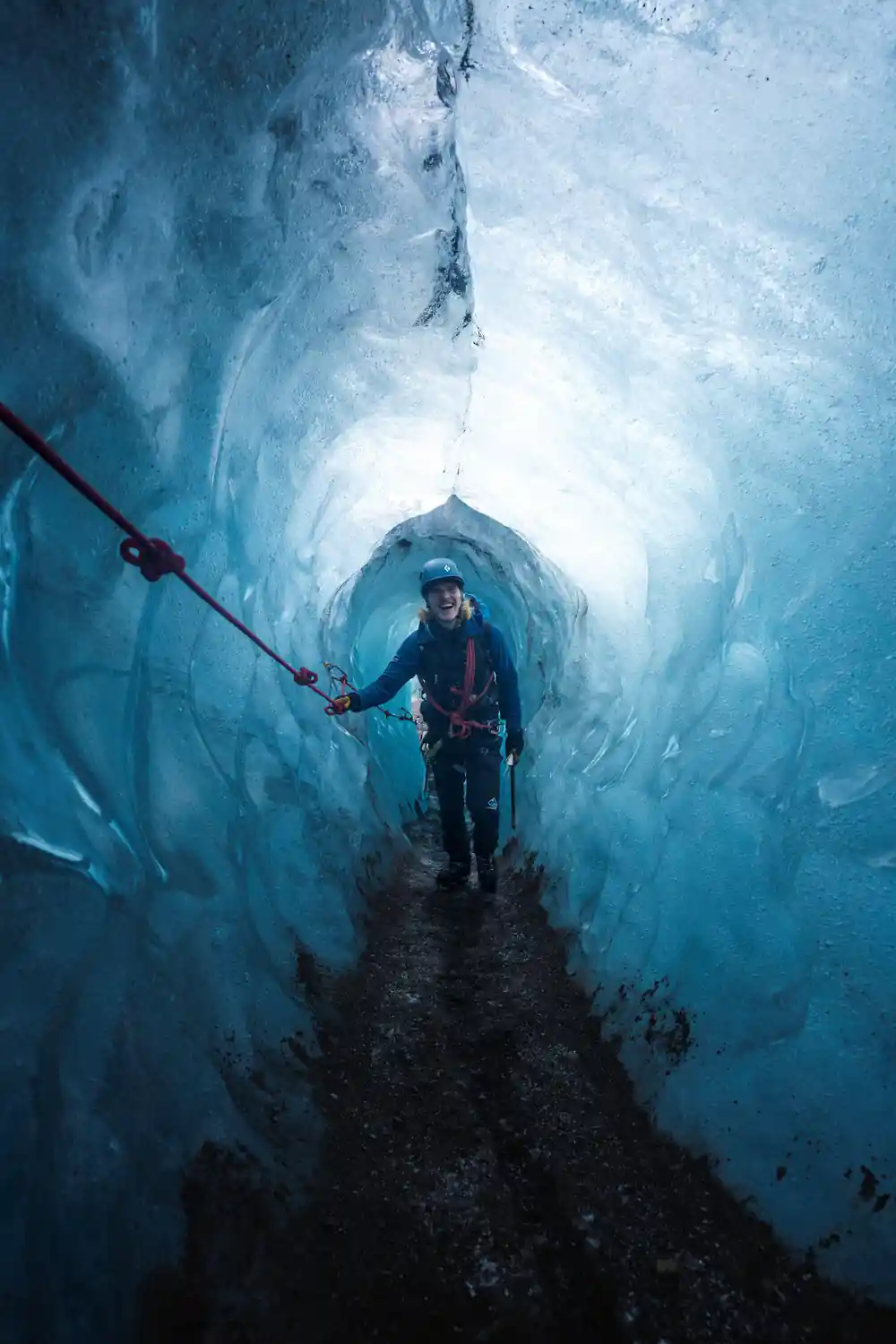
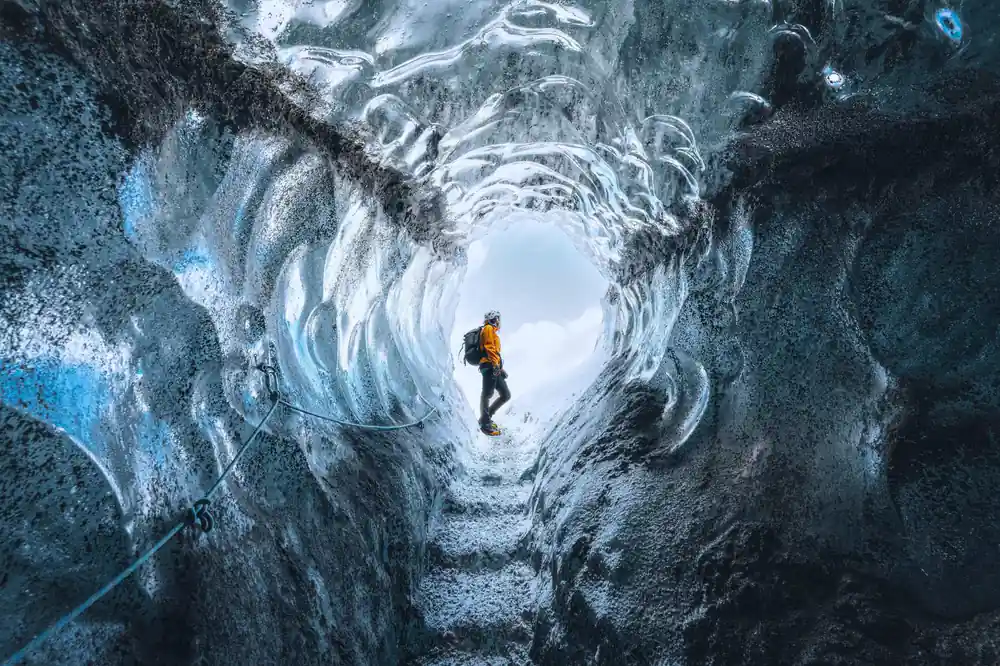
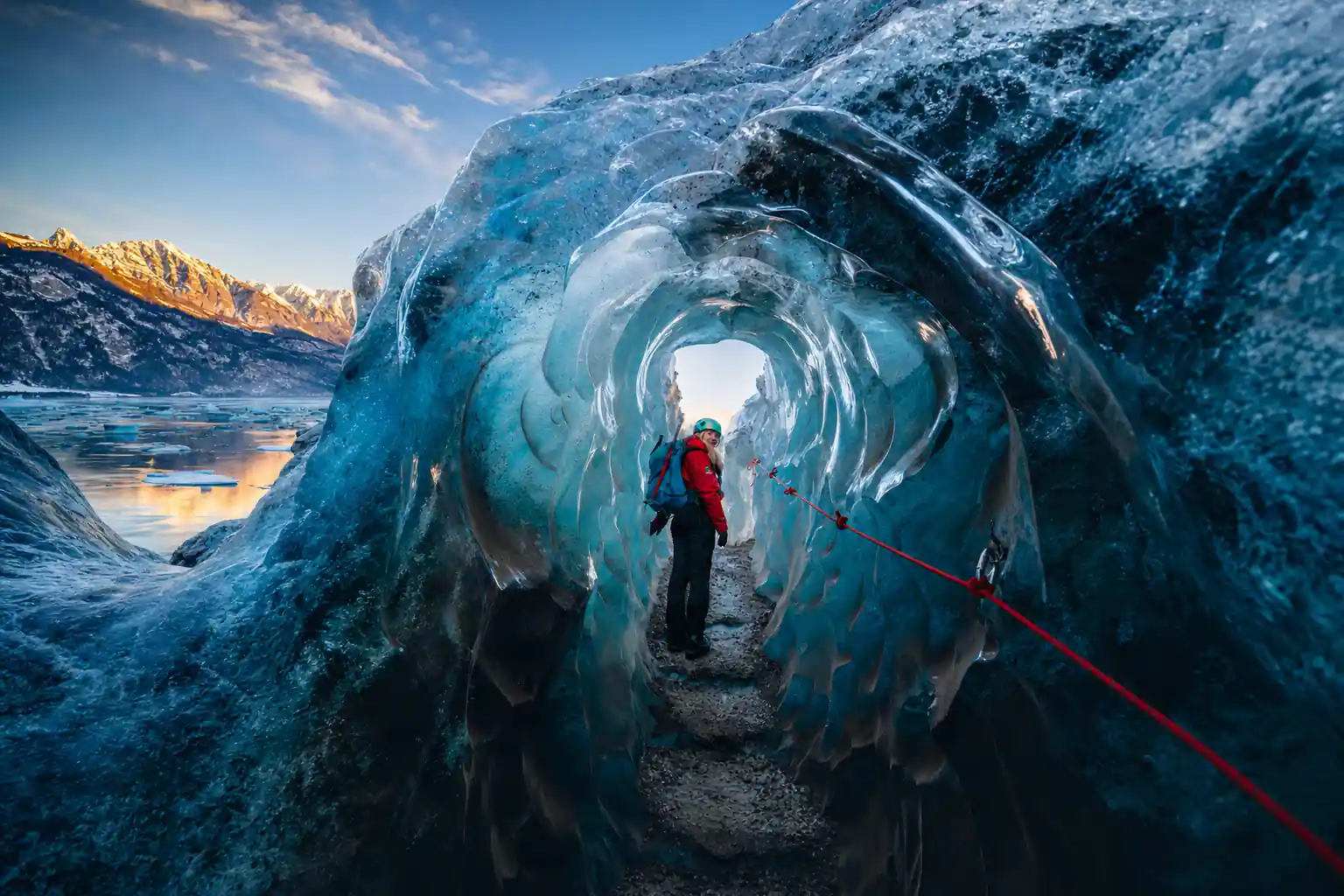
Ice caves under Vatnajökull's outlet glaciers are accessible only during winter months, from November and usually throughout March, depending on the weather.[1] The window moves with the season rather than following a fixed set of dates, so an early-season visit and a late-season visit can look quite different from each other.
Iceland's outlet glaciers have retreated exceptionally fast since the year 2000, and their mass loss is among the highest recorded in the world.[14] The ice you walk on is not a fixed set of features. Caves and routes are found afresh each winter, and the shape of a tunnel can differ from one season to the next.
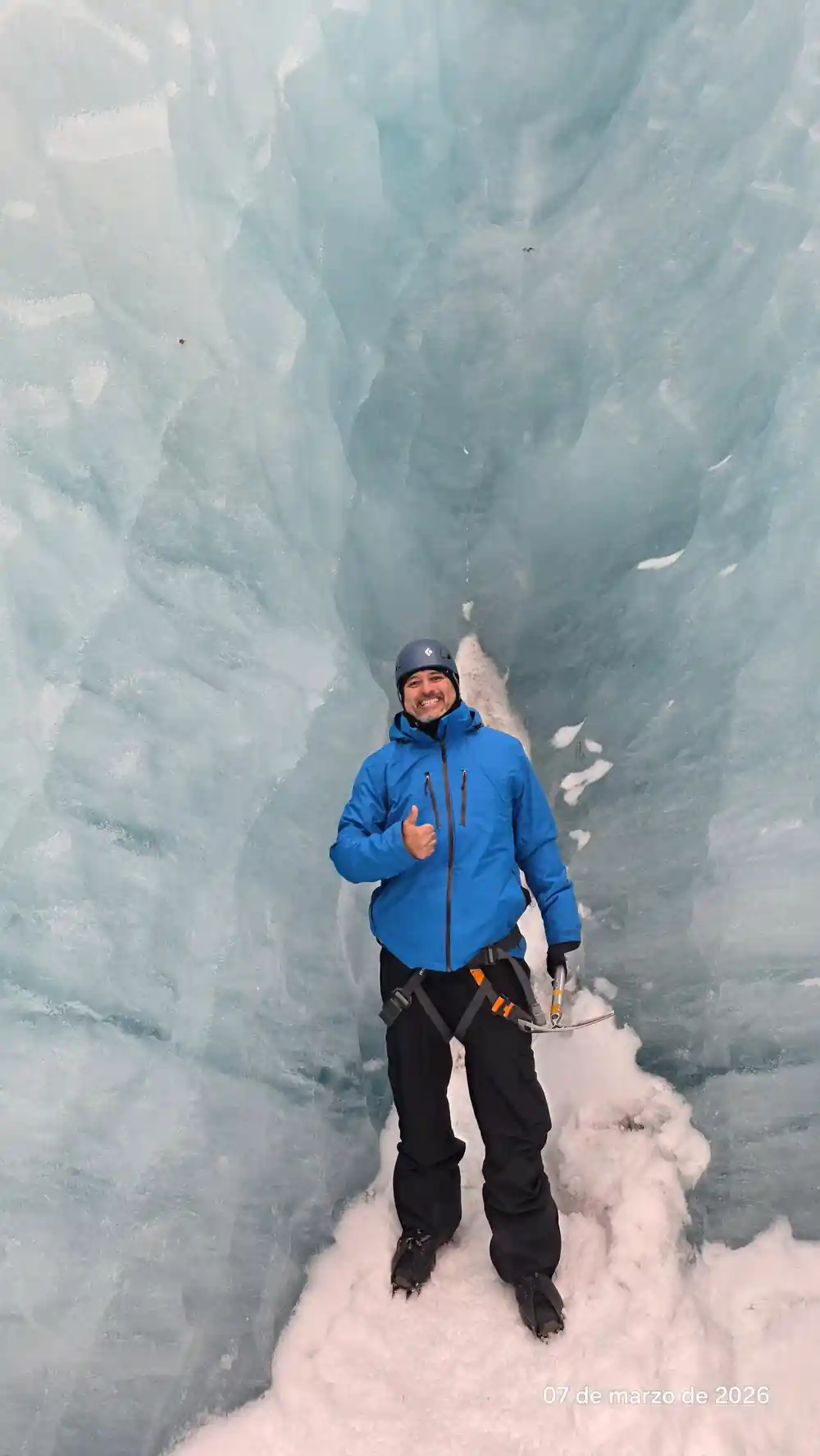
Ice cave weather inside the tunnel is calmer than out on the ice: you are sheltered from wind and rain, though the floor stays wet. Rain, sleet and snow are all normal on a glacier day, and wet weather is part of the deal rather than a reason to stay in the car. Dress to stay dry from the outside in, with waterproof outer layers, gloves that still work when wet, and boots that keep water out. Above Skaftafell, Hvannadalshnúkur rises to 2110 m (6900 ft),[15] a reminder of how quickly the air cools as you climb.
How long the main ice cave and glacier tours last
From-prices per adult on Skaftafell and Jökulsárlón glacier tours
From-prices of the tours listed here:[5],[16],[7].
When to plan a Skaftafell glacier day
Planning a glacier day
Read the forecast twice
Look at wind, cloud and precipitation for the glacier plateau, then check road conditions for the drive east.
Dress for wet and wind
Waterproofs over warm layers, gloves, hat and boots with ankle support, whatever the morning looks like from the window.
Allow a spare day
If the glacier is the reason for your trip, a night near Skaftafell gives you a second chance at the weather.
Know your cancellation terms
The Skaftafell blue ice cave and glacier hike includes free cancellation up to 24 hours in advance for a full refund.[5]
Check in with your guide
Ask at the meeting point how the ice is looking and what the route will be; guides see more than any forecast page.
See dates, times and availability for the Skaftafell glacier day
from US$167Reserve now & pay later