If you read nothing else
- Dense glacier ice that has been squeezed free of air bubbles, pale blue in flat light and deep, saturated blue in shadow.
- Vatnajökull has a surface area of approximately 8,100 square kilometers (3,127 square miles) and is the largest glacier in Iceland and Europe.[1]
- The ice caves in Vatnajökull are only accessible during winter months, from November and usually throughout March, depending on the weather.[2]
- Vatnajökull's ice cap averages about 380 metres thick, and in places it is almost a kilometre deep.[3]
- The Skaftafell Blue Ice Cave and Glacier Hike lasts 4 hours, is limited to 12 participants and has a live English-speaking guide.[4]
- Top choice Blue ice cave and hike from US$167 Duration4 hours[4]Rated4.62 from 848 reviews[4]Live guideEnglish[4]CancellationFree cancellation up to 24 hours[4] Check availability
- Jökulsárlón ice cave from US$164 Duration3 hours[5]Rated4.25 from 2,171 reviews[5]Live guideEnglish[5]CancellationFree cancellation up to 24 hours[5] See this tour
- Ice cave with glacier hike from US$162 Duration4 hours[6]Rated4.53 from 1,962 reviews[6]Live guideEnglish[6]CancellationFree cancellation up to 24 hours[6] See this tour
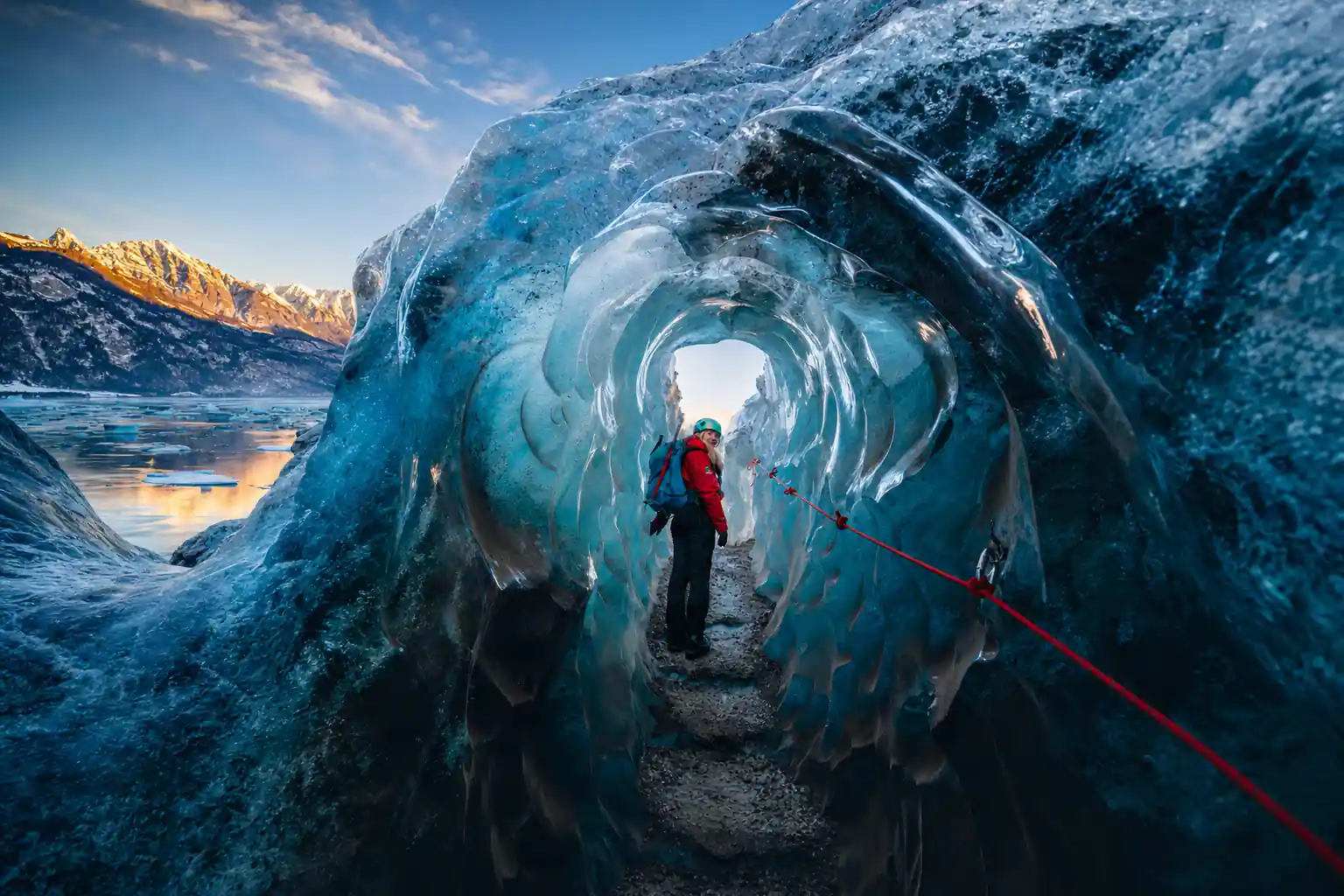
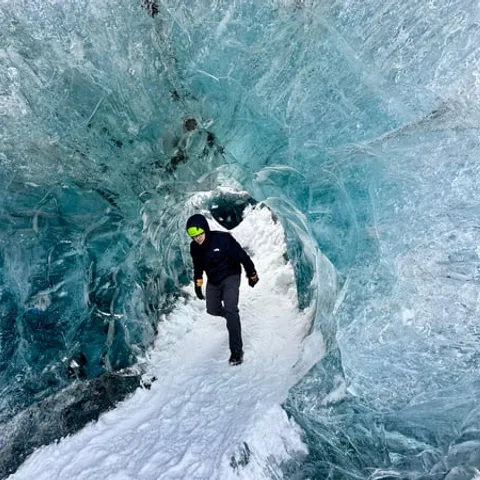
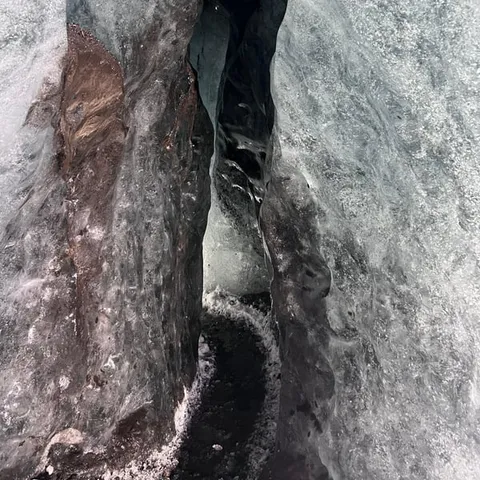
The ice averages 380 metres thick, though in places it is almost a kilometre deep.
Is a blue ice cave tour worth your Iceland days?
Plan before you go
On the day
What is blue ice?
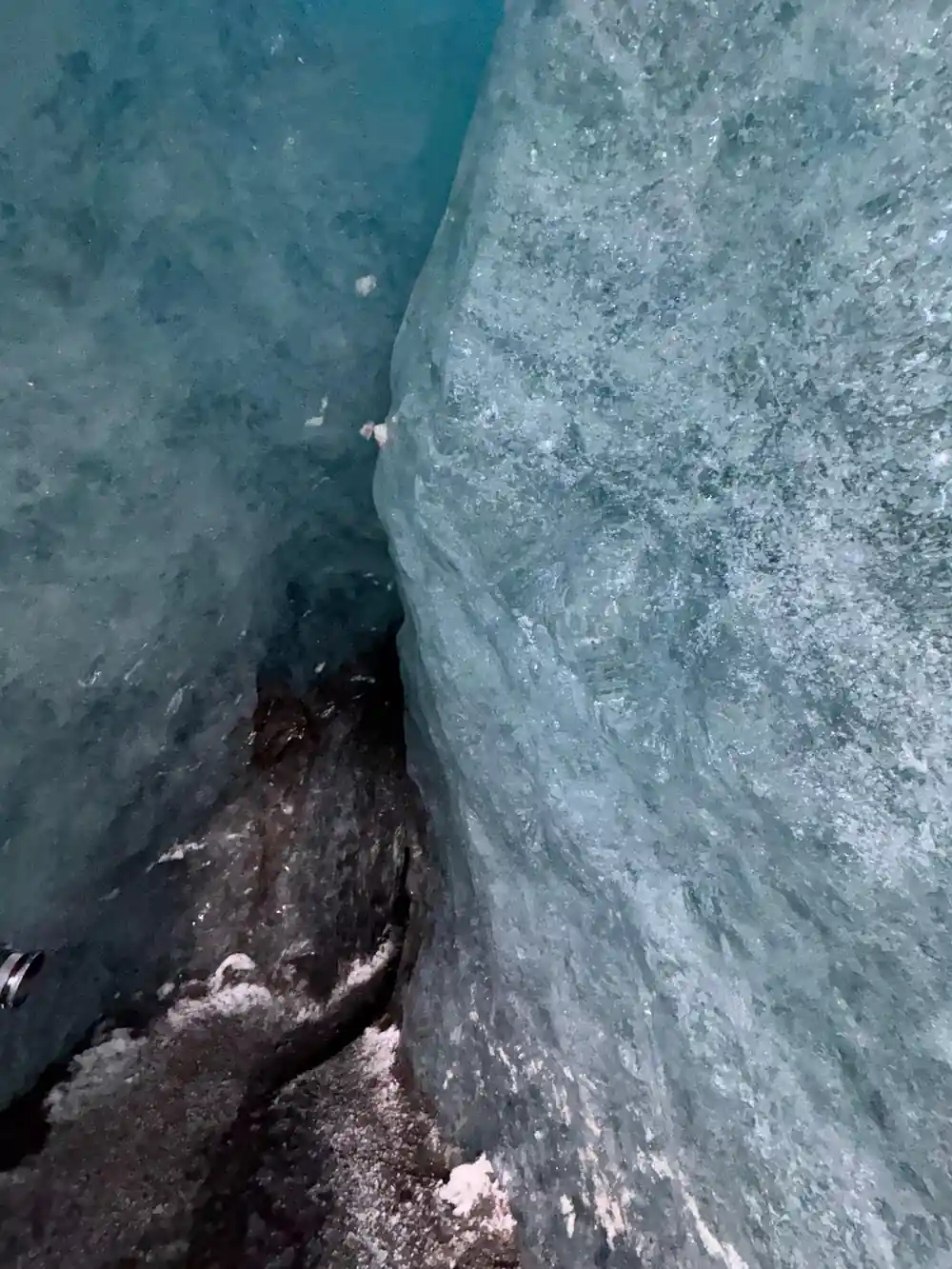
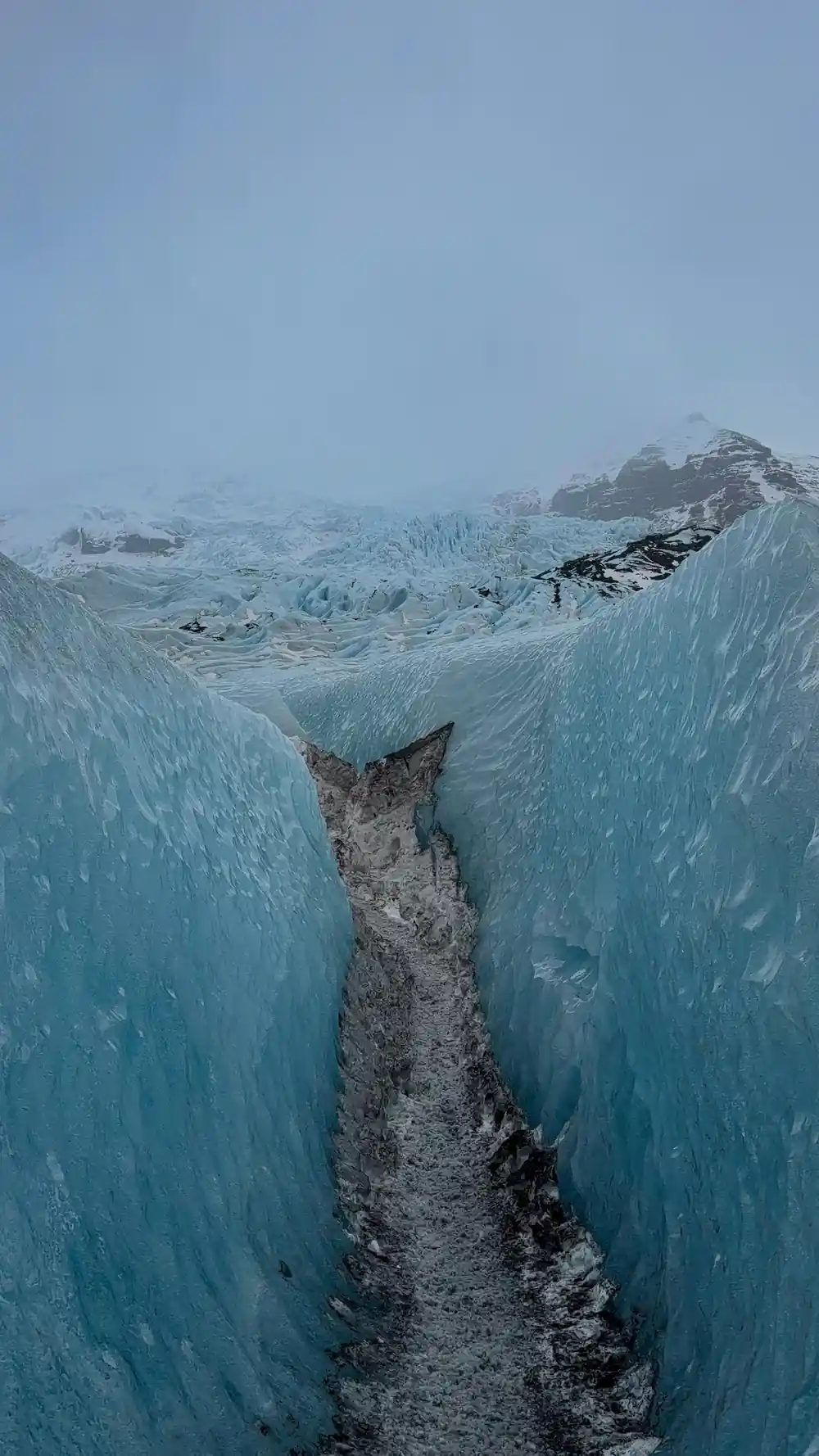
Blue ice is glacier ice that has been squeezed free of air. Snow falls, stacks up and is buried by the next winter's snow, and the weight above presses the tiny air pockets out of the layers below. What is left is dense ice with almost no bubbles inside it. It looks pale grey-blue in flat light and deep, saturated blue in shade. The colour is not a coating, a mineral or a trick of the camera. It comes from the way ice itself handles daylight. You will usually meet it in the wall of a crevasse long before you meet it in a cave.
The ice around Skaftafell belongs to something enormous. Vatnajökull has a surface area of approximately 8,100 square kilometers (3,127 square miles), and it is the largest glacier in both Iceland and Europe.[1] From the air it reads as a white lid pressed onto the landscape. At ground level it is a slow-moving body of ice, and the blue shows where the surface has been scoured, sheared or hollowed out by water. That is why you meet it in crevasses, in the walls of meltwater channels and in the roof of a cave, and rarely on a smooth snowfield.
Why glaciers are blue
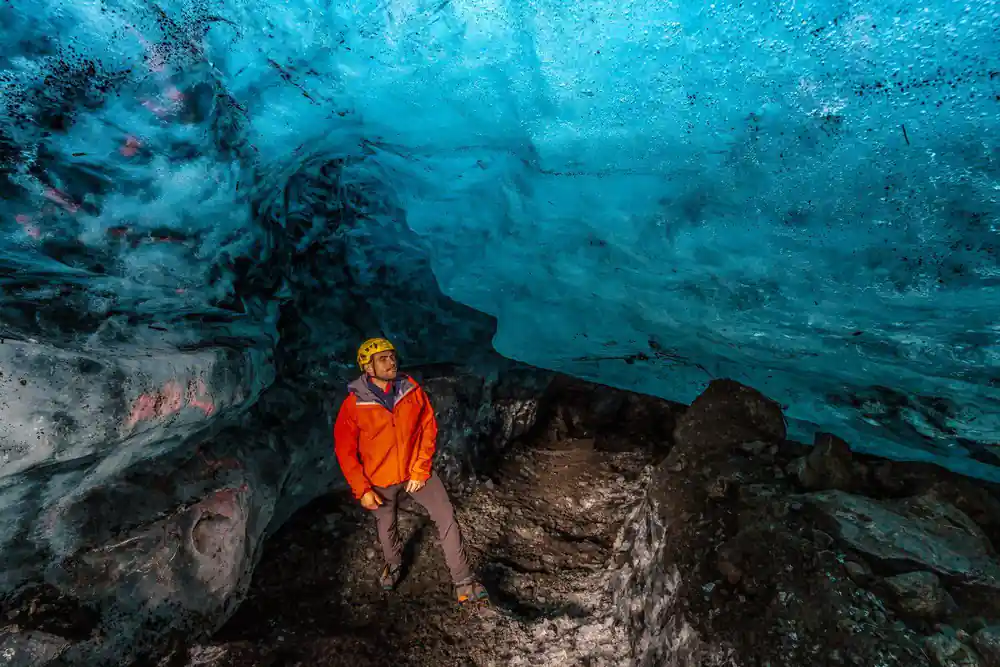
Sunlight carries every colour at once. As it travels into ice, the red end of the spectrum is absorbed quickly, while blue travels further and eventually scatters back towards your eye. A thin slice of ice looks clear. A metre of it looks blue. Several metres of it look almost black-blue, because the warmer colours have been stripped out along the way. That is why the deepest, densest ice looks the bluest, and why a crack in a snowfield can glow at the edges. Snow, by contrast, is full of air and pore space, which scatters every wavelength and sends it back white.
Bubble content decides how blue a piece of ice looks, and bubble content is a record of pressure. Ice buried deep, or squeezed as it flowed around a bend, has had its air driven out and its crystals grown large. A blue ice glacier is simply one where enough of that has happened, most visibly where meltwater has refrozen in the gaps, and fresh snow and firn stay white above it. The same block of ice can look pale on its rough outer face and deep blue where a guide has chipped it open.
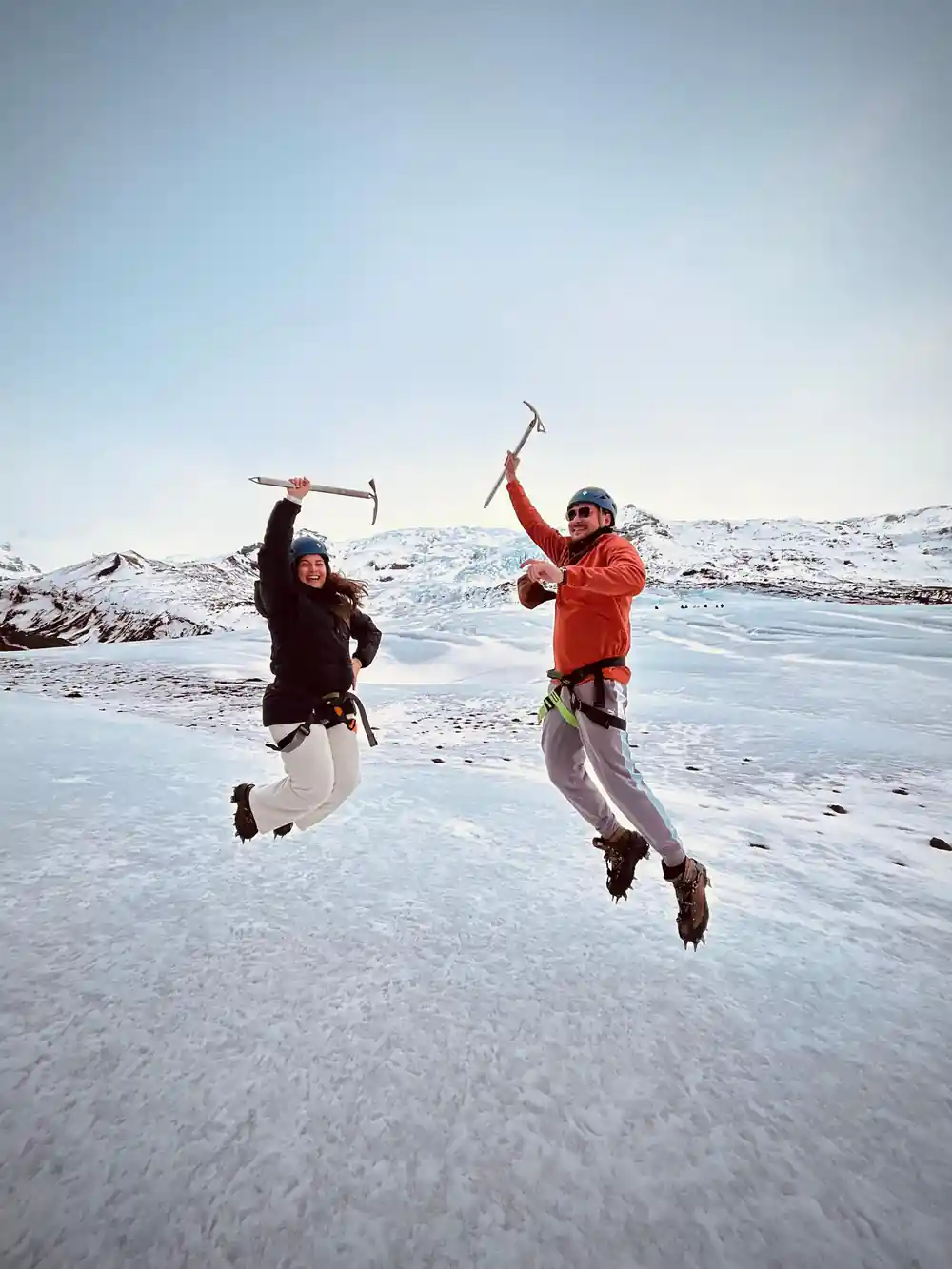
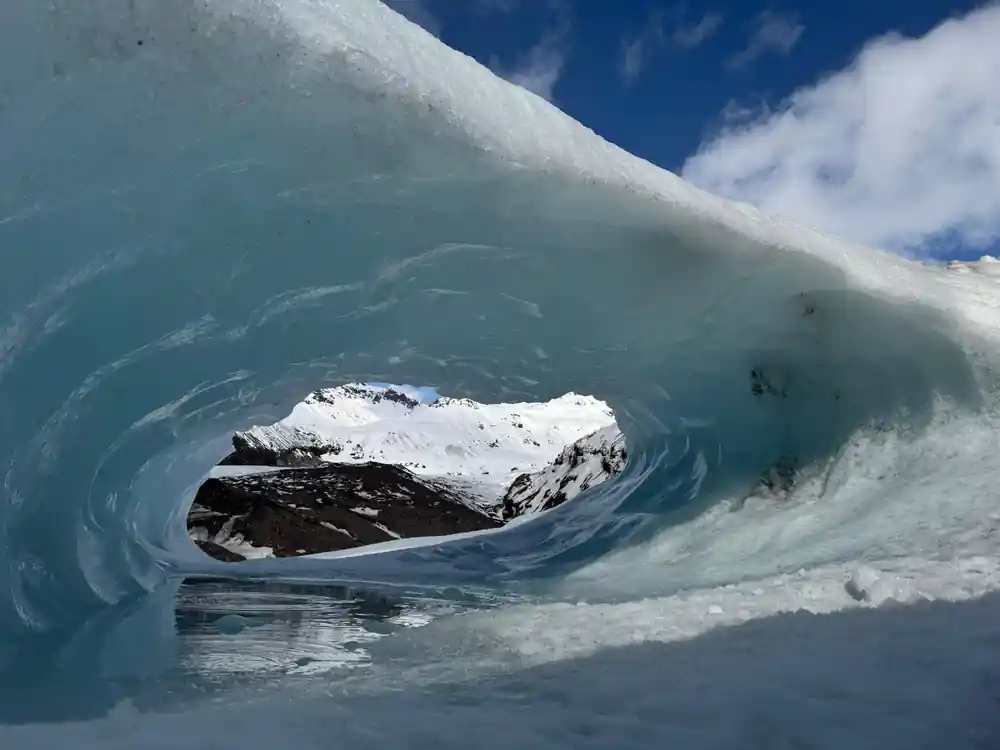
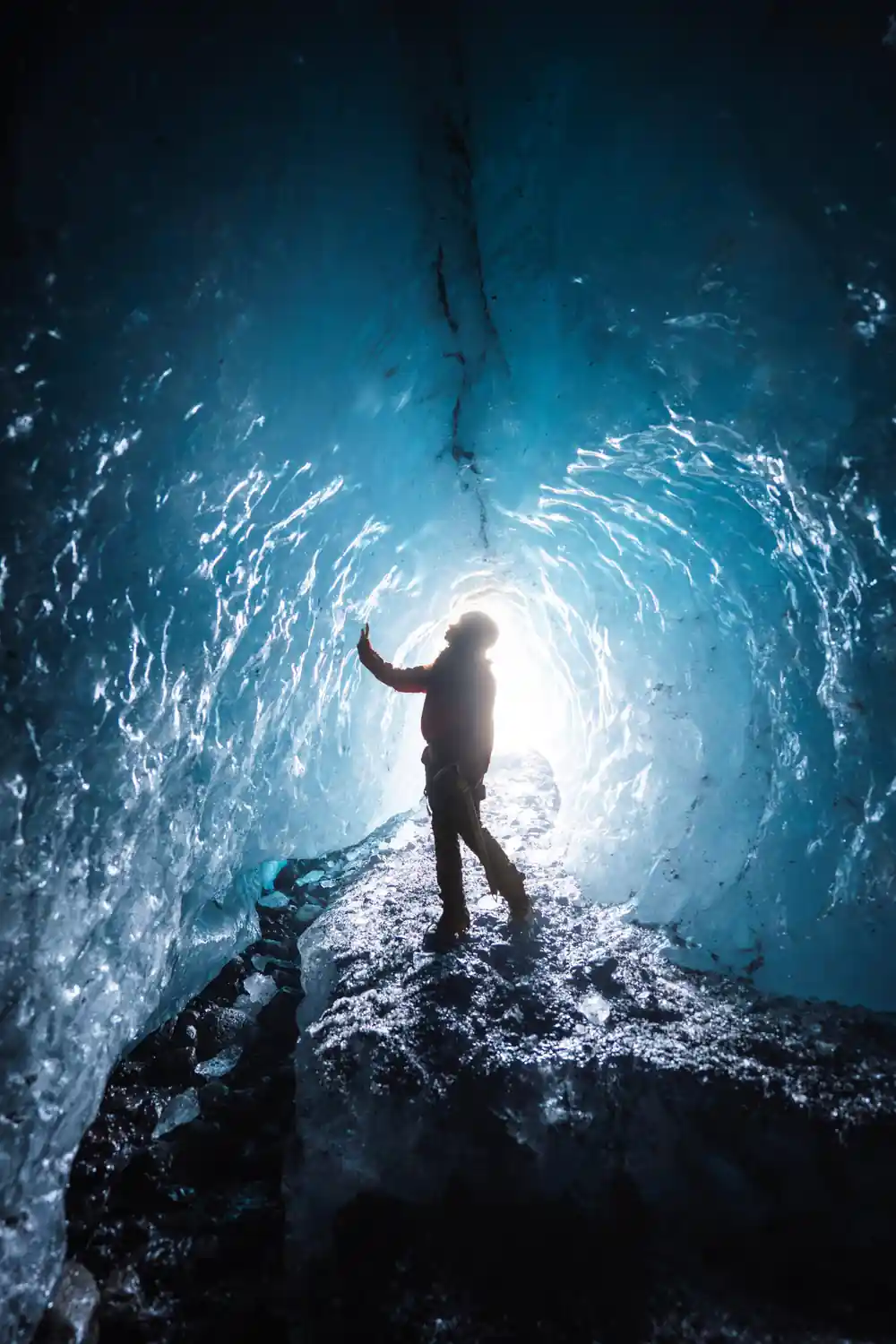
Blue light in the roof of a tunnel cut by meltwater under Vatnajökull.
Why do ice caves form in Vatnajökull?
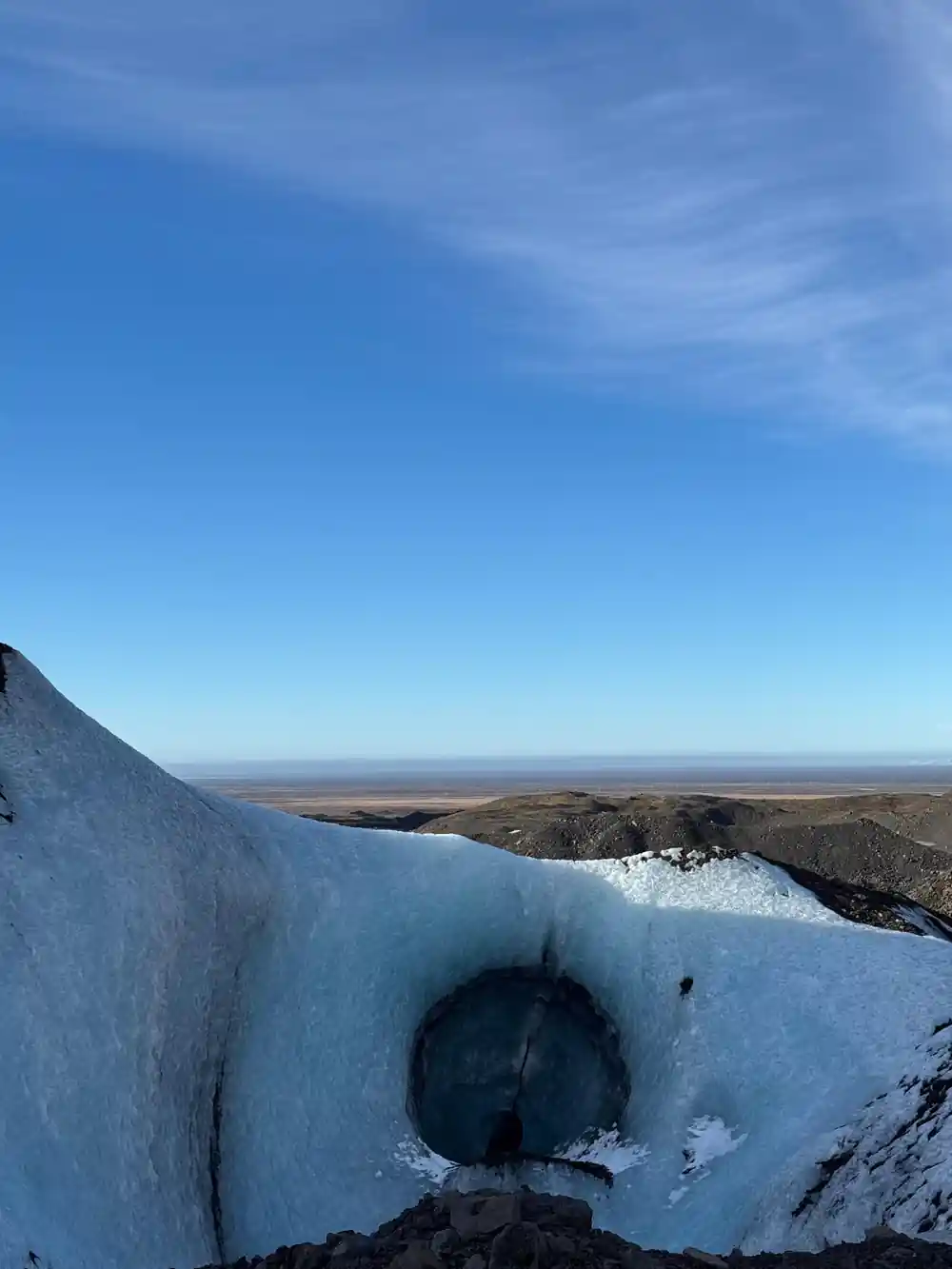
An ice cave is a drainage feature before it is a sightseeing stop. In summer, meltwater on the surface finds a crevasse, a soft seam or a gap between the ice and the ground beneath, and starts to run through it. Moving water carries grit and warmth, so the channel widens. Freezing overnight and thawing again smooths the walls. A trickle can become a tunnel tall enough to stand up in, with a roof of dense blue ice overhead.
Winter is when you can actually go in. The ice caves in Vatnajökull are only accessible during winter months, from November and usually throughout March, depending on the weather.[2] Vatnajökull National Park was inscribed on UNESCO's list of World Heritage Sites on 5 July 2019.[9] Not every cave sits under this ice cap: the Katla Ice Cave is a natural ice cave in the Mýrdalsjökull Glacier, formed by the volcanic glacier above the Katla volcano, and it is one of the few ice caves in Iceland that can be visited year-round.[10]
Moulins, mills and the meltwater plumbing
A moulin is a vertical shaft in the ice, often where a surface stream pours into a crack and drills straight down. These features are also called glacier mills, because the water inside grinds at the walls the way a millstone works grain. From above, a moulin looks like a small dark hole in white. From the inside, when a cave connects to one, it is a chimney of light with water thundering somewhere out of sight. Moulins are also why a passage can be quiet and dry on a cold morning and roaring after a warm afternoon.
Underneath all this water is heat. The three most famous subglacial volcanoes under Vatnajökull are Grímsvötn, Öraefajökull and Bardarbunga.[11] They sit beneath the ice, and geothermal warmth melts ice from the bottom as well as the top. The glacier is plumbed with channels and hollows rather than being a solid block, and meltwater can vanish at the surface and reappear far below.
from US$167
The Blue Ice Cave and Glacier Hike at Skaftafell runs with a live English-speaking guide and is limited to 12 participants.[4]
The annual collapse and rebirth of a cave
A cave roof is thin. It is ice, not rock, and it is warmed from above, melted from within and pushed around by the glacier's own movement. Roofs sag, crack and come down, sometimes within a single season. A passage a guide walked through early in the winter may be a heap of ice blocks a few weeks later, and a new opening may appear a short distance away. The cave you visit is not the same cave photographed years ago.
The glacier itself is shrinking. Since the year 2000 Icelandic outlet glaciers have retreated exceptionally fast, and their mass loss is among the highest recorded in the world.[12] Falljökull Glacier, the tongue many Skaftafell walks follow, is a striking outlet glacier of the vast Vatnajökull ice cap.[13] Guides work with the shape each winter offers them, reading the season rather than last year's map. Every winter the same walk can lead to a different room, and that is part of the appeal.
Thickness, age and pressure in the ice
Everything above a cave is load. Vatnajökull's ice cap averages about 380 metres thick, and in places it is almost a kilometre deep.[3] That weight is what turns snow into blue ice in the first place, and it also keeps a cave roof under constant pressure. Blue ice is a product of that pressure, so the deepest parts of the glacier hold the darkest blues. Take away the support of the water that carved the tunnel and the roof begins to close in on itself.
The ice overhead has been compressed over many winters, and it is far older than the snow on the surface. Iceland's highest ground also rises out of this mass. Hvannadalshnúkur is 2110 meters, or 6900 feet, high.[14] On the glacier, scale is the thing that surprises people: a flat white field is really a deep body of dense, compressed ice, with mountains buried beneath the edges.
How guides scout and choose safe caves each season
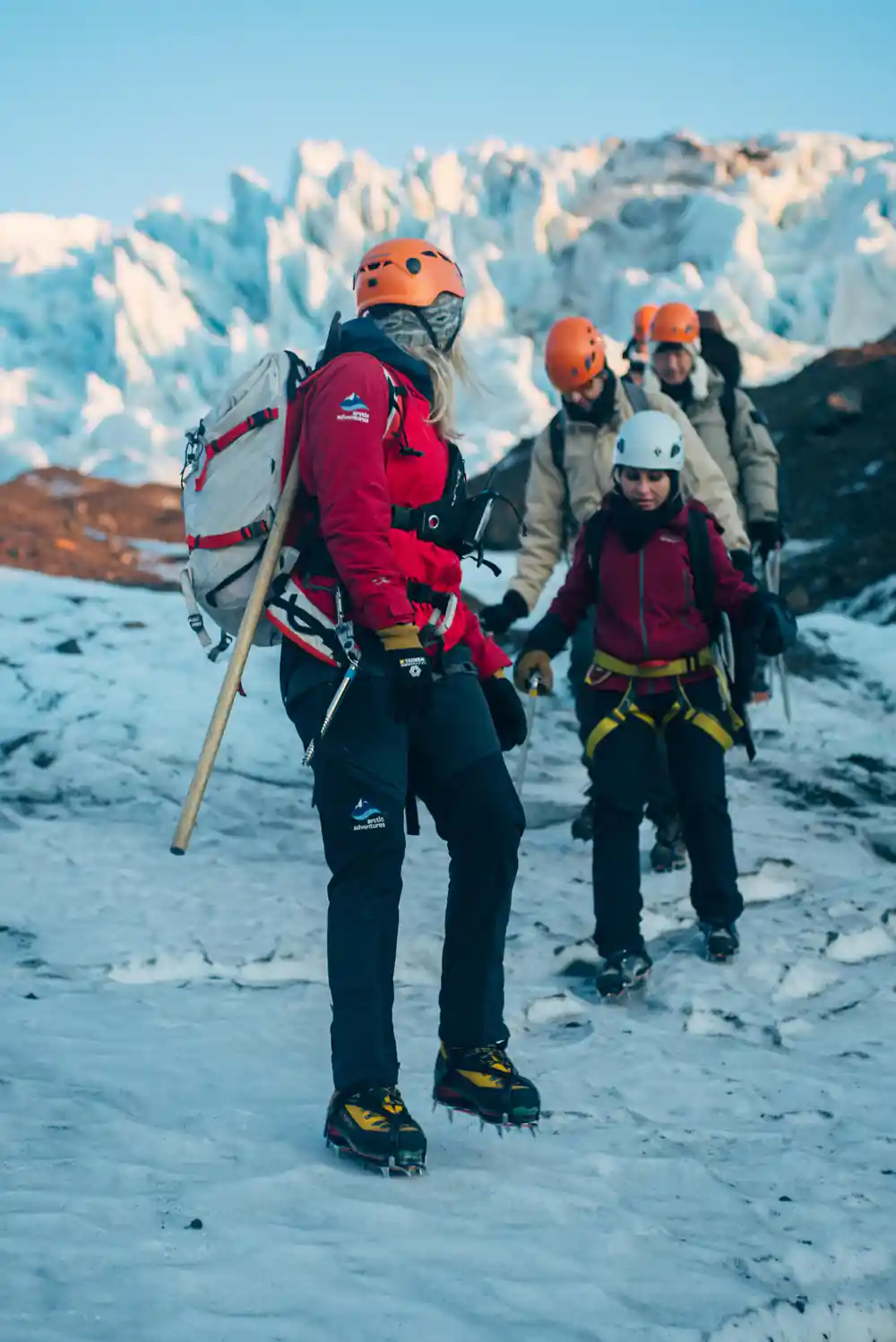
Before any tour runs, guides walk the glacier. They check roofs for thin spots, watch for water still moving inside, test snow bridges over crevasses, and follow the forecast in the days before a departure. Ice moves, so a route checked on Monday is checked again before Friday's group. Crampons go on before the ice steepens, groups stay together, and no guide leads people into a cave that has not been visited and assessed. That is why both the meeting point and the cave itself can change from one season to the next.
At Skaftafell the guided trip is a 4 hour outing with a live English-speaking guide in a small group limited to 12 participants, from US$167.[4] Free cancellation runs up to 24 hours in advance, and you can reserve now and pay later.[4] Getting there takes planning: Skaftafell is about 327 km (203 miles) from Reykjavík by car via Route 1, a drive that takes approximately 4.5 hours.[8] If you are adding the lagoon, Jökulsárlón is 35.4 miles (57 km) from Skaftafell, about 50 minutes away in normal traffic.[15]
How long the main ice cave and glacier tours run
Durations as listed for these GetYourGuide tours:[4],[5],[16] and[17].
Compare from-prices for ice cave and glacier tours
From-prices in US dollars from GetYourGuide listings:[4],[5],[6] and[18].
When to plan your ice cave visit
From snow to blue ice
Snow falls and stacks up
Each winter adds a layer, and the layers below are buried under the weight of the next season's snow.
The air is squeezed out
Pressure from above forces air bubbles out of the ice, and what stays behind is far denser than the snow it came from.
Crystals grow and line up
Ice grains enlarge and knit together, which is what lets light travel deeper into the ice before the blue comes back to your eye.
Meltwater finds a way in
Summer melt runs downhill, finds a crevasse or a soft seam, and begins to cut a channel through the body of the glacier.
The channel becomes a tunnel
Water widens the passage, freezing and refreezing smooths the walls, and a cave you can walk into takes shape.
Guides check it again
Roofs collapse and channels shift, so guides walk the glacier each season to find and test the caves that are safe to enter.
Walk into the blue inside Vatnajökull
from US$167Reserve now & pay later