If you read nothing else
- The glacier covers about 8,100 square kilometers (3,127 square miles) and is the largest in Iceland and Europe.[1]
- Ice caves in Vatnajökull are only accessible during winter months, from November and usually throughout March, depending on the weather.[2]
- Skaftafell is about 327 km (203 miles) from Reykjavík via Route 1, a drive of approximately 4.5 hours.[3]
- Parking at Skaftafell is subject to a regional fee, with a passenger car of 5 or fewer seats charged 1,110 ISK.[4]
- The Skaftafell blue ice cave and glacier hike runs 4 hours, is limited to 12 participants and starts from US$167.[5]
- Top choice Blue Ice Cave & Hike from US$167 Duration4 hours[5]Group sizeLimited to 12 participants[5]Rating4.62 from 848 reviews[5]CancellationFree up to 24 hours ahead[5] Check availability
- Ice Cave and Glacier Hike from US$162 Duration4 hours[6]Group sizeLimited to 12 participants[6]Rating4.53 from 1,962 reviews[6]CancellationFree up to 24 hours ahead[6] See this tour
- Jökulsárlón Ice Cave Tour from US$164 Duration3 hours[7]Group sizeNot stated on the listingRating4.25 from 2,171 reviews[7]CancellationFree up to 24 hours ahead[7] See this tour
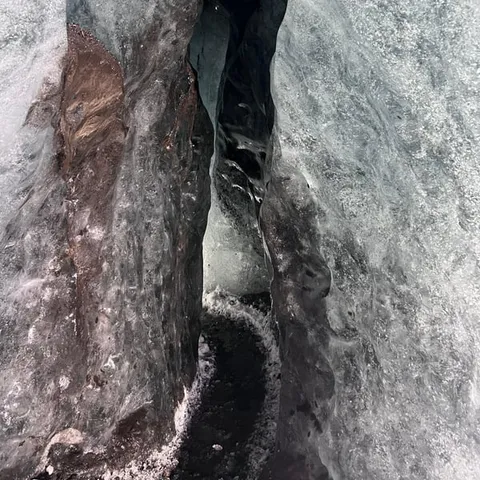
The ice averages 380 metres thick, though in places it is almost a kilometre deep.
Is the Skaftafell blue ice cave tour worth it?
Prepare for the day
Where Vatnajökull National Park is
Vatnajökull National Park covers a huge slice of south-east Iceland, wrapped around the glacier that gives it its name. The park runs from the highlands down to the coast, and the practical hub for a visit is Skaftafell, a green shelf of birch and campsite sitting between the glacier outlets and the Ring Road. If you are studying a Vatnajökull National Park map before you travel, picture a long band along the Ring Road with Skaftafell roughly in the middle, Jökulsárlón and Diamond Beach towards the eastern end, and the vast ice cap filling the country inland.
The park was inscribed on UNESCO's list of World Heritage Sites on 5 July 2019[9], a date worth knowing before you start planning. Skaftafell itself is about 327 km (203 miles) from Reykjavík by car via Route 1, a drive that takes approximately 4.5 hours[3]. It is a long run in one go, so breaking the journey with a night on the south coast near Vík or Kirkjubæjarklaustur makes for a calmer arrival. The reward is walking out the next morning with the ice already in view.
The glacier behind the name
Vatnajökull is not a single tidy sheet of ice. It is an ice cap with dozens of outlet glaciers spilling out of it, each with its own shape, colour and temper. The ice averages 380 metres thick, though in places it is almost a kilometre deep[10], and the cap has a surface area of approximately 8,100 square kilometers (3,127 square miles)[1]. That makes it the largest glacier in both Iceland and Europe[1]. Standing near an outlet, that scale is easier to feel than to read.
Underneath all that ice sit volcanoes. The three most famous subglacial volcanoes under Vatnajökull are Grímsvötn, Öraefajökull and Bardarbunga[11]. Their heat, the weather and the sheer weight of the ice together shape what you see at ground level: crevasses, meltwater channels, grey moraine pushed into ridges, and outlet glaciers ending in lagoons full of floating ice. Since the year 2000, Icelandic outlet glaciers have retreated exceptionally fast, and their mass loss is among the highest recorded in the world[12]. A guided walk on the ice is a look at a landscape in motion.
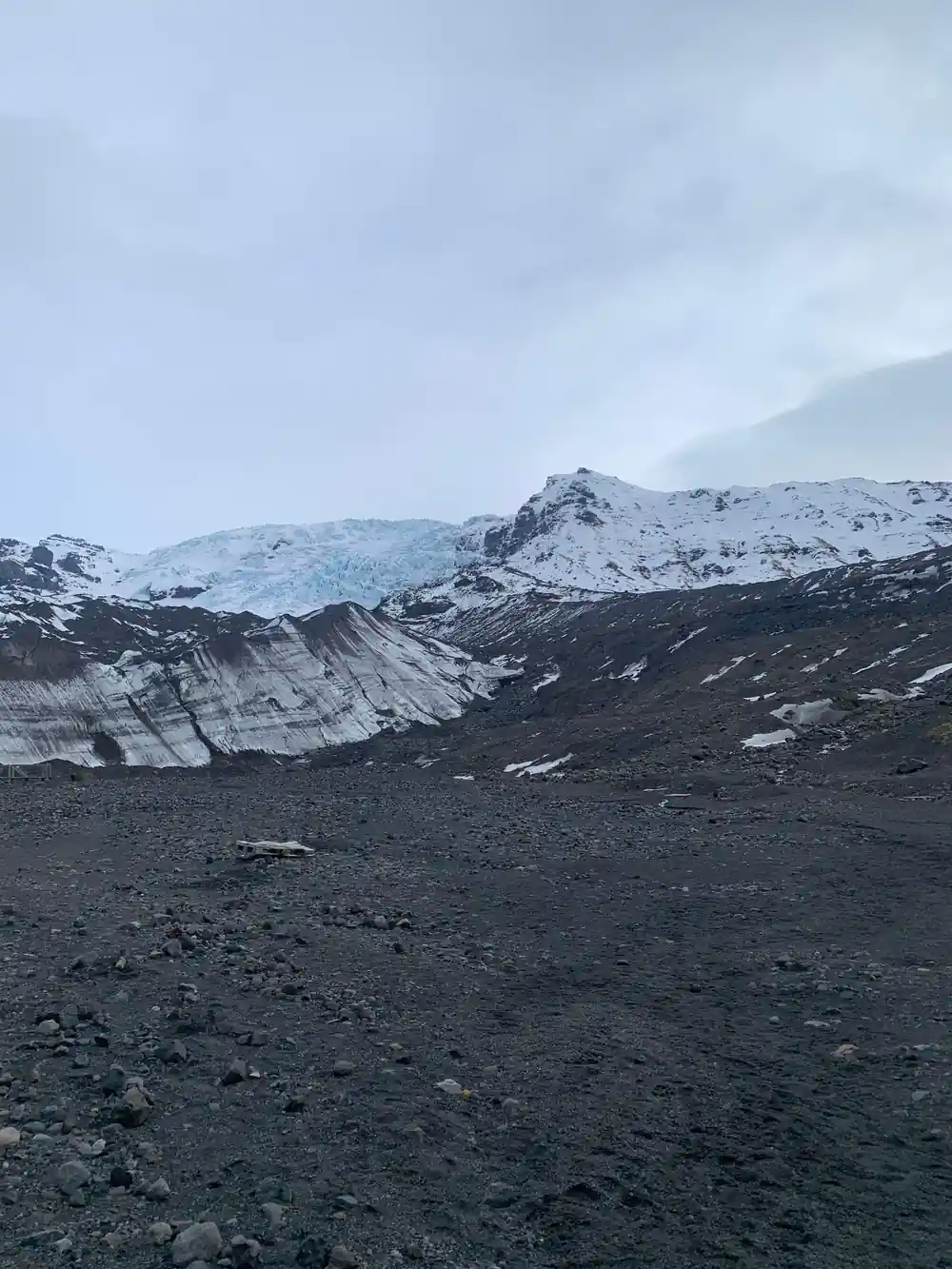
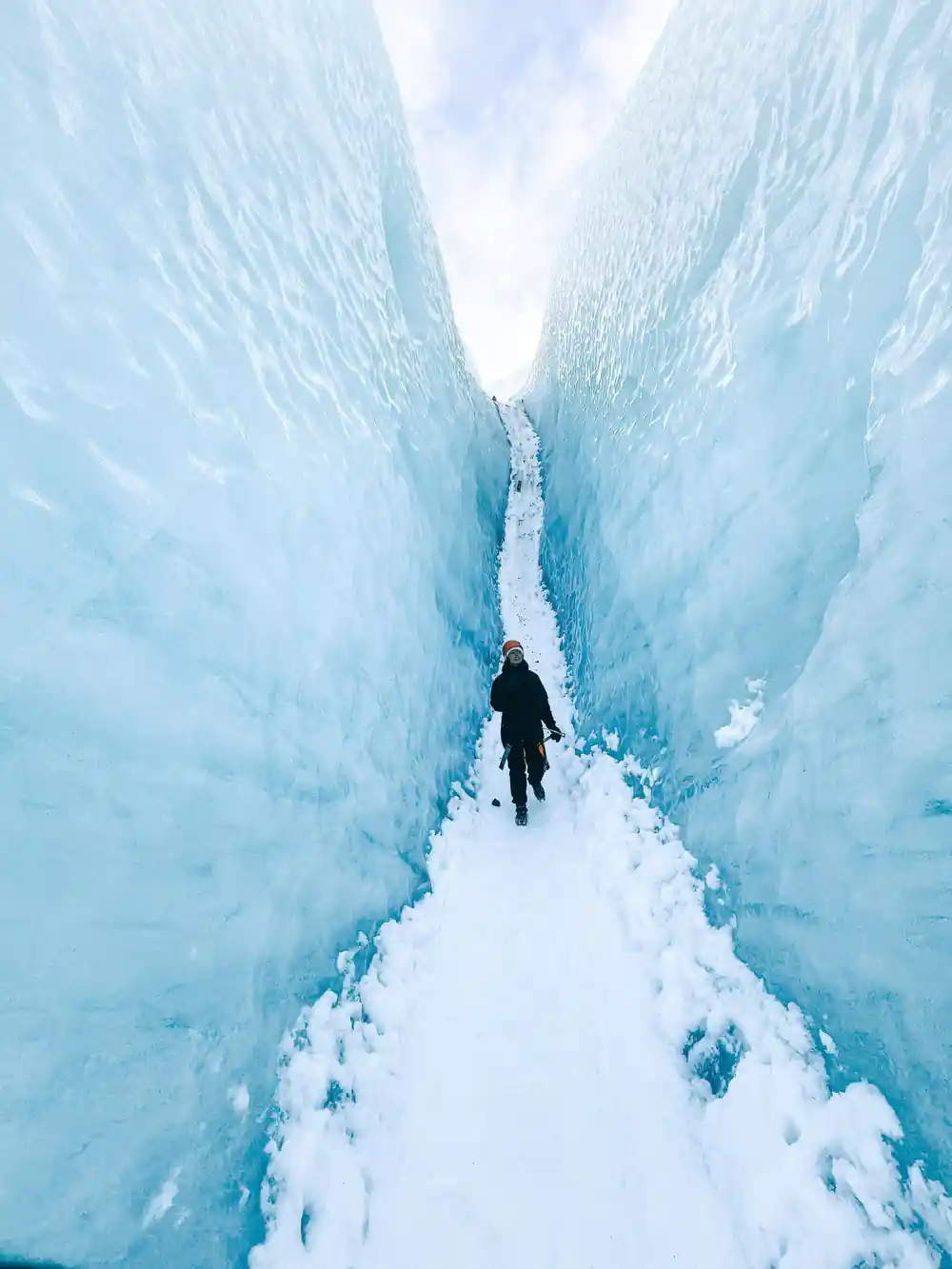
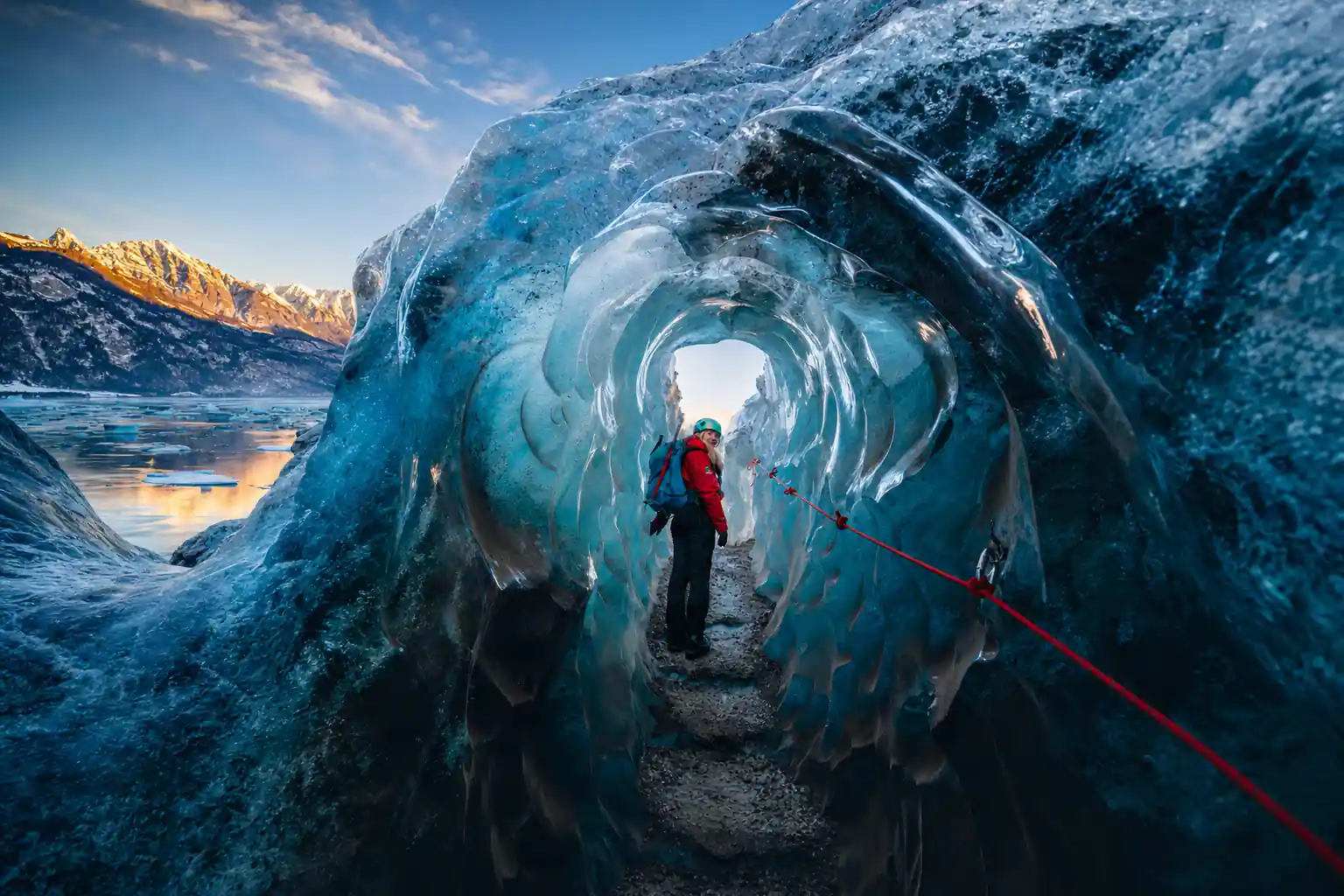
Blue light inside a Vatnajökull ice cave, where the ice is dense enough to glow.
Ice caves: a winter-only world
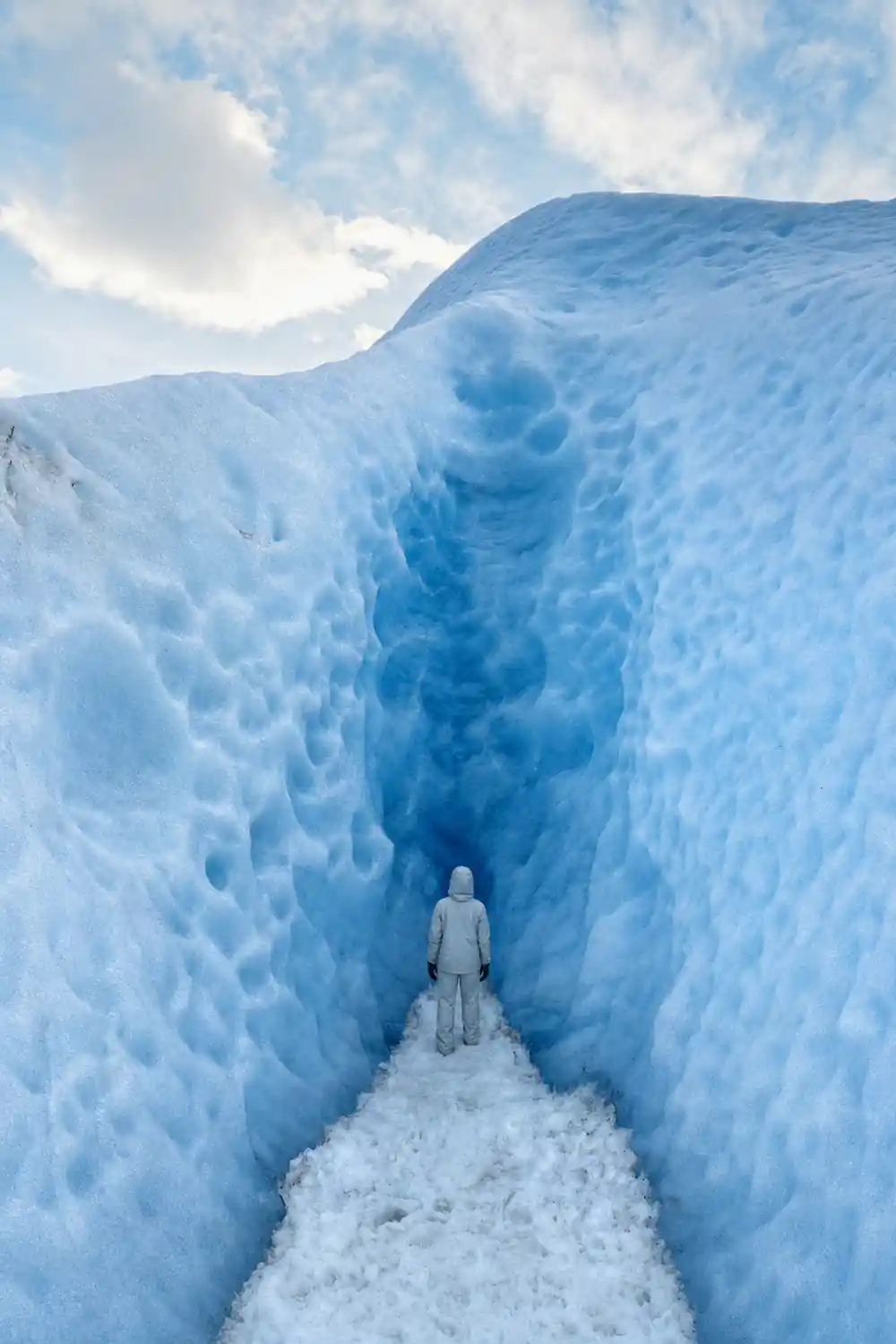
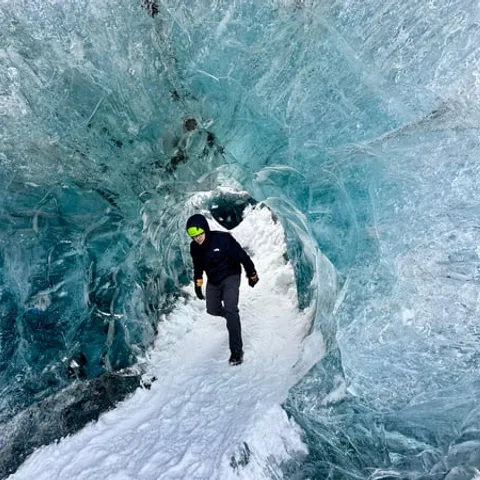
The blue caves people travel for are not year-round attractions. Ice caves in Vatnajökull are only accessible during winter months, from November and usually throughout March, depending on the weather[2]. They form where meltwater drains beneath the glacier and refreezes into dense, glassy ice that filters light into blue. Every winter the caves are different. Some are wide chambers you can stand up in, some are low passages you duck through, and a cave that is famous one season may be gone the next.
That is why nobody can promise you a particular cave in advance. Guides read the ice, the forecast and the snowpack before choosing a route on the day, and that judgement is a large part of what you are paying for. Light inside a cave is dim and blue, phones struggle to capture it, and the cold settles in faster than you expect. Thin gloves you can still work a camera with beat thick ones you have to keep taking off.
What a guided glacier day looks like
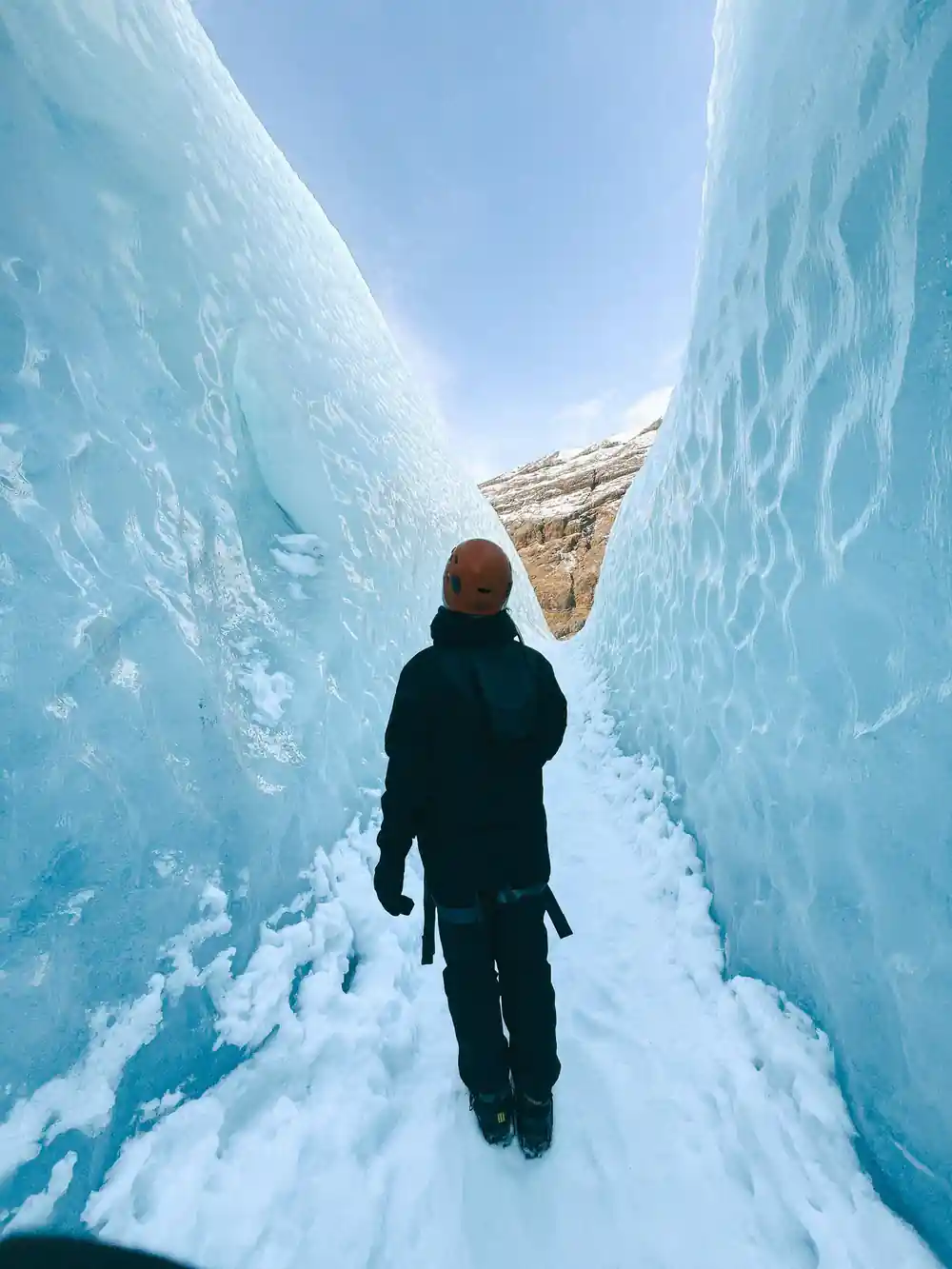
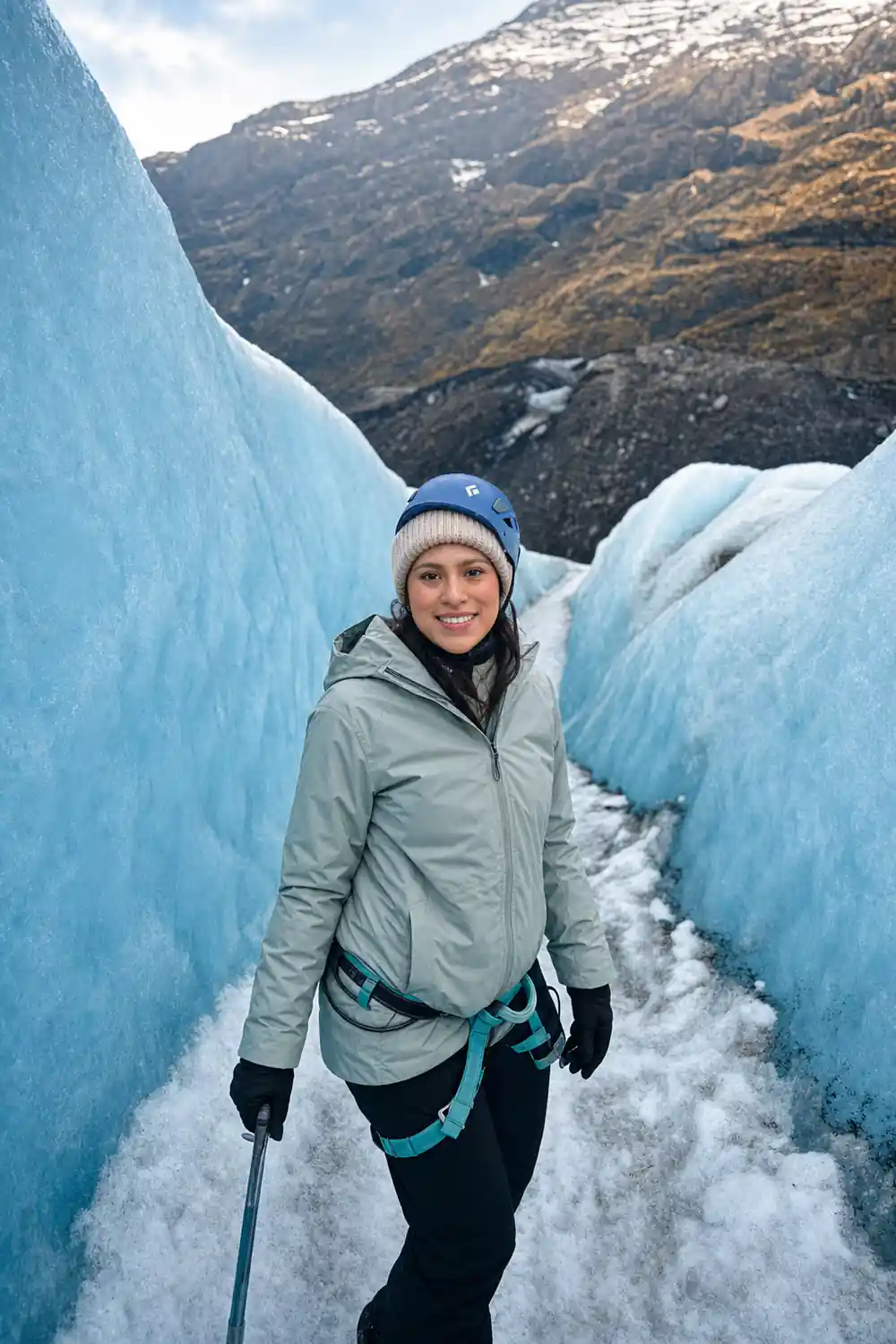
A typical day begins at a base near Skaftafell, where you meet your guide, collect the safety kit and take a short transfer towards the ice edge. Then it is boots on the glacier: a steady walk up Falljökull or another outlet, with stops to look at crevasses, meltwater channels and the way ice changes colour as it compresses. Falljökull is a striking outlet glacier of the vast Vatnajökull ice cap[13], and its surface is where crampons earn their keep.
Group size matters more than people expect once you are on the ice. The Skaftafell blue ice cave and glacier hike is limited to 12 participants[5], which keeps the pace human and leaves room for questions. It runs 4 hours[5] with a live guide who speaks English[5], and starts from US$167[5]. You can reserve now and pay later, and cancel free up to 24 hours in advance[5].
from US$167
The Skaftafell blue ice cave and glacier hike starts from US$167, runs 4 hours and keeps groups to 12 participants.[5]
Getting there and driving the south coast
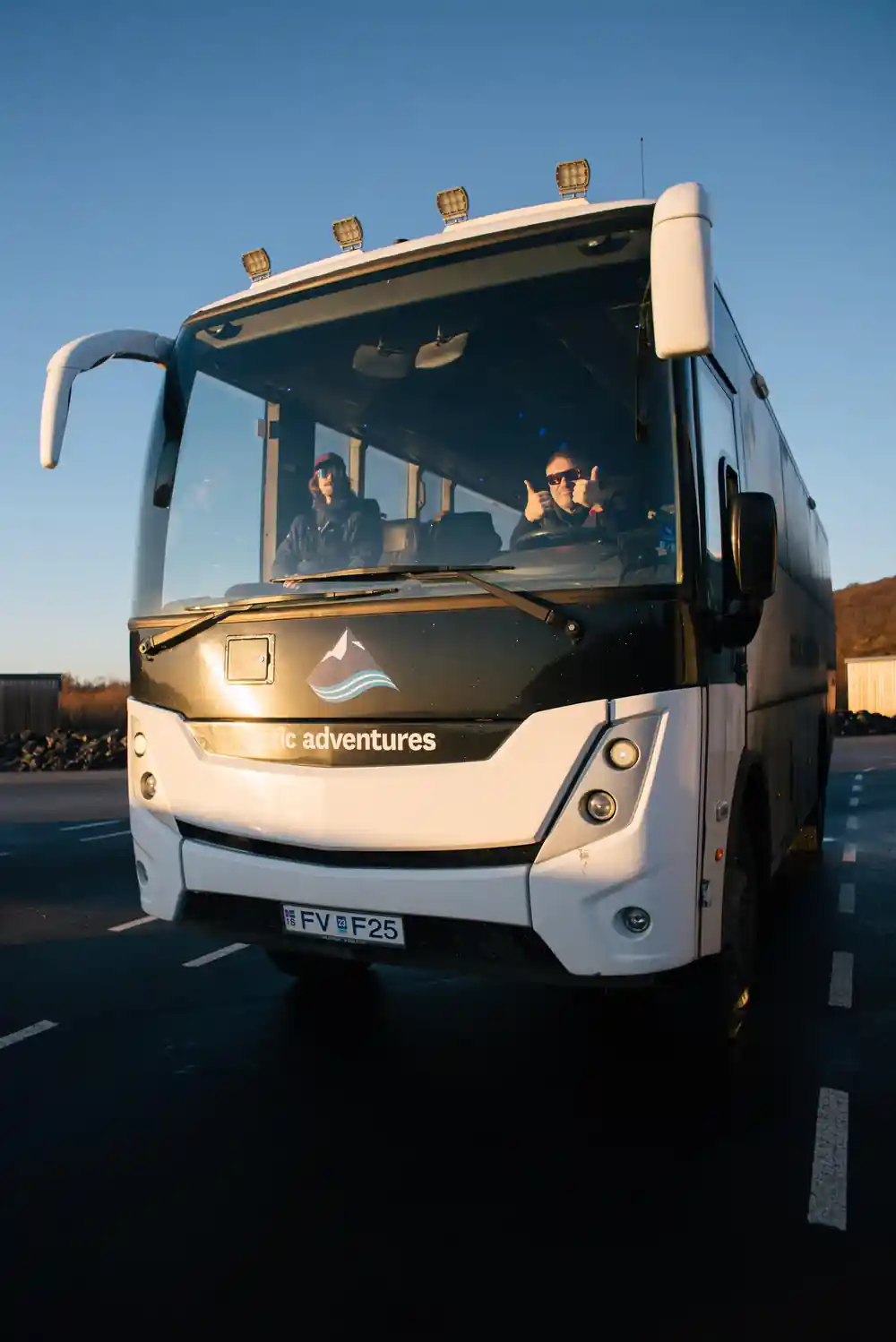
The usual way in is by car or coach along Route 1, the Ring Road that loops the country. From Reykjavík, Skaftafell is about 327 km (203 miles) away, a drive of approximately 4.5 hours[3]. Push on further east and the direct drive from Skaftafell to Jökulsárlón is 35.4 miles (57 km), about 50 minutes in normal traffic[14], so the lagoon and Diamond Beach slip easily into the same day as a glacier walk.
Distances on this coast mislead, because the driving is simple while everything around it is not. Fuel stops, toilets and places to eat are spread thin, wind can slam a car door back on your hand, and a road may close with little warning in winter. Check conditions in the morning, keep the tank well filled, and leave more slack in the day than the numbers suggest. You can also skip the driving and join a long day trip from Reykjavík instead.
Park fees, parking and the visitor centre
Parking is the practical charge to plan for. Parking at Skaftafell is subject to a regional fee, with a passenger car of 5 or fewer seats charged 1,110 ISK[4]. Look for the payment signs when you pull in, keep a bank card handy, and read the board before you walk away. If you are budgeting for a Vatnajökull National Park fee, this is the charge a driver runs into.
Skaftafellsstofa is the visitor centre at Skaftafell, and it is the place to pick up trail information and ask rangers what conditions are like. Its opening hours shift month by month: 10-17 in January and February, 9-17 in March to May, 9-19 in June to August, 9-18 in September and October, 9-17 in November, and 10-17 in December[8]. Arriving outside those hours is fine, but bring your own map and plans with you.
Things to do in Vatnajökull National Park
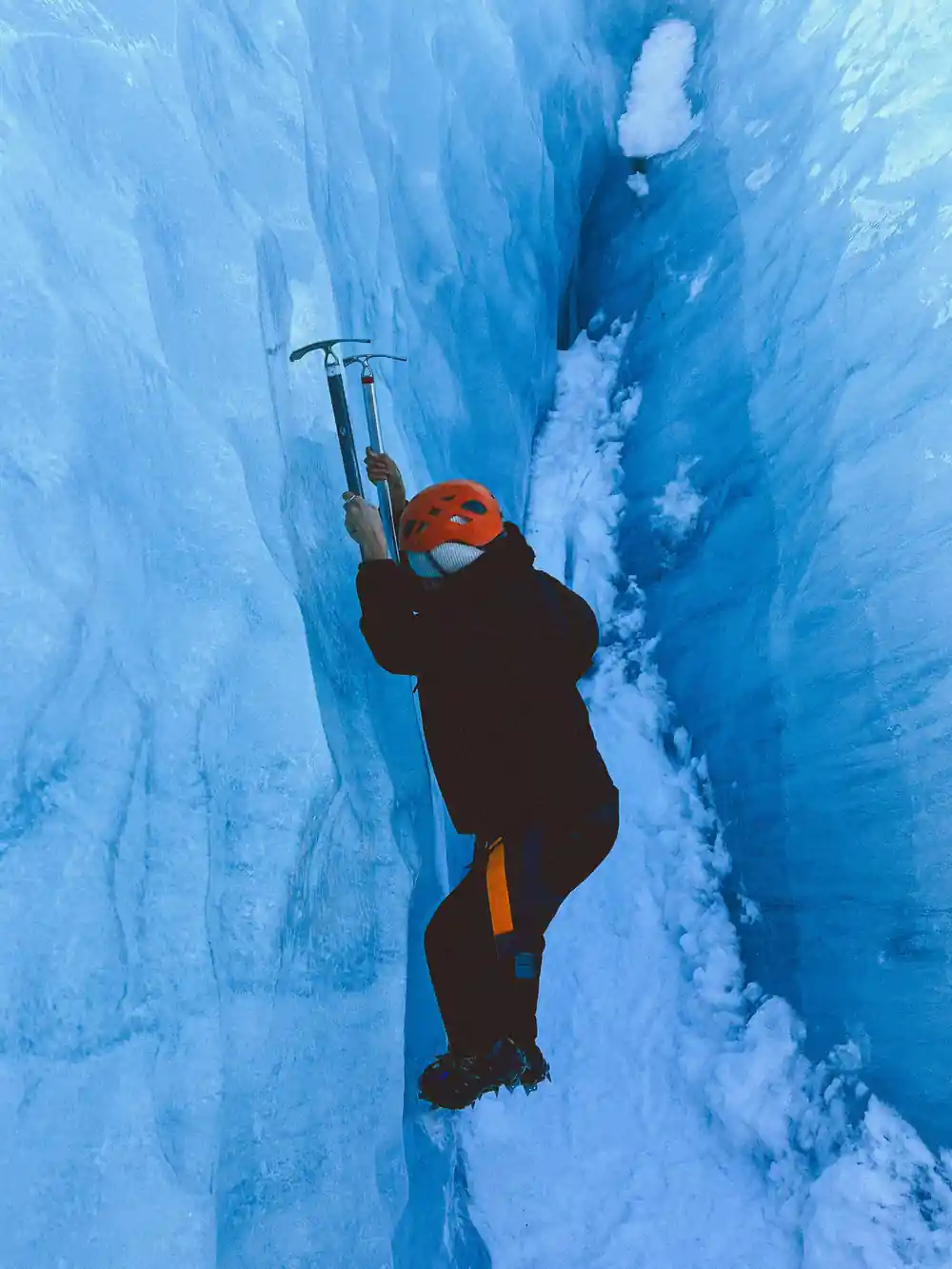
Walking on the ice is the headline, but it is not the only reason to come. Glacier hikes range from gentle, family-paced walks to long climbs with an ice axe in your hand. On the Jökulsárlón side you can paddle a kayak among the icebergs, and the Jökulsárlón amphibian boat tour lasts 30-40 minutes[15]. On land, trails from Skaftafell lead to waterfalls and viewpoints, and photographers happily spend a whole afternoon on the black sand at Diamond Beach.
For a bigger objective, Hvannadalshnúkur is 2110 metres, or 6900 feet, high[16], a serious guided ascent rather than an afternoon stroll. If you would rather sleep comfortably between adventures, Fosshotel Glacier Lagoon is a four-star superior hotel located a stone's throw from Skaftafell[17]. In winter, book the cave day and your bed early, and keep one spare day in the plan for weather. The ice rewards patience.
How long ice cave and glacier tours last
From-prices for ice cave and glacier tours
US dollar from-prices of GetYourGuide listings:[5][22][23][24]
Season by season
Plan your Vatnajökull day
Pick your season
Ice caves are only accessible from November and usually throughout March, depending on the weather.[2]
Book the cave tour
The Skaftafell blue ice cave and glacier hike runs 4 hours from US$167 and is limited to 12 participants.[5]
Base yourself at Skaftafell
Skaftafell is about 327 km (203 miles) from Reykjavík, roughly 4.5 hours by car on Route 1.[3]
Check road and weather
Keep a spare day. Winter storms and wind can change plans at short notice, and guides may switch routes.
Gear up
Warm layers, waterproofs and sturdy boots. The cave is cold and the glacier surface is wet and uneven.
Walk on Falljökull and stand inside blue ice
from US$167Reserve now & pay later