The short version
- The Skaftafell listing runs 4 hours and is limited to 12 participants, with a live English-speaking guide and free cancellation up to 24 hours ahead.[1]
- Top choice Skaftafell Blue Ice Cave from US$167 Duration4 hours[1]Group sizeLimited to 12 participants[1]Rating4.62 from 848 reviews[1]Guide languageEnglish[1]CancellationFree cancellation, 24 hours notice[1] Check availability
- Skaftafell Glacier Hike from US$106 Duration4 hours[2]Group sizeGroup size not given in the listingRating4.71 from 1,357 reviews[2]Guide languageEnglish[2]CancellationFree cancellation, 24 hours notice[2] See this tour
- Jökulsárlón Ice Cave Tour from US$164 Duration3 hours[3]Group sizeGroup size not given in the listingRating4.25 from 2,171 reviews[3]Guide languageEnglish[3]CancellationFree cancellation, 24 hours notice[3] See this tour
The ice caves are only accessible during winter months, from November and usually throughout March, depending on the weather.
Is the Falljökull ice cave hike worth booking?
Booking details
On the ground
- The listed stops are Bus/coach, Vatnajökull, Falljökull and Bus/coach.[1]
- Ice caves in Vatnajökull are accessible from November, usually through March, depending on the weather.[4]
- Parking at Skaftafell is 1,110 ISK for a passenger car of 5 or fewer seats.[5]
- Skaftafellsstofa Visitor Centre is open 9-19 from June to August.[6]
Check in at Skaftafell before the ice cave hike
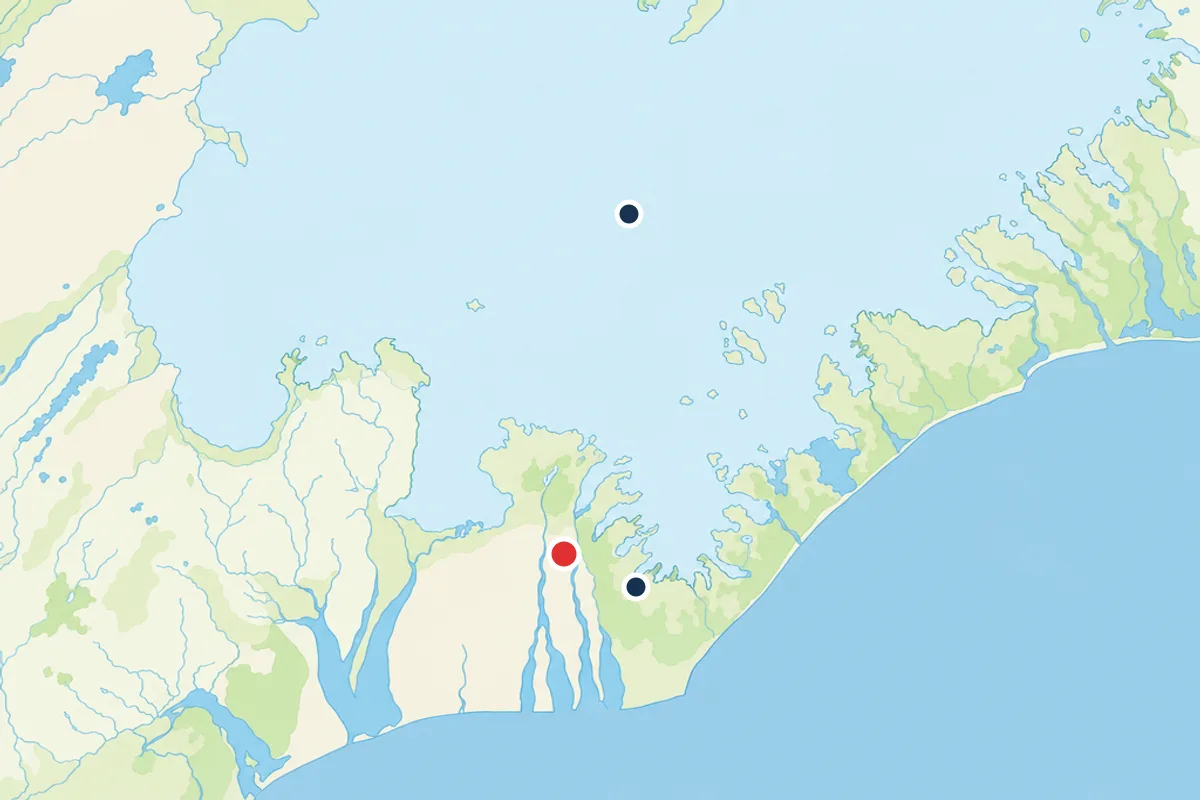
Skaftafell sits in the south of Vatnajökull National Park, and it is about 327 km (203 miles) from Reykjavík by car via Route 1, a drive that takes approximately 4.5 hours.[7] Coming from the capital, a night somewhere along the south coast turns the last stretch into an easy morning run, and the road itself passes waterfalls, black sand and long lava fields. From the other direction, the direct drive from Skaftafell to Jökulsárlón is 35.4 miles (57 km) and takes about 50 minutes in normal traffic.[8] Parking at Skaftafell is subject to a regional fee, with a passenger car of 5 or fewer seats charged 1,110 ISK.[5]
The Skaftafell: Blue Ice Cave & Glacier Hike on Vatnajökull runs for 4 hours, and the listing says to check availability to see starting times.[1] Arrive early enough to pull on a warm layer, sort out your boots and find your guide. Numbers on this tour are limited to 12 participants, and the guide speaks English.[1] If you want trail information or a weather check before you set off, Skaftafellsstofa Visitor Centre's opening hours are 10-17 in January-February, 9-17 in March-May, 9-19 in June-August, 9-18 in September and October, 9-17 in November, and 10-17 in December.[6]
Gear fitting: crampons, harness and helmet
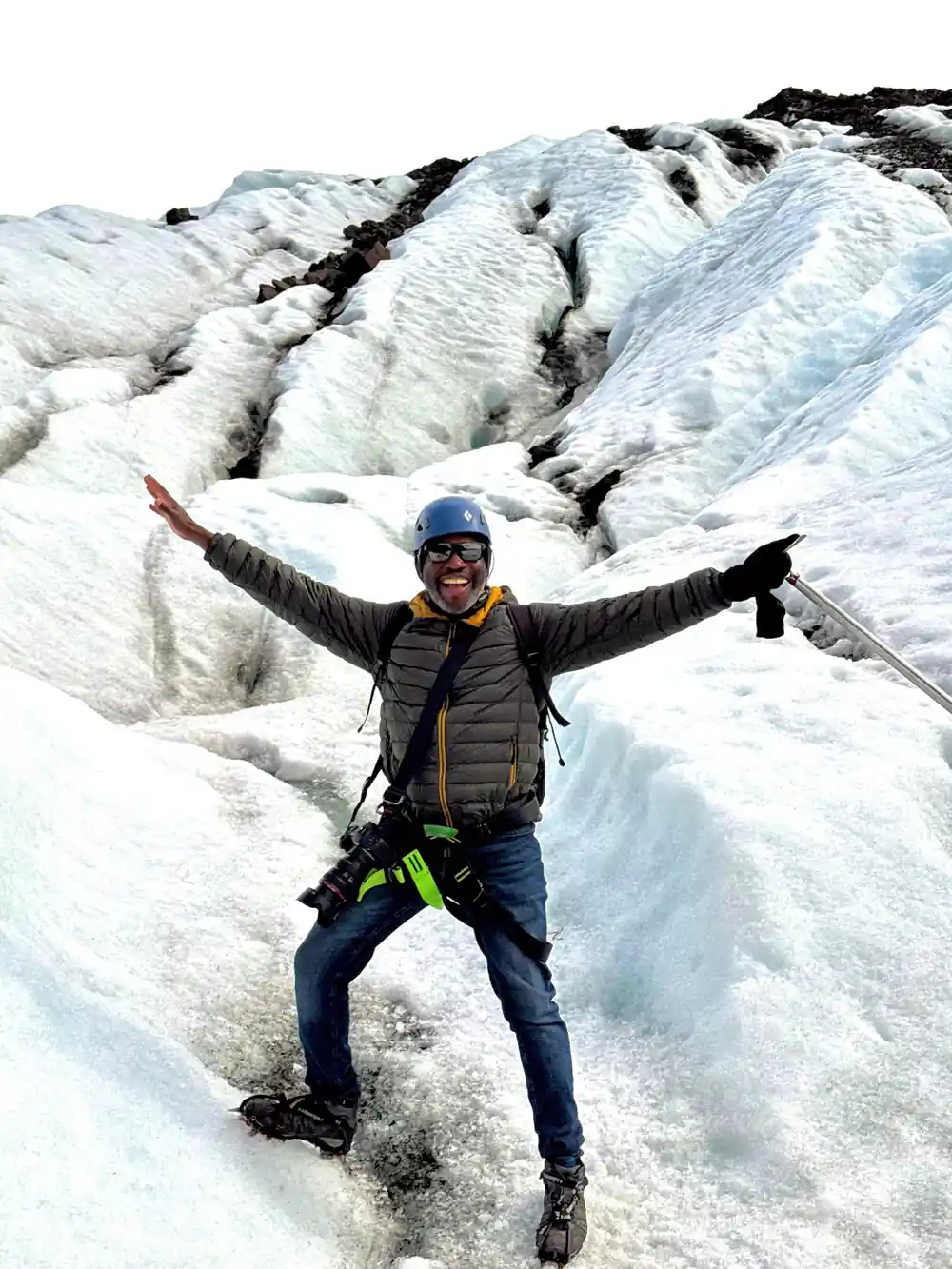
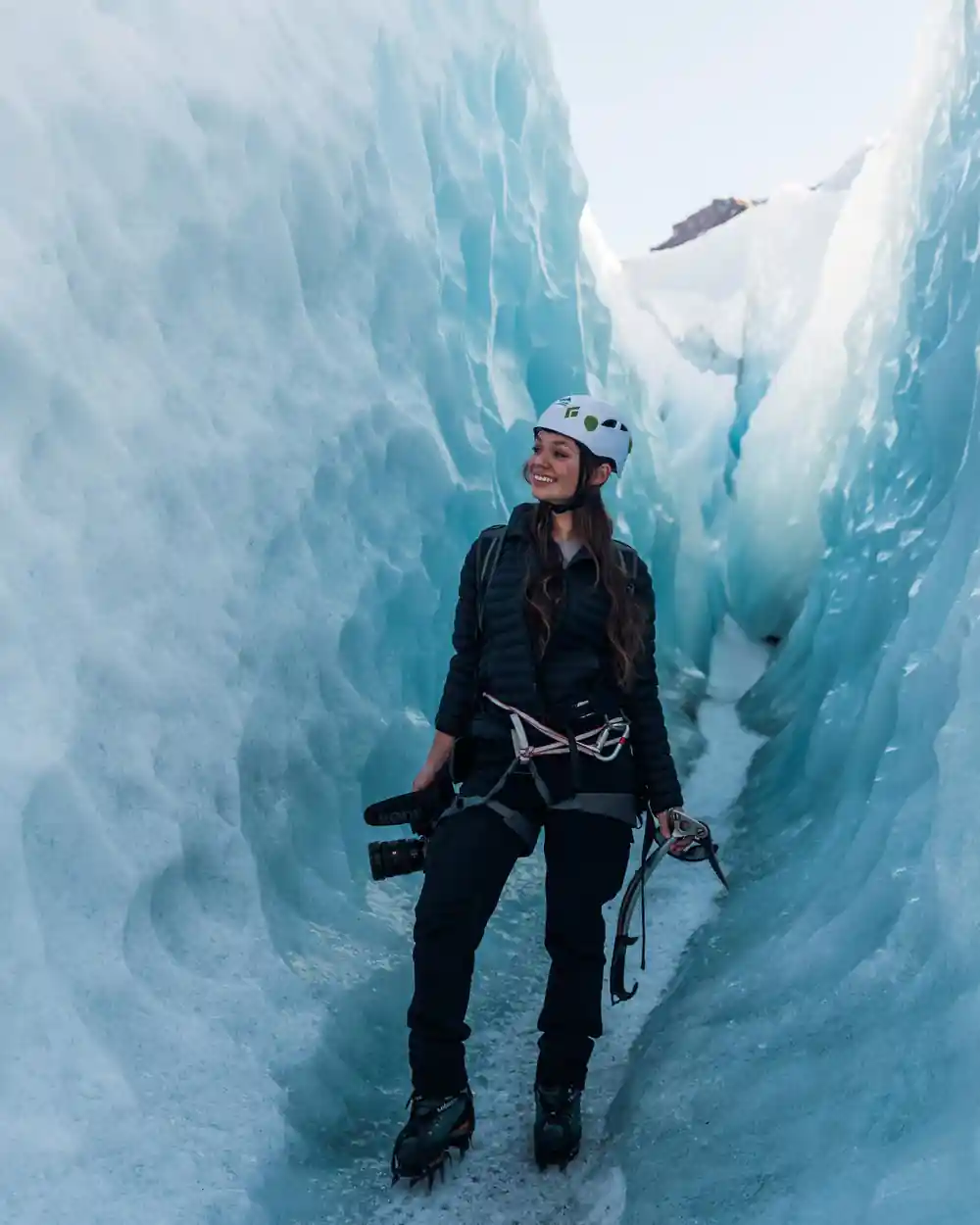
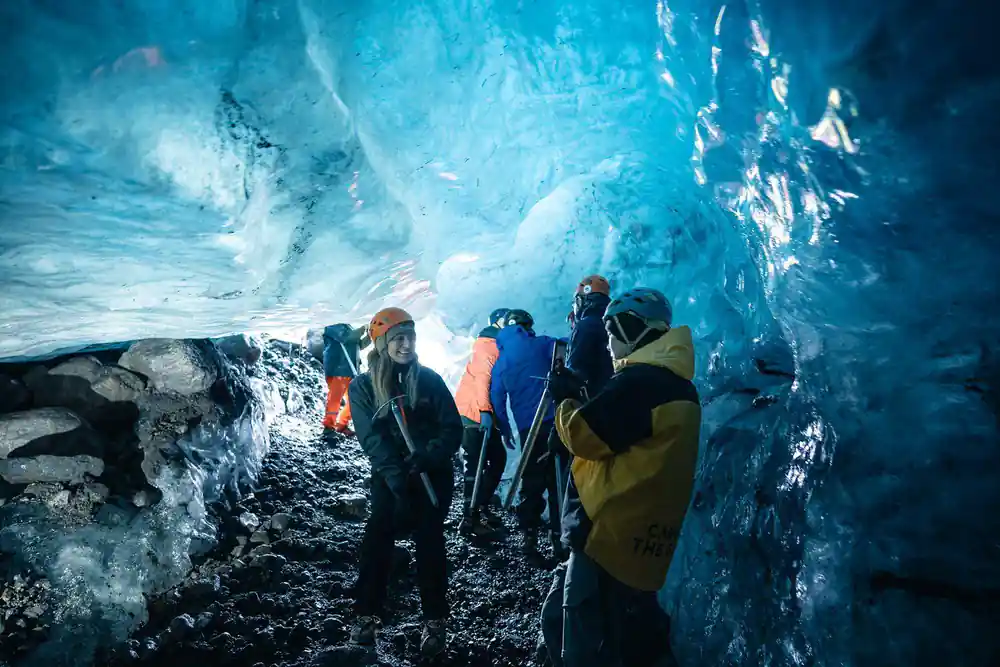
Gear fitting is the short, practical part of the morning, and it matters more than people expect. Your guide checks that boots are tight and warm, then adjusts a harness at the hips and thighs, buckles a helmet, and fits crampons so the points sit under the sole and the straps do not wander. Everything is set to you, at the meeting point, before the group leaves. Speak up if a strap digs in, a boot feels loose or a helmet sits oddly, because a fix on the tarmac takes seconds and a fix on the ice takes far longer.
Wear waterproof outer trousers and a waterproof jacket over warm wool or fleece layers, plus gloves, a hat and sunglasses. Thin liner gloves under thicker ones keep your hands working when the group stops for photos. Bring a small backpack with water and a snack if you like, and leave a spare dry layer in the vehicle for the drive afterwards. Dangling jewellery, long scarves and anything else that can flap about in a strong wind are best left behind at your accommodation.
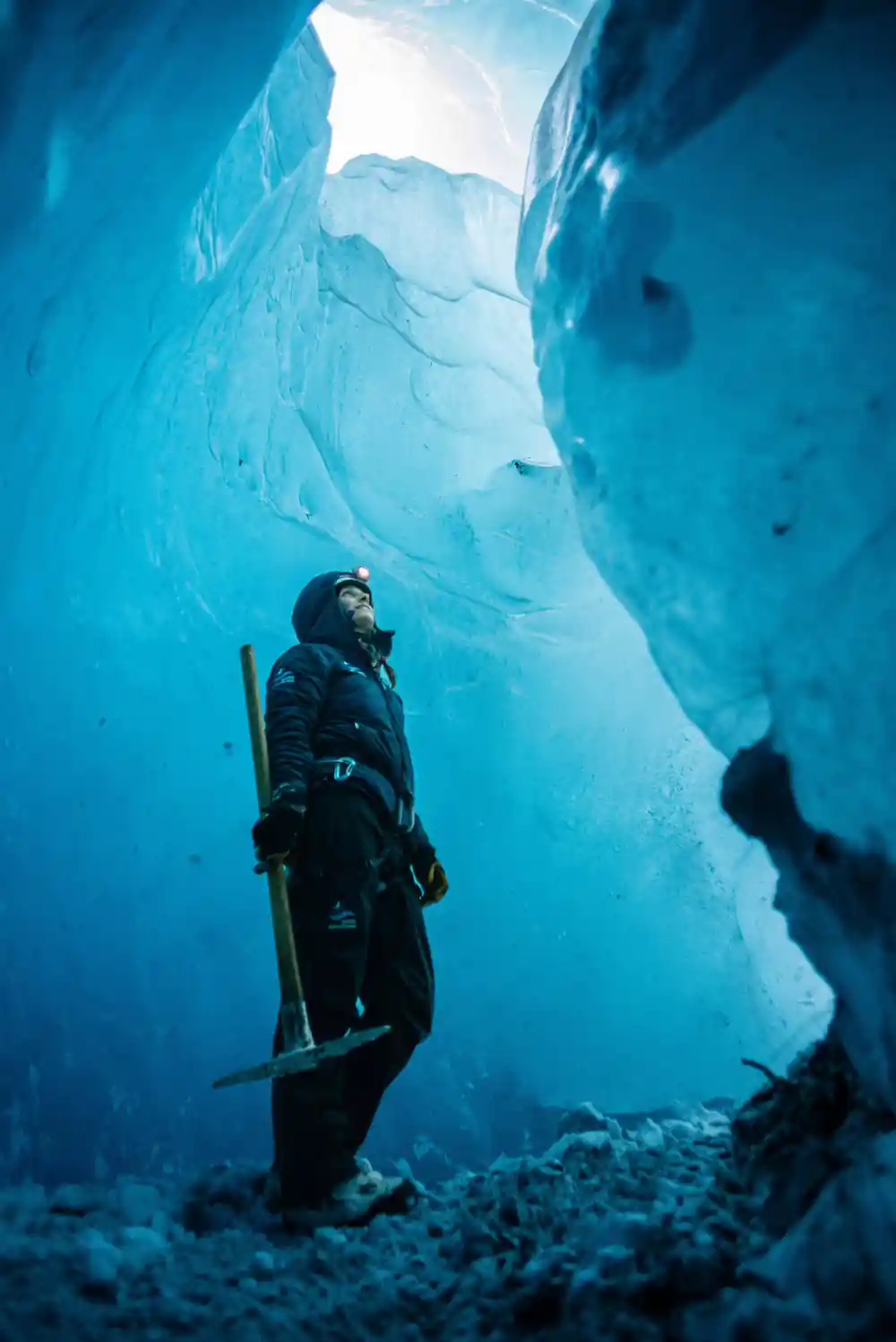
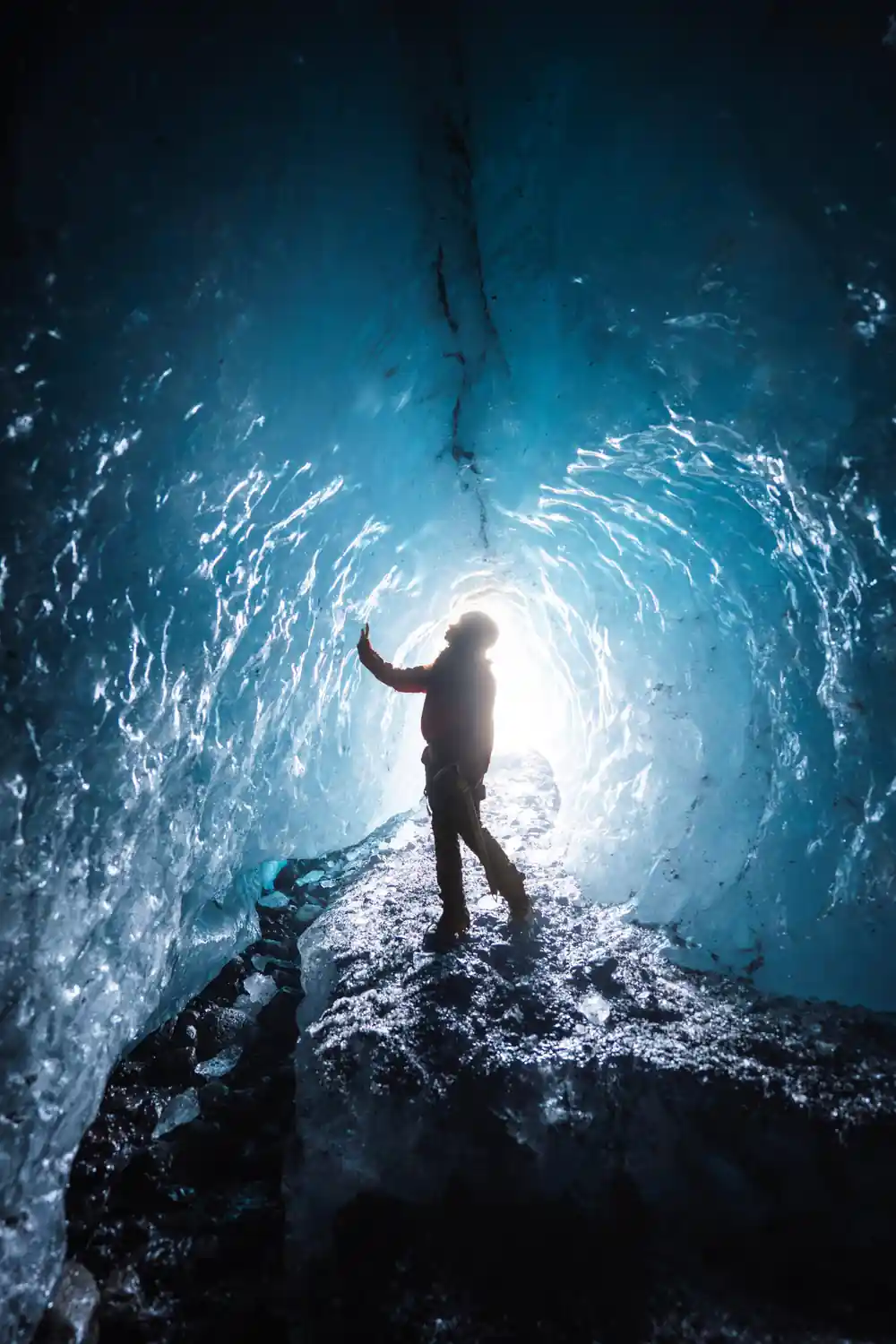
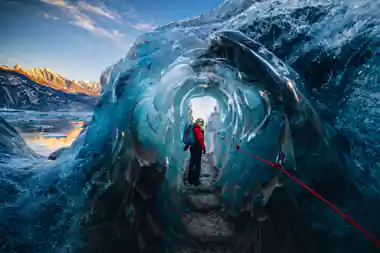
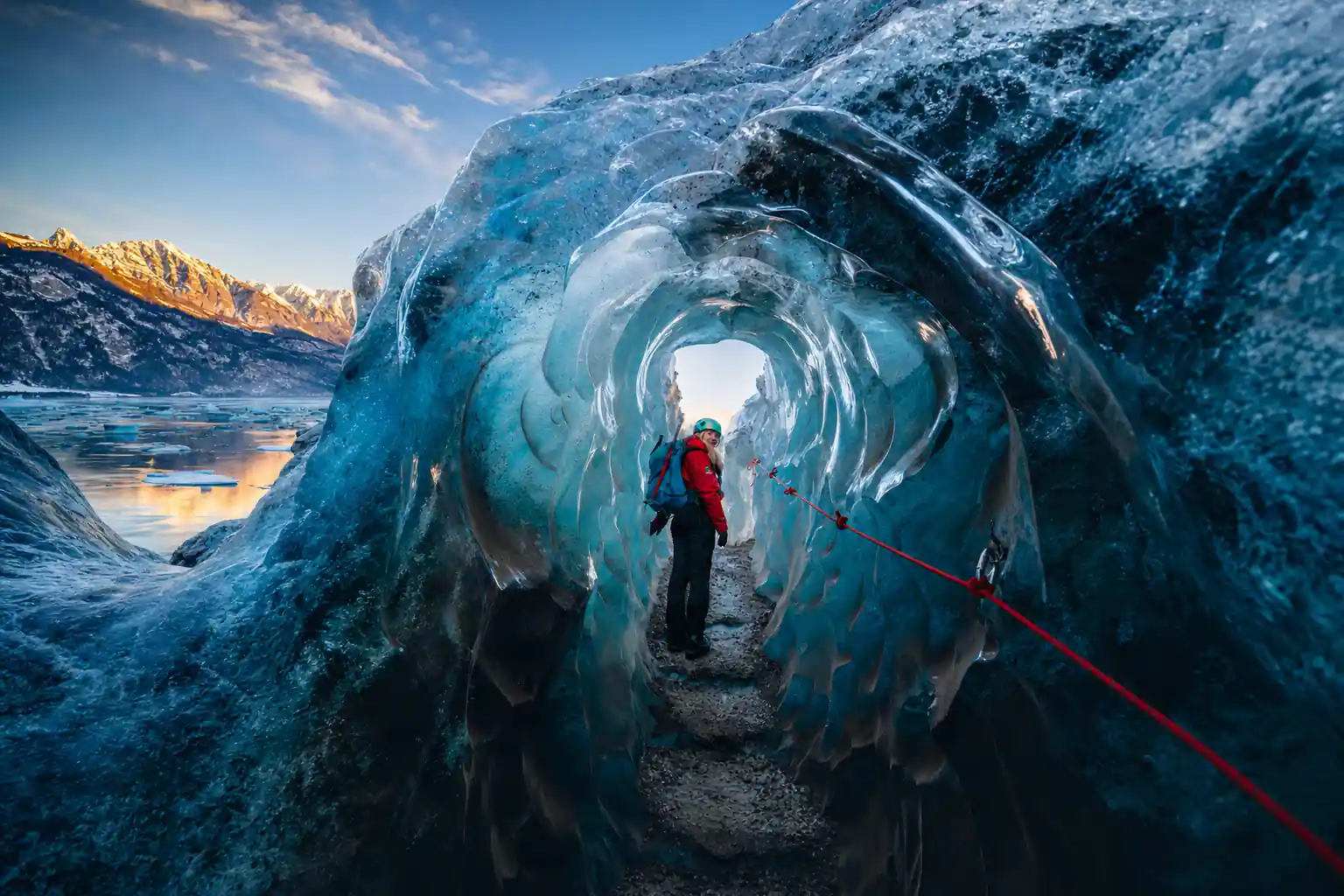
Blue light under the ice on Falljökull, Vatnajökull National Park.
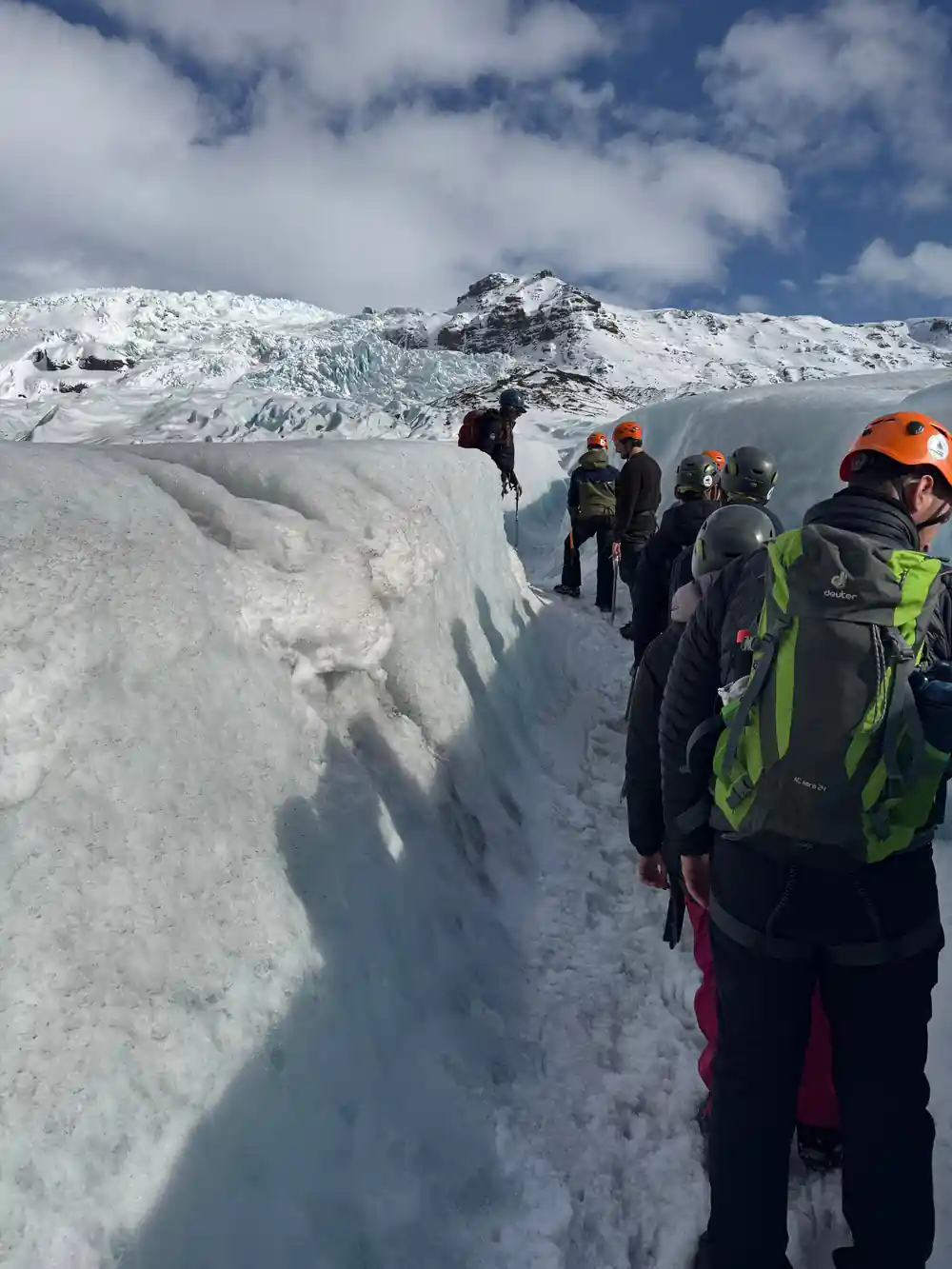
The hike onto Falljökull Glacier
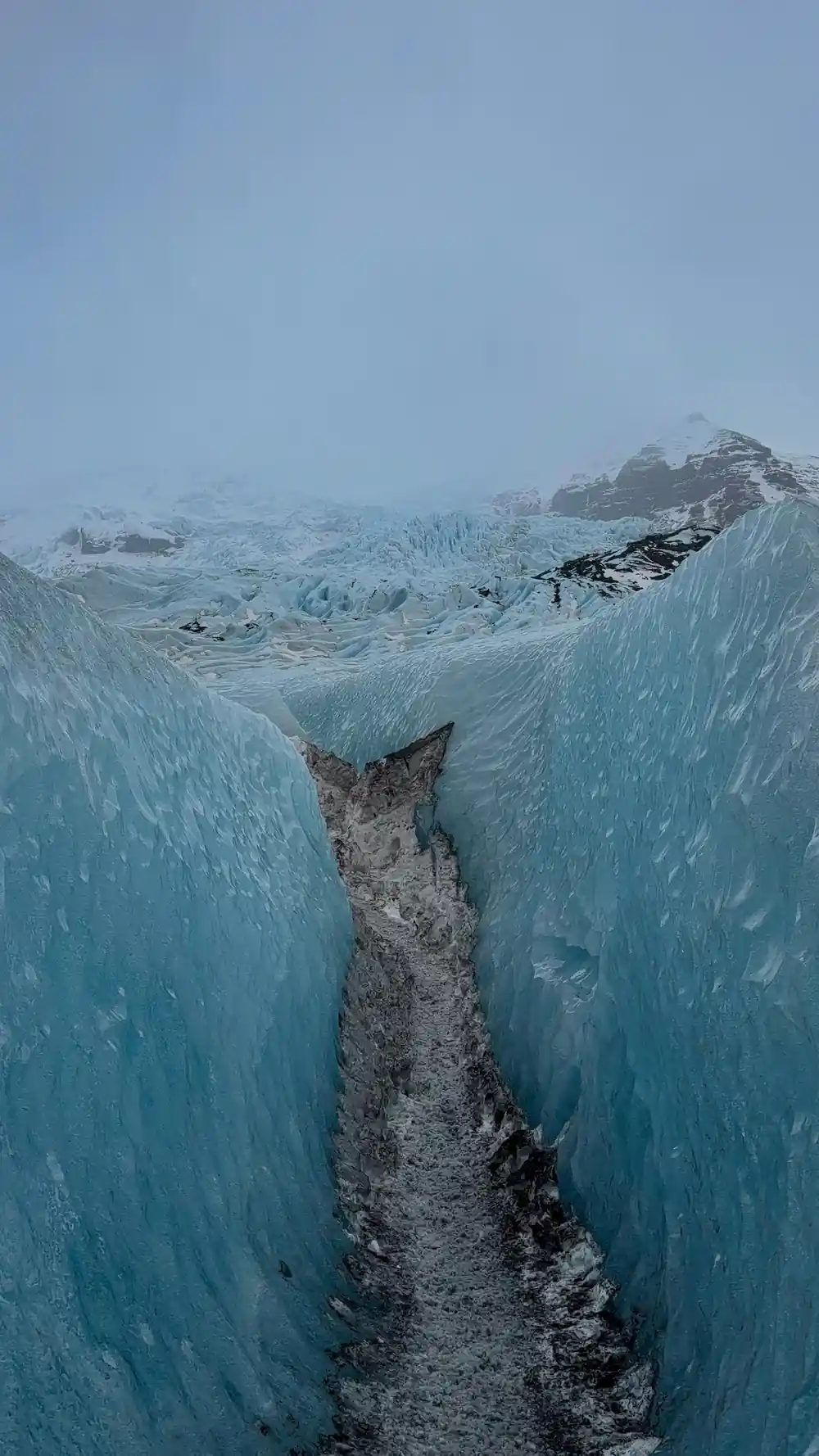
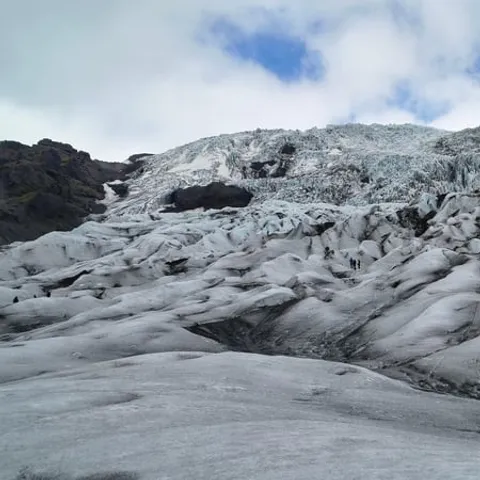
Falljökull is an outlet glacier of the Vatnajökull ice cap.[9] Vatnajökull has a surface area of approximately 8,100 square kilometers (3,127 square miles) and is the largest glacier in both Iceland and Europe.[10] Its ice averages about 380 metres thick, though in places it is almost a kilometre deep.[11] The walk begins on grey moraine and gravel, then steps onto ice that shifts from white to pale blue as the surface gets wetter and denser under your feet.
The line you take on the day depends on conditions, so expect gentle slopes, short steep pulls, runnels of meltwater and ridges carved by the weather. Icelandic outlet glaciers have retreated exceptionally fast since the year 2000, and their mass loss is among the highest recorded in the world.[12] Vatnajökull National Park was inscribed on UNESCO's list of World Heritage Sites on 5 July 2019.[13] Volcanoes sit under the ice, and the three most famous subglacial volcanoes under Vatnajökull are Grímsvötn, Öraefajökull and Bardarbunga.[14]
Inside the blue ice cave
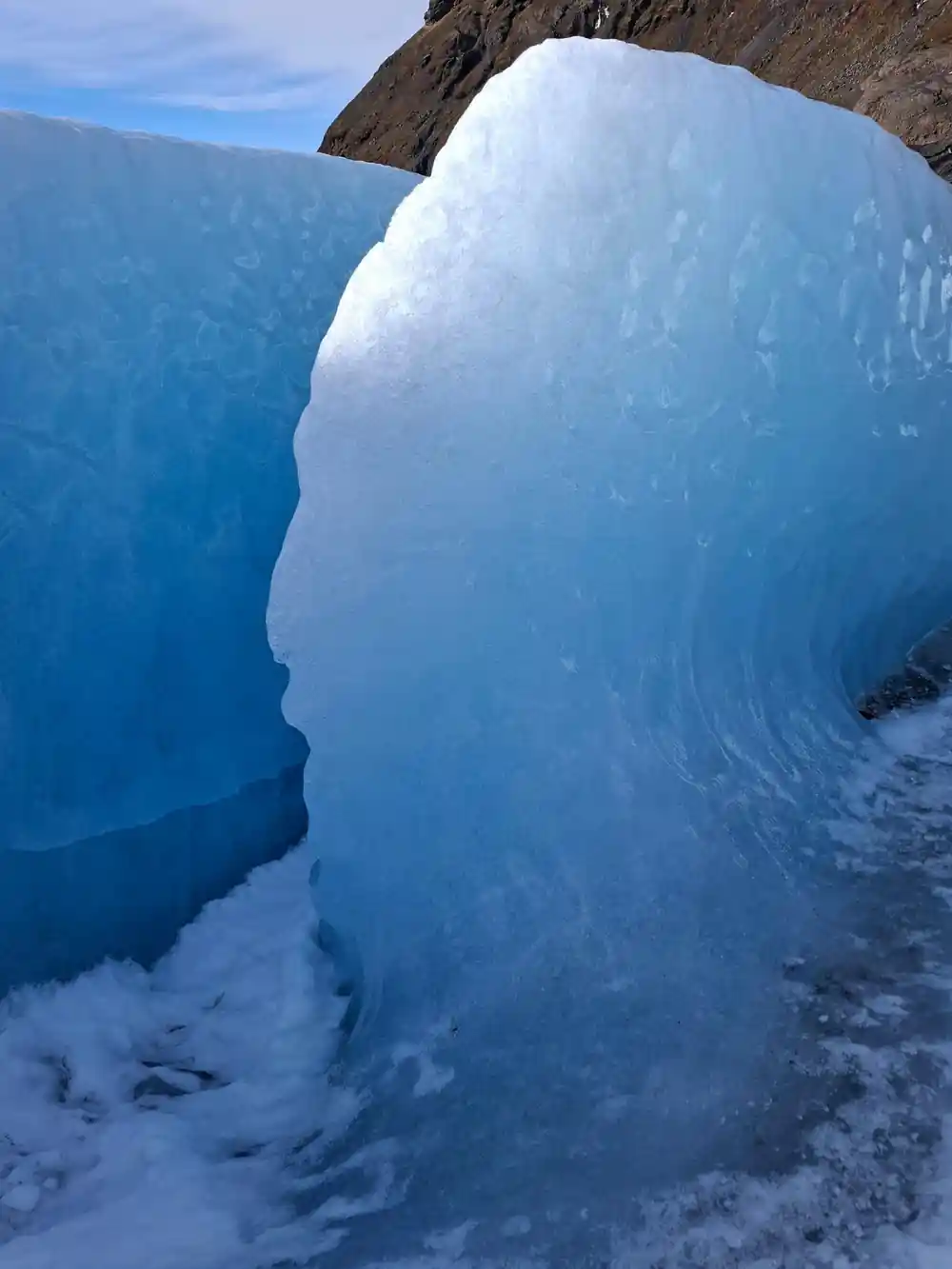
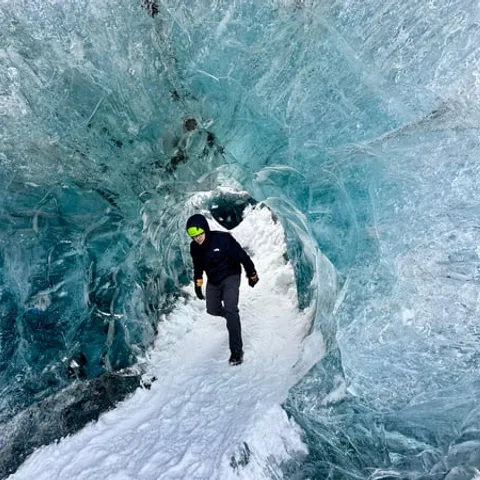
The cave is the part of the day people talk about afterwards. Ice caves in Vatnajökull are only accessible during winter months, from November and usually throughout March, depending on the weather.[4] Inside, daylight filters through ice that has been squeezed under enormous pressure, and the walls shift from clear to deep blue depending on how thick the roof is and how much light is left in the sky. Dark bands of ash and grit run through the ice like lines on a page.
You follow the ice cave trail in single file, ducking under low ceilings and stepping over ridges on the floor, while the guide stops the group wherever the passage is wide enough for photos. Sound behaves oddly in there: boots crunch, voices flatten, and meltwater drips somewhere out of sight. Keep your hands off the walls where the guide asks you to, and stay close behind the person in front rather than wandering to your own viewpoint.
from US$167
A 4-hour small-group tour limited to 12 participants, rated 4.62 from 848 reviews, with free cancellation up to 24 hours in advance.[1]
The return journey across the ice
After the cave, the group walks back out across the glacier, often on a slightly different line that gives a fresh view of the icefall. The descent is usually quicker than the climb, and the guide sets a steady pace with short stops to regroup and take photographs. Crampons make downhill walking on ice feel surprisingly confident once you trust them, though tired legs make people clumsy towards the end of any winter day out.
An ice cave hike in Iceland is a winter thing, and the light is what people remember: low sun on white ice, long shadows across the crevasses, and a horizon that keeps going past the edge of the glacier. Wind picks up quickly out on the open ice, so gloves and a hood come back out for the last stretch. From the ice you walk back over the moraine to the transport, and then on to Skaftafell.
Back at Skaftafell and the end of the tour
Back at the meeting point you hand in the borrowed gear, and most people head straight for a hot drink and a change of socks. The listing offers free cancellation up to 24 hours in advance for a full refund, and you can reserve now and pay later.[1] If your plans are weather-dependent, that flexibility is worth knowing about before you lock in dates for a winter trip along the south coast.
Staying in the area makes the next morning easy. Fosshotel Glacier Lagoon is a four-star superior hotel located a stone's throw from Skaftafell.[15] The drive to Jökulsárlón is short enough for an afternoon, and the amphibian boat tour there lasts 30-40 minutes.[16] If you are travelling outside the winter window and still want ice, the Katla Ice Cave is a natural ice cave in Mýrdalsjökull Glacier, formed by the volcanic glacier that sits above the Katla volcano, and it is one of the few ice caves in Iceland that can be visited year-round.[17]
How demanding is the ice cave hike?
People ask how long is ice caves hike, and the honest answer is that it depends on which tour you choose and how many photo stops the group wants. On a guided glacier walk you move at conversation pace with regular breaks, but you are on ice in crampons for a good part of the day, in cold air, carrying your own layers and water. If you can walk for a few hours on uneven ground without distress, you will manage this comfortably.
For the easy glacier hikes Mountain Guides lists on Skaftafell and Sólheimajökull, the minimum age requirement is 8 years old, and more difficult glacier walks may set a higher minimum age.[18] Tell your guide about knees, backs or nerves before you set off, since they would far rather slow the pace than have you struggle quietly at the back. For a bigger day out in the region, Hvannadalshnúkur is 2110 m (6900 ft) high.[19]
Listed durations of ice cave tours
Durations in hours as listed on GetYourGuide for the tours below.[1][3][20][21][22]
From-prices for ice cave tours
US dollar from-prices listed on GetYourGuide for these tours.[1][2][3][21][22]
When to go and how to book
How the day unfolds
Check in at Skaftafell
Meet your guide at the Skaftafell meeting point, check in, and hear the plan for the day along with the conditions on the ice.
Fit your gear
Boots checked, harness set, helmet buckled and crampons fitted and tested. Say something if anything rubs or feels loose.
Onto the ice
A short transfer, then the walk from gravel and moraine onto the glacier, with the guide setting a steady pace and pointing out features.
Inside the blue cave
Single file into the blue ice cave, ducking under the roof and stopping wherever the guide finds space for the group to take photos.
The walk back
Back across the glacier on a slightly different line, with the low winter sun doing most of the work for your camera.
Back at the car park
Gear handed back, goodbyes with the guide, and the drive onwards or a night nearby before the next day on the south coast.
Pick a winter date and walk into the blue ice
from US$167Reserve now & pay later