If you read nothing else
- Vatnajökull covers about 8,100 square kilometres (3,127 square miles) and is the largest glacier in Iceland and Europe.[1]
- Snowmobile glacier tours in Iceland include rides onto Langjökull from Reykjavík, over 10 hours from US$399.[2]
- Ice caves in Vatnajökull's outlet glaciers are accessible from November and usually throughout March, weather depending.[3]
- Skaftafell is about 327 km (203 miles) from Reykjavík via Route 1, roughly 4.5 hours by car.[4]
- The Blue Ice Cave and Glacier Hike on Vatnajökull runs 4 hours in a group limited to 12, from US$167.[5]
- Top choice Blue Ice Cave & Hike from US$167 Duration4 hours[5]Rating4.62 from 848 reviews[5]Glacier stopsVatnajökull and Falljökull[5]CancellationFree up to 24 hours ahead[5]Style of dayIce cave plus glacier walk Check availability
- Blue Ice Glacier Hike from US$106 Duration4 hours[6]Rating4.71 from 1,357 reviews[6]Glacier stopsVatnajökull National Park, Falljökull[6]CancellationFree up to 24 hours ahead[6]Style of dayGlacier walk only See this tour
- Falljökull Ice Cave Tour from US$162 Duration4 hours[7]Rating4.53 from 1,962 reviews[7]Glacier stopsVatnajökull National Park, Skaftafell[7]CancellationFree up to 24 hours ahead[7]Style of dayIce cave plus glacier walk See this tour
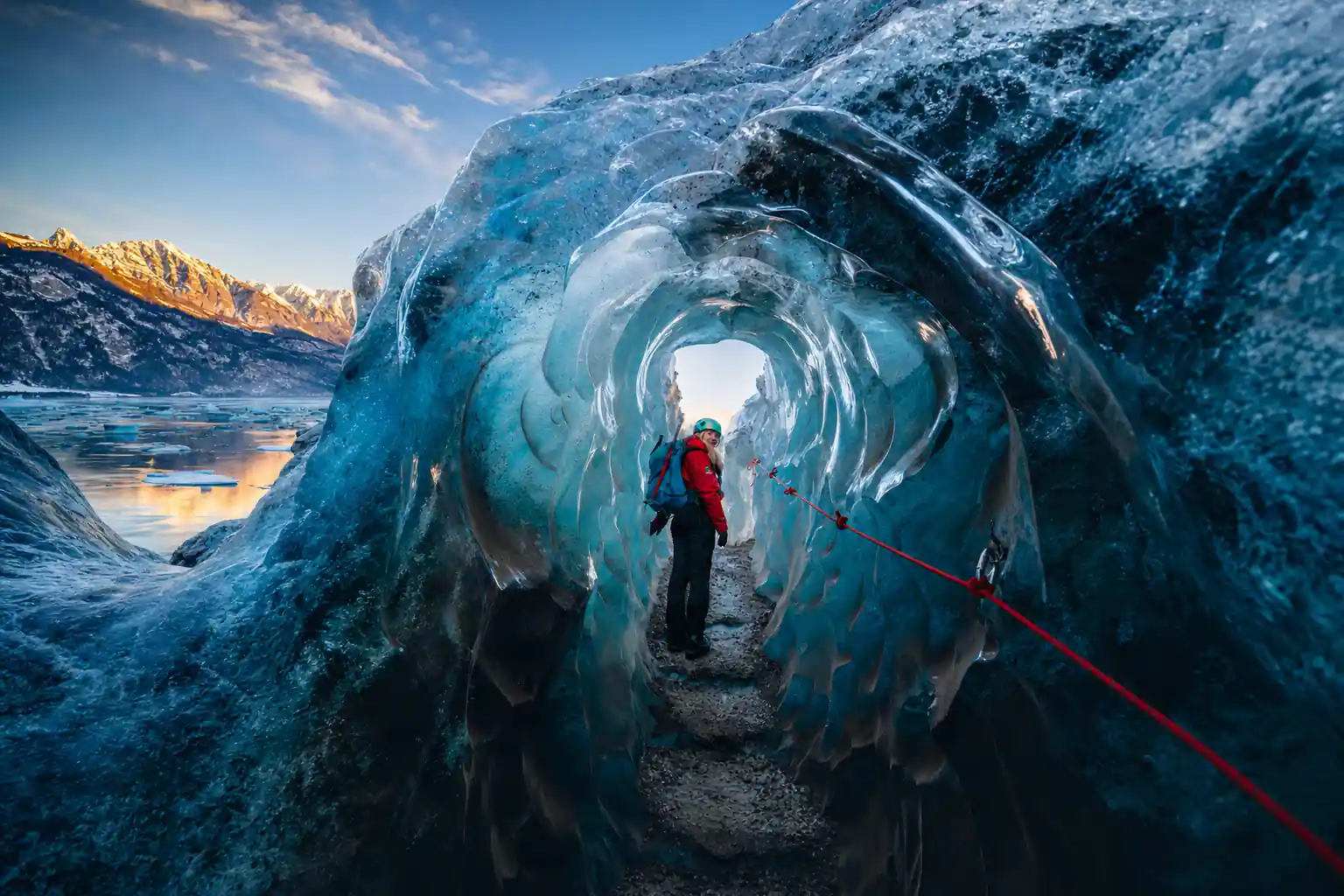
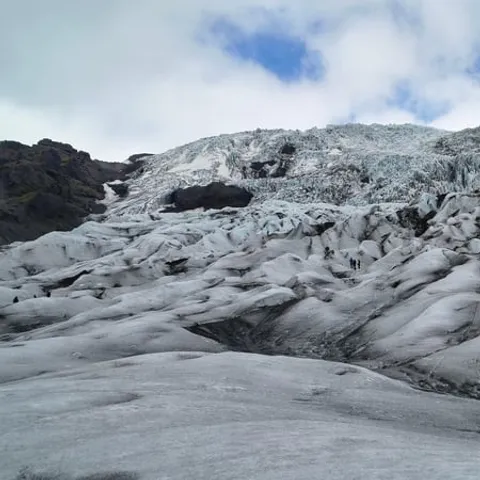
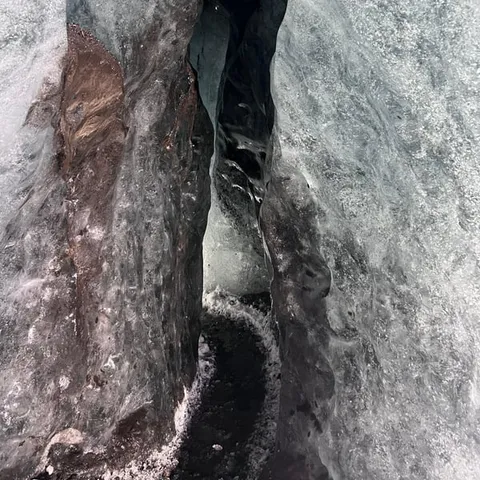
Skaftafell is easily accessible by car from Reykjavík , which is about 327 km (203 miles) away, a drive that takes approximately 4.5 hours via Route 1, also known as the Ring Road.
Snowmobiling and glacier hiking in one trip
Before you leave
- Aim for the ice cave window, November to March, when caves in Vatnajökull's outlet glaciers are accessible.[3]
- Allow approximately 4.5 hours to drive from Reykjavík to Skaftafell via Route 1.[4]
- Skaftafell parking: 1,110 ISK for a car of 5 or fewer seats.[8]
- Reserve now and pay later, free cancellation up to 24 hours ahead.[5]
On the ice
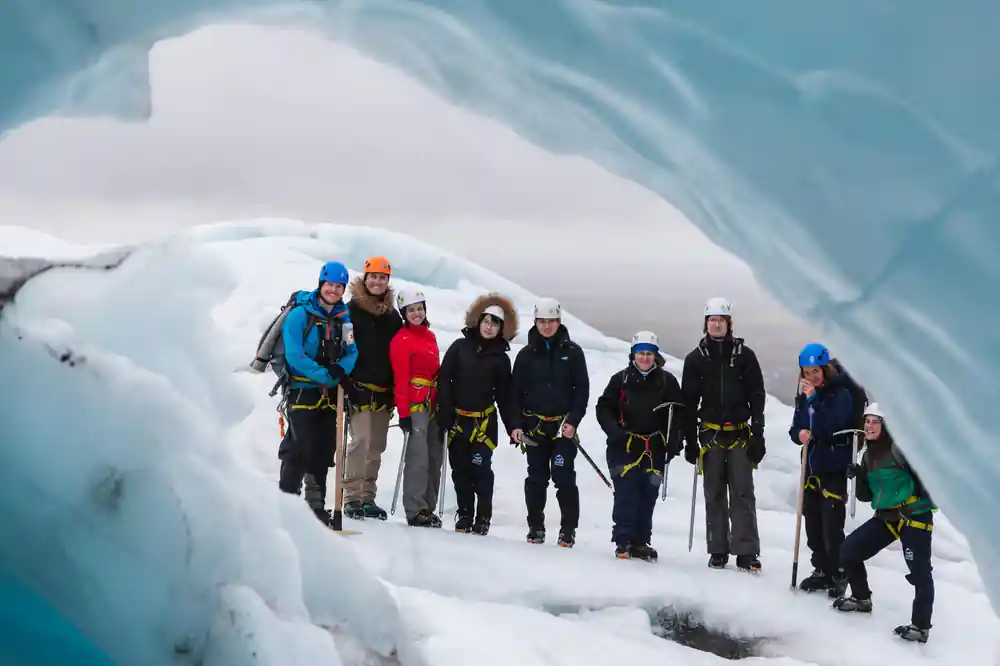
- The Blue Ice Cave and Glacier Hike caps groups at 12 participants.[5]
- Waterproof shell, warm mid-layers, gloves, hat and sturdy boots; the wind does the rest.
- Follow your guide's line on the glacier and stay clear of the ground they mark off.
- Jökulsárlón is 35.4 miles (57 km) from Skaftafell, about 50 minutes by road.[9]
What a Vatnajökull snowmobile tour really involves
Riding a snowmobile on a glacier is not a trail ride through a forest. You are on an ice cap, following a guide in a line across a surface that can be wind-scoured and flat one hour and drifted the next. There is engine noise, a lot of cold wind, and long views of white that run past the point where you can pick out a horizon. Operators brief the group before setting off and keep everyone in single file, so nobody drops into a hollow unannounced.
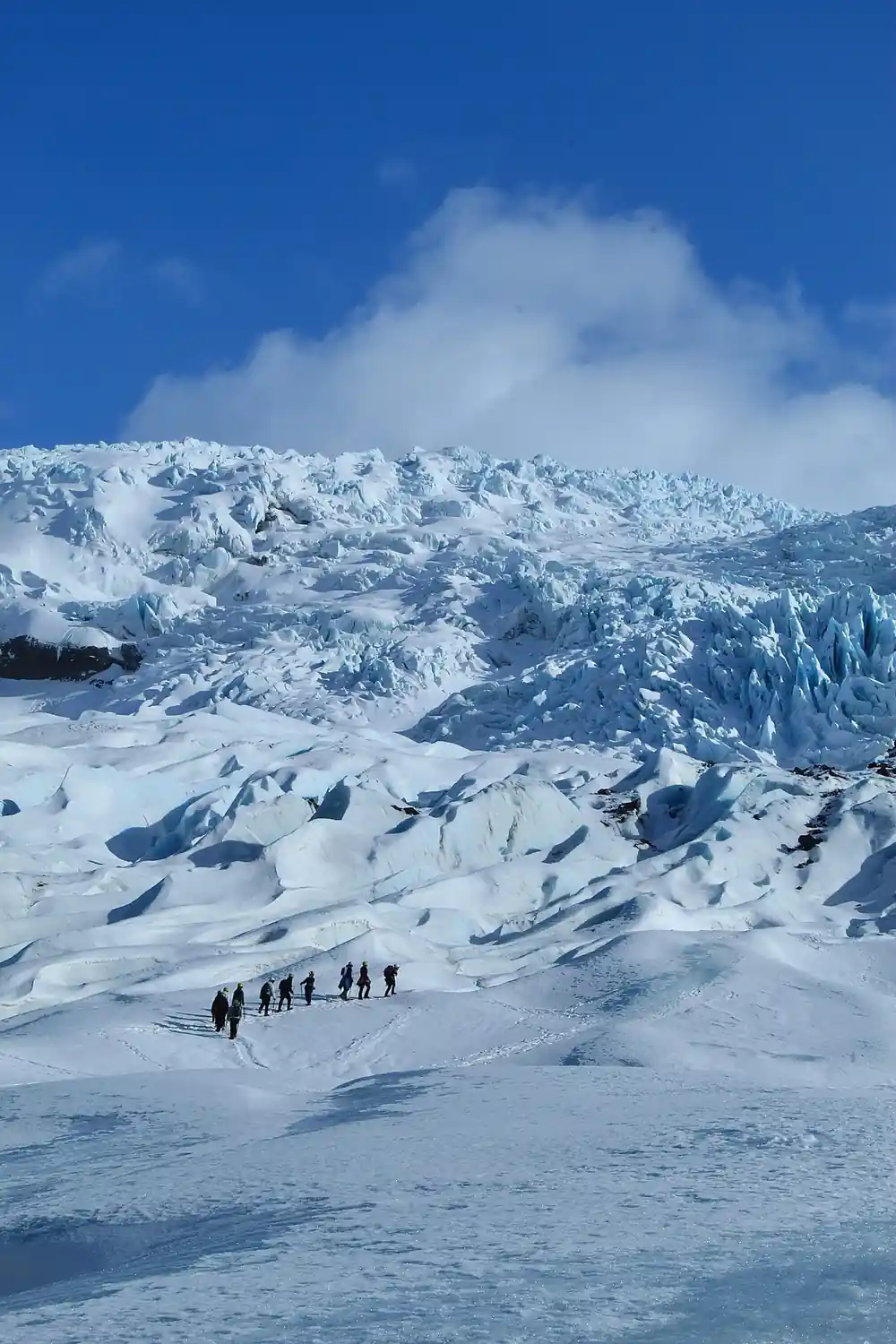
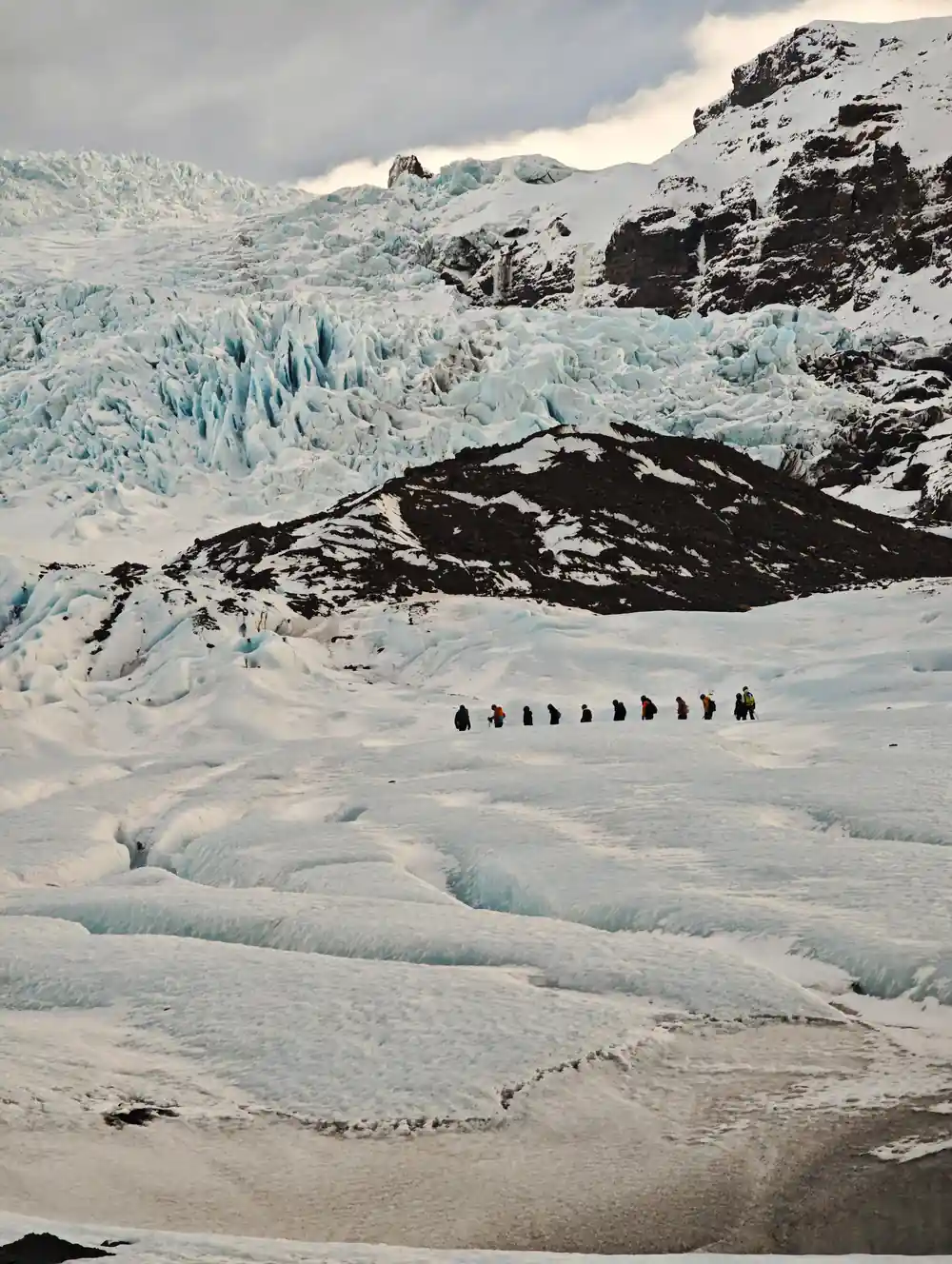
In Iceland, snowmobile glacier tours include departures from Reykjavík that run 10 hours from US$399[2], from Gullfoss over 4 hours from US$297[10] and from Geysir over 4.5 to 5 hours from US$311[11] onto Langjökull. Around Skaftafell, the guided trips on Vatnajökull are ice cave and glacier hikes, usually on Falljökull, a striking outlet glacier of the vast Vatnajökull ice cap.[12]
It helps to treat the snowmobile tour in Iceland and Vatnajökull glacier walking as two different purchases. One is a motorised crossing of an ice cap with a throttle in your hand. The other is a slower walk on crampons, close to blue ice, crevasses and the meltwater channels that cut across the surface each summer.
How large Vatnajökull really is
Vatnajökull has a surface area of approximately 8,100 square kilometres (3,127 square miles) and is the largest glacier in both Iceland and Europe.[1] The ice averages about 380 metres thick, and in places it is almost a kilometre deep.[13] Under that weight sit subglacial volcanoes, and the three most famous are Grímsvötn, Öraefajökull and Bardarbunga.[14]
The national park around the ice cap was inscribed on UNESCO's list of World Heritage Sites on 5 July 2019.[15] It is also a landscape on the move: since the year 2000 Icelandic outlet glaciers have retreated exceptionally fast, and their mass loss is among the highest recorded in the world.[16] Above the sandur and the lagoons, Hvannadalshnúkur reaches 2110 m (6900 ft).[17]
That scale is why operators work from different corners of the country. A walk out of Skaftafell, a departure from Jökulsárlón and a snowmobile ride onto a completely different ice cap are not interchangeable days out, even when the photos all show blue ice and white snow.
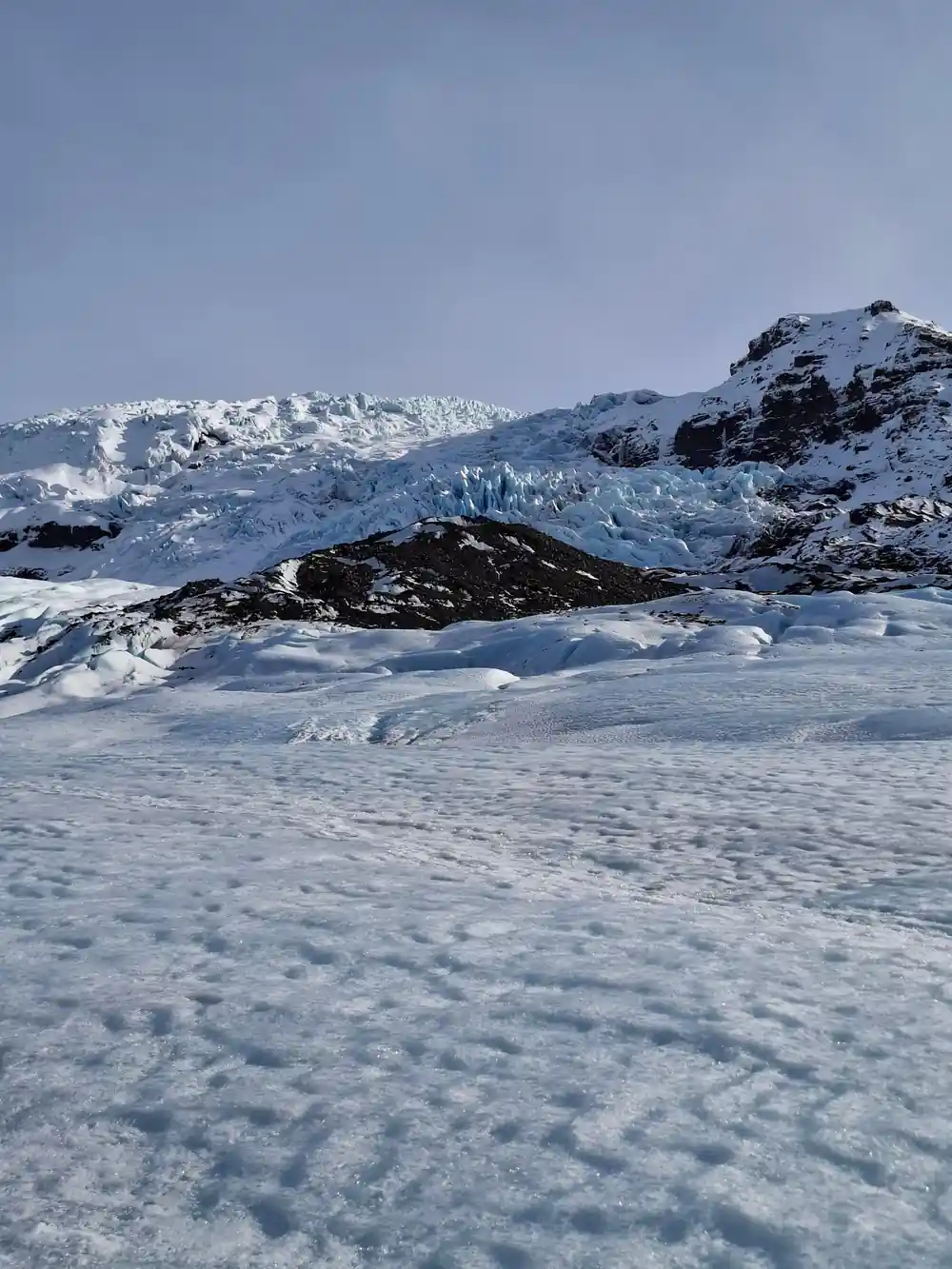
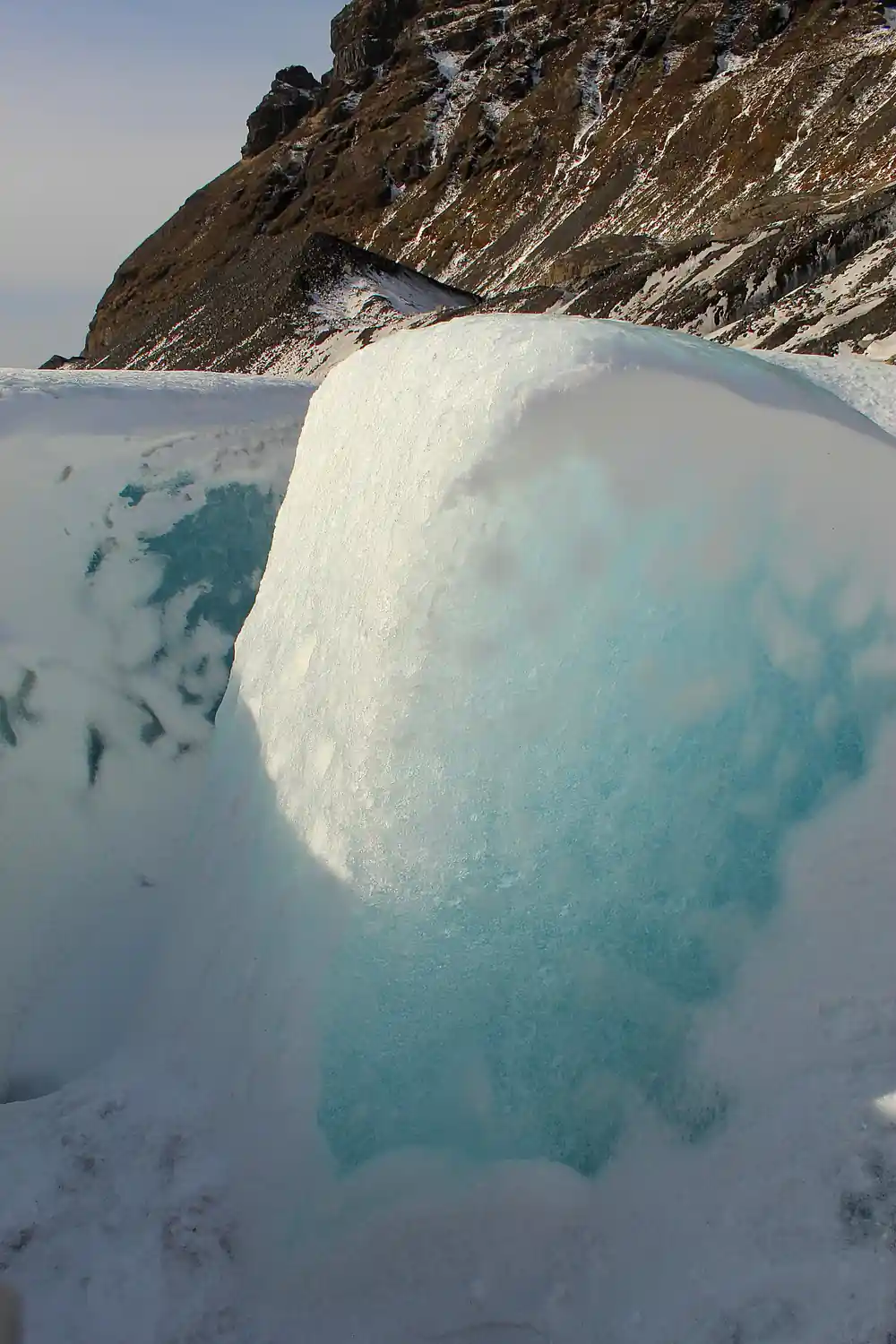
Blue ice forms where snow is compressed for decades and most of the air is squeezed out.
Ice cave season on Vatnajökull
Ice caves in Vatnajökull's outlet glaciers are only accessible during the winter months, from November and usually throughout March, depending on the weather.[3] That is the window when guided visits into the meltwater tunnels and chambers are possible, and it is the reason winter dates disappear first. Outside that window the ice is still there to walk on, but the caves are not accessible.[3]
If you are travelling outside the winter window, one natural ice cave in Iceland can be visited year-round: the Katla Ice Cave in Mýrdalsjökull Glacier, formed by the volcanic glacier that sits above the Katla volcano.[18] Blue ice looks the way it does because the ice has been compressed until most of the air is squeezed out, so light travels deeper into it before bouncing back, and what returns to your eye is that dense blue.
Guides choose which cave to visit on the day, and no two winters open the same tunnels. What you walk through is re-formed water: melt from the summer surface running under the ice, freezing into new ceilings and pillars, then closing again when the melt returns. Photographs rarely capture how dark the ice can look until a torch or a shaft of daylight reaches it, or how quickly the ceiling shifts from clear blue to grey-black as you go deeper.
Getting to Skaftafell and around the park
Skaftafell is about 327 km (203 miles) from Reykjavík by car via Route 1, a drive that takes approximately 4.5 hours.[4] The road is good for most of the way, but the last stretch crosses open country where wind and rain arrive fast, so plan fuel, food and a break before you need them. From Skaftafell, the direct drive to Jökulsárlón is 35.4 miles (57 km) and takes about 50 minutes in normal traffic.[9]
Parking at Skaftafell is subject to a regional fee, with a passenger car of 5 or fewer seats charged 1,110 ISK.[8] The Skaftafellsstofa Visitor Centre opens 10-17 in January and February, 9-17 in March to May, 9-19 in June to August, 9-18 in September and October, 9-17 in November and 10-17 in December.[19] It is the sensible first stop for maps, trail conditions and a warm few minutes before a tour.
Fuel up in the larger settlements before the long empty stretch, carry food and water, and check road and weather conditions before you set off, because wind on exposed sections changes the feel of the drive completely. If you would rather not drive, the Jökulsárlón Glacier Lagoon and Diamond Beach tour from Reykjavík offers pickup, with options to check when you book.[20]
from US$167
Small group glacier hiking and a blue ice cave on Vatnajökull, 4 hours, from US$167, free cancellation up to 24 hours ahead.[5]
Snowmobile ride or glacier hike: how to choose
The Blue Ice Cave & Glacier Hike on Vatnajökull runs 4 hours in a group limited to 12, from US$167.[5] The Blue Ice Glacier Hike also runs 4 hours, from US$106.[6] The Skaftafell ice cave and glacier hike is 4 hours from US$162[7], and the Jökulsárlón ice cave tour is 3 hours from US$164.[21] Snowmobile rides on an ice cap sit at the higher end of that range.
Think about the kind of morning you want. A snowmobile day is noisy, fast and surprisingly physical across the shoulders and arms after an hour of holding a line on rough ice. A glacier walk is slower and more conversational, with time to look at crevasses, meltwater and the shape of the ice. For easy glacier hikes such as the Blue Ice Experience on Skaftafell, the minimum age is 8 years old, and more difficult glacier walks may set a higher age.[22]
Whichever you pick, the day is guided, and the pace is set for the slowest person in the line, so a fit walker and a nervous first-timer often end up on the same outing. Say something if you are unsure on steep ground. Waterproof trousers and gloves make more difference than fitness on a cold, wet morning, and a small backpack with a spare layer is easy to carry.
What to wear on a glacier day
Glacier weather is not town weather. Bring a waterproof shell and trousers, a warm mid-layer, a hat, gloves and boots with some grip, and leave cotton at home because it holds water and chills you once you stop moving. Sunglasses matter on bright snow, and a dry bag or a waterproof phone pouch keeps a camera usable when the wind picks up.
The Skaftafell: Blue Ice Cave & Glacier Hike on Vatnajökull lasts 4 hours and runs with a live tour guide in English, in a group limited to 12 participants.[5] It comes with free cancellation up to 24 hours in advance, so you can reserve now and pay later while you watch the forecast.[5] Starting times are shown when you check availability for your date.[5]
Routes, seasons and a sensible plan
If you are coming from Reykjavík, a long day trip down the south coast reaches the glacier country and returns the same evening; the Jokulsarlon Glacier Lagoon and Diamond Beach tour runs 14 hours from US$232.[23] Once you are east of Skaftafell, Jökulsárlón is worth an hour, and its amphibian boat tour lasts 30-40 minutes.[24] Staying overnight near the ice cap turns a rushed day into two calm ones.
For lodging near the ice, Fosshotel Glacier Lagoon is a four-star superior hotel a stone's throw from Skaftafell, with 125 rooms.[25] Winter cave dates fill quickly, so book the guided part of the trip first and build the driving and sleeping around it. Keep one flexible day in the plan for weather, and treat any clear, calm morning as the day to get out on the ice.
Keep the plan simple. Base yourself near the ice for a couple of nights, drive out to the lagoon in the morning light, walk a glacier the next day, and leave the rest of the itinerary loose. Weather decides more here than any booking, and a flexible plan is the one that gets you onto the ice when it clears.
Glacier tour prices in the Vatnajökull area
From-prices in US dollars, each stated by its GetYourGuide listing:[5][6][7][21].
Compare from-prices per person
From-prices per person from GetYourGuide listings:[5][6][7][10][21]. Child rates are not shown in these listings.
When to plan your glacier day
Plan your glacier day
Pick your base
Skaftafell sits about 327 km (203 miles) from Reykjavík, roughly 4.5 hours along Route 1.[4]
Choose a length
The Blue Ice Cave & Glacier Hike runs 4 hours, and a glacier hike on its own also runs 4 hours.[5][6]
Book the cave season
Ice caves in Vatnajökull are accessible from November and usually throughout March, depending on the weather.[3]
Sort parking
Parking at Skaftafell carries a regional fee of 1,110 ISK for a passenger car of 5 or fewer seats.[8]
Check the start time
Duration is 4 hours, and starting times are shown when you check availability for your date.[5]
Ride, walk or crawl through the blue ice of Vatnajökull
from US$167Reserve now & pay later