If you read nothing else
- Easy glacier hikes in Iceland list a minimum age of 8 years old; more difficult glacier walks may ask for a higher minimum age.[1]
- The ice caves in Vatnajökull are only accessible during winter months, from November and usually throughout March, depending on the weather.[2]
- The Skaftafell blue ice cave and glacier hike runs 4 hours with a live English-speaking guide, and the group is limited to 12 participants.[3]
- An ice cave is a passage through the ice, so if narrow places bother you, a surface glacier hike keeps you above ground the whole way.
- Reserve now and pay later, with free cancellation up to 24 hours in advance for a full refund on the Skaftafell ice cave tour.[3]
- Top choice Skaftafell Ice Cave & Hike from US$167 Duration4 hours[3]Rating4.62 from 848 reviews[3]GuideLive tour guide: English[3]Group sizeLimited to 12 participants[3]Free cancellationUp to 24 hours in advance[3] Check availability
- Ice Cave and Glacier Hike from US$162 Duration4 hours[4]Rating4.53 from 1,962 reviews[4]GuideLive tour guide: English[4]Group sizeLimited to 12 participants[4]Free cancellationUp to 24 hours in advance[4] See this tour
- Blue Ice Glacier Hike from US$106 Duration4 hours[5]Rating4.71 from 1,357 reviews[5]GuideLive tour guide: English[5]Group sizeNo group size given on the listingFree cancellationUp to 24 hours in advance[5] See this tour
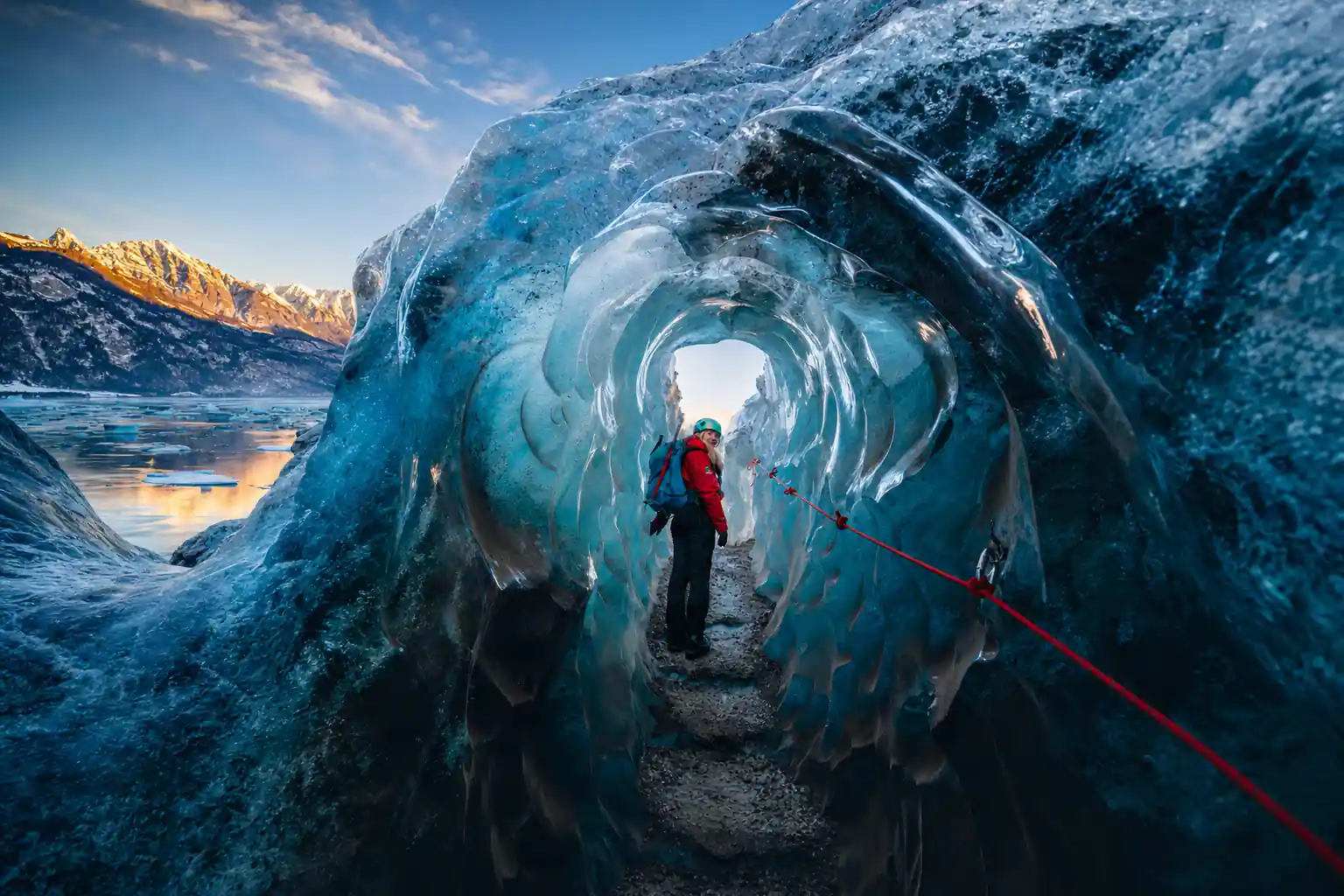
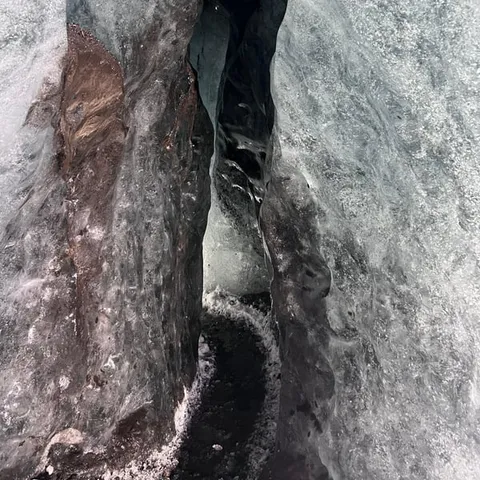
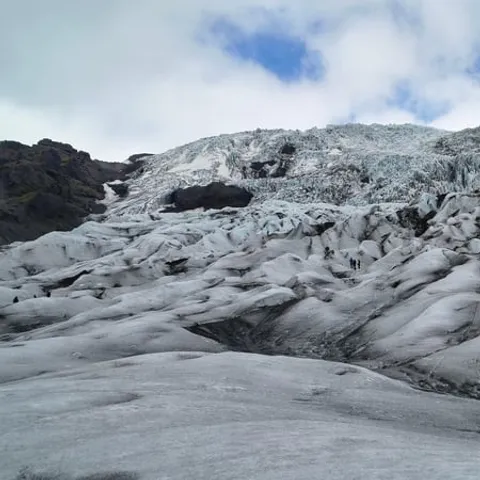
Both the Glacier Discovery on Sólheimajökull and the Blue Ice Experience on Skaftafell tours are classed as easy glacier hikes with a minimum age requirement of 8 years old. If you are hoping to go on a more difficult glacier walk, the minimum age requirement may be higher.
Who this ice cave tour suits, and who should pick another
Know this first
Getting there and on the day
Minimum age and youth requirements
Age rules are set per tour rather than per glacier, so the line to check is the one on the listing you are actually booking. For easy glacier hikes in Iceland, the minimum age requirement is 8 years old, and that figure is given for the Glacier Discovery on Sólheimajökull and the Blue Ice Experience on Skaftafell; if you are hoping to go on a more difficult glacier walk, the minimum age requirement may be higher.[1] Families with younger children are better off on the gentler walks and saving the steeper ice for a later trip.
The Skaftafell blue ice cave and glacier hike is a 4-hour day, with a bus or coach ride out to Vatnajökull and Falljökull and the same ride back at the end.[3] That span sounds short on paper and feels longer on ice, where every step costs a little more than a step on gravel and the cold creeps in whenever you stop. Children who are used to walking and can carry a small backpack usually manage the day well.
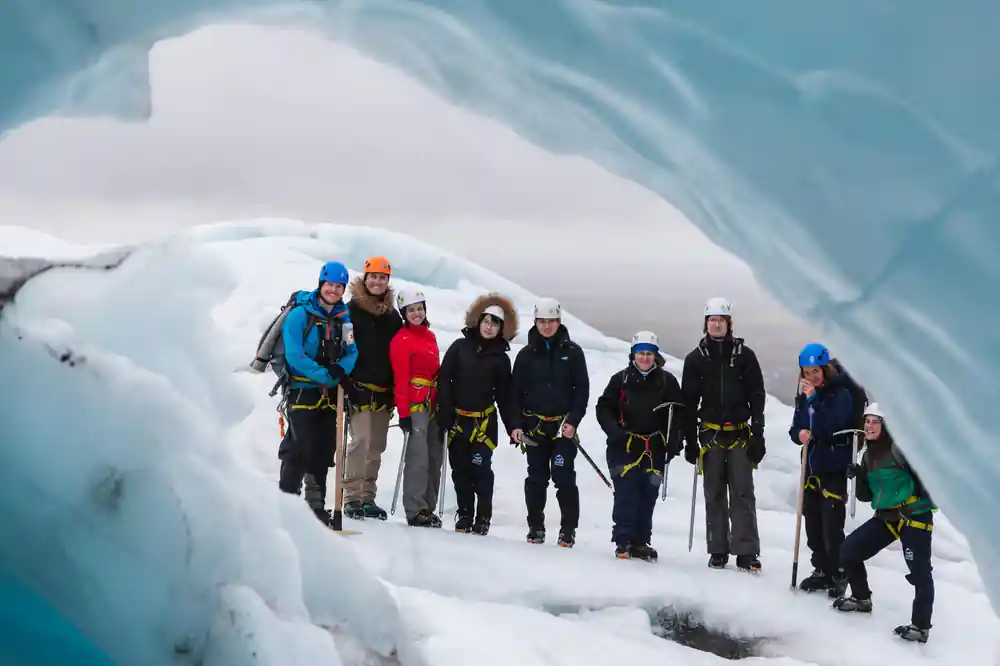
Group size helps here. The tour is limited to 12 participants,[3] so the guide can keep an eye on everyone, pause when someone needs a breather, and hold the line together on the ice. Starting times move with the date, so look at the slot you want before you build the rest of the day around it.[3]
Fitness level and physical demands
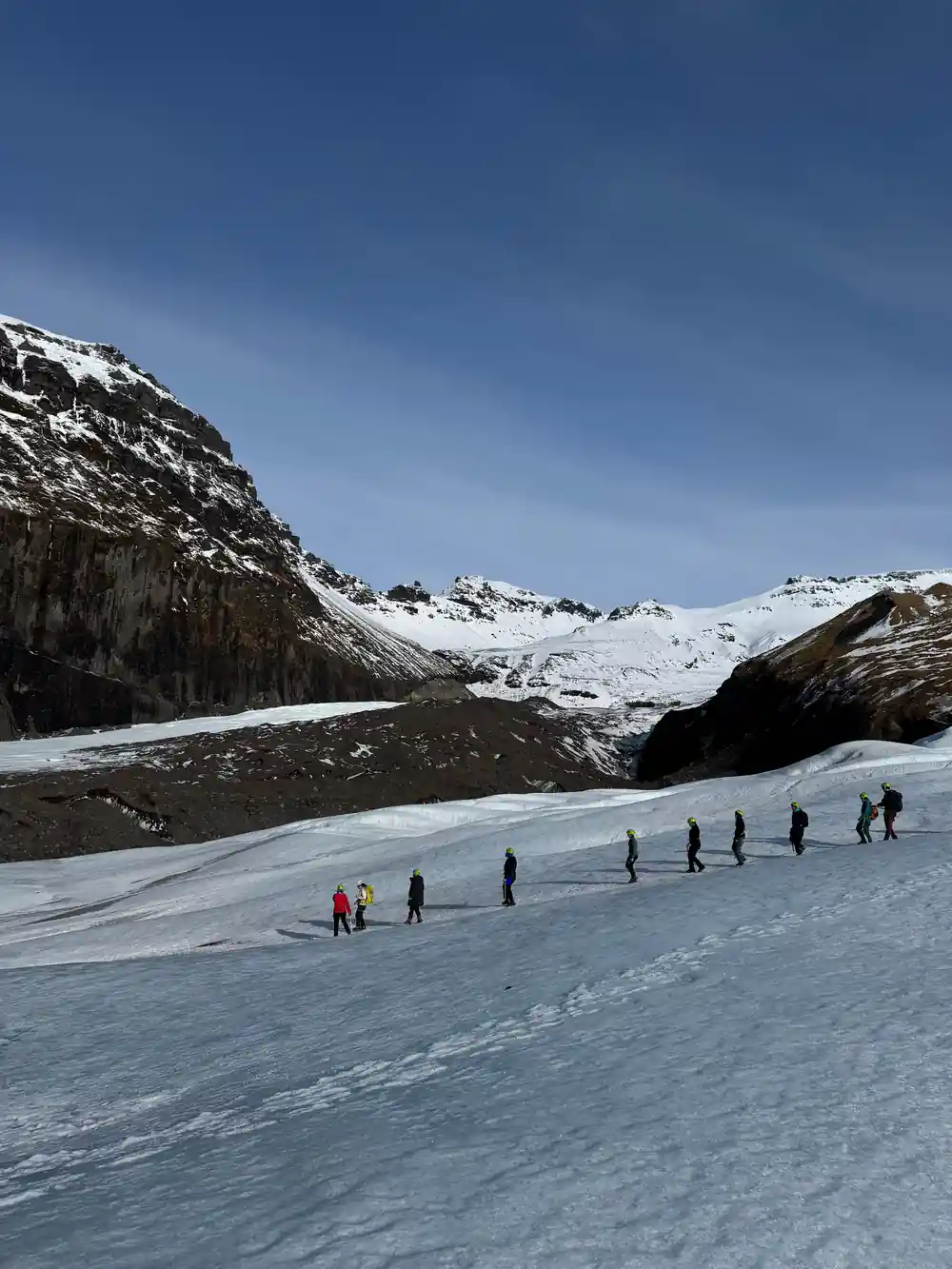
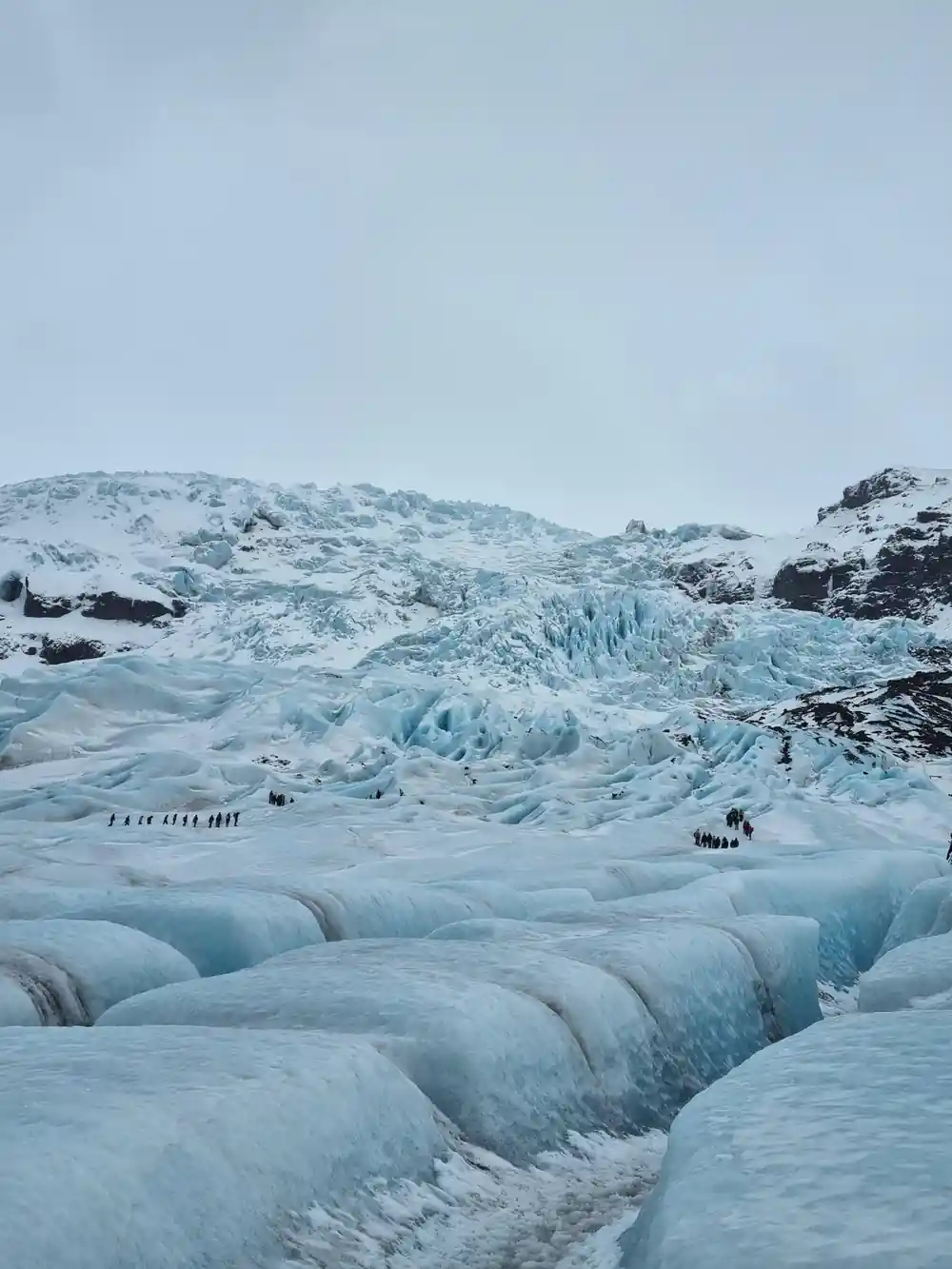
The honest answer is that you need to be able to walk for a few hours on uneven ground in cold air, with a guide setting a pace that suits the group. Falljökull, where the Skaftafell tours head, is a striking outlet glacier of the vast Vatnajökull ice cap.[8] Underfoot there is ice and packed snow, sometimes with a crust that breaks under your weight, sometimes bare blue ice with a sheen of water on top.
Vatnajökull covers approximately 8,100 square kilometers (3,127 square miles) and is the largest glacier in both Iceland and Europe,[9] and the ice averages about 380 metres thick, though in places it is almost a kilometre deep.[10] You are walking along the ragged edge of something enormous, and that scale is the part most people remember afterwards.
If that sounds like more than you want, there are shorter glacier walks from the same area, including a 3-hour option[11] and a 2.5-hour short glacier encounter walk with a 4x4 transfer from US$121.[12] At the other end of the range sits a 5-hour advanced hike on Falljökull limited to 10 participants.[13] Choose the number of hours you can enjoy rather than the number you can survive.
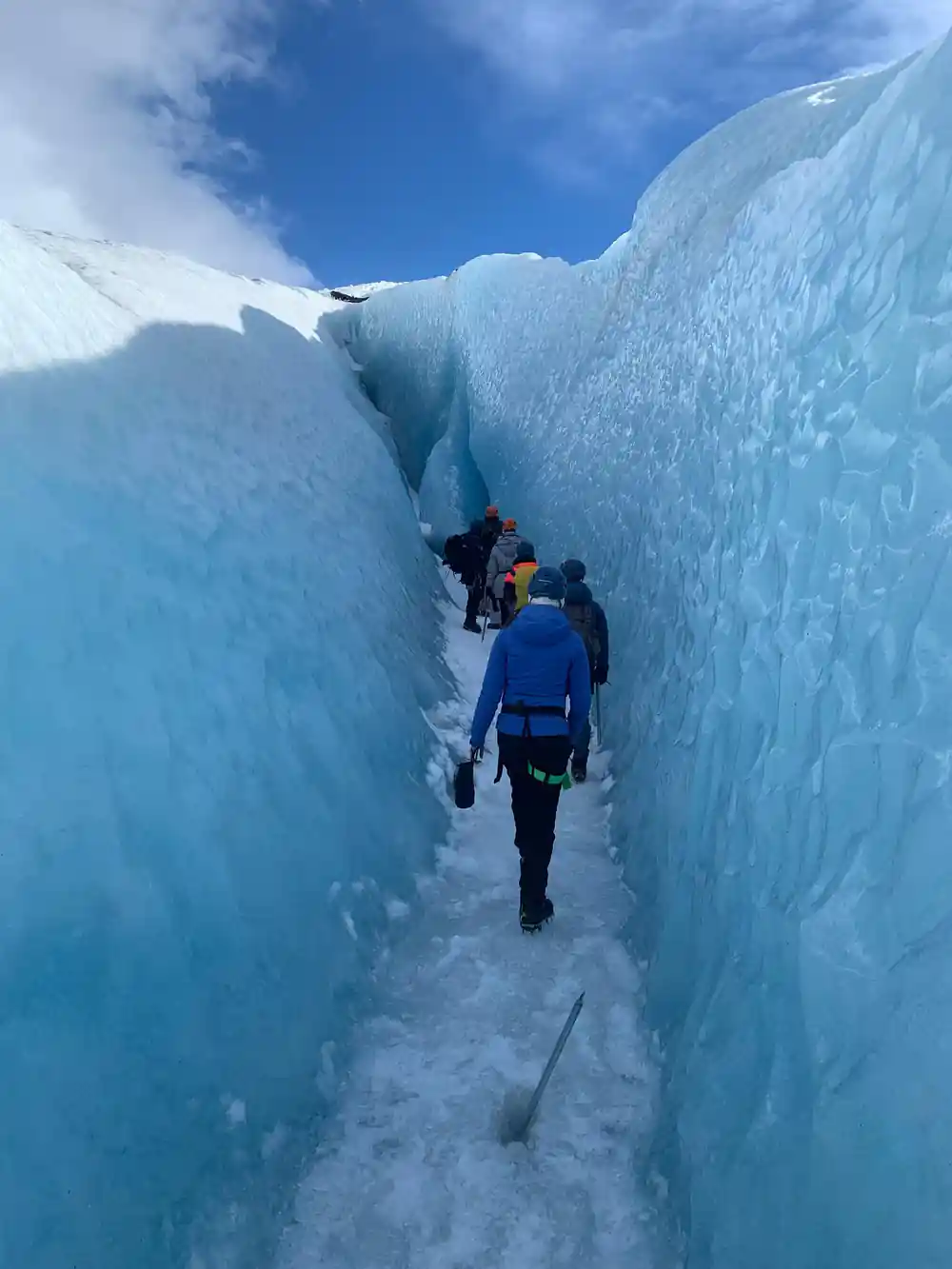
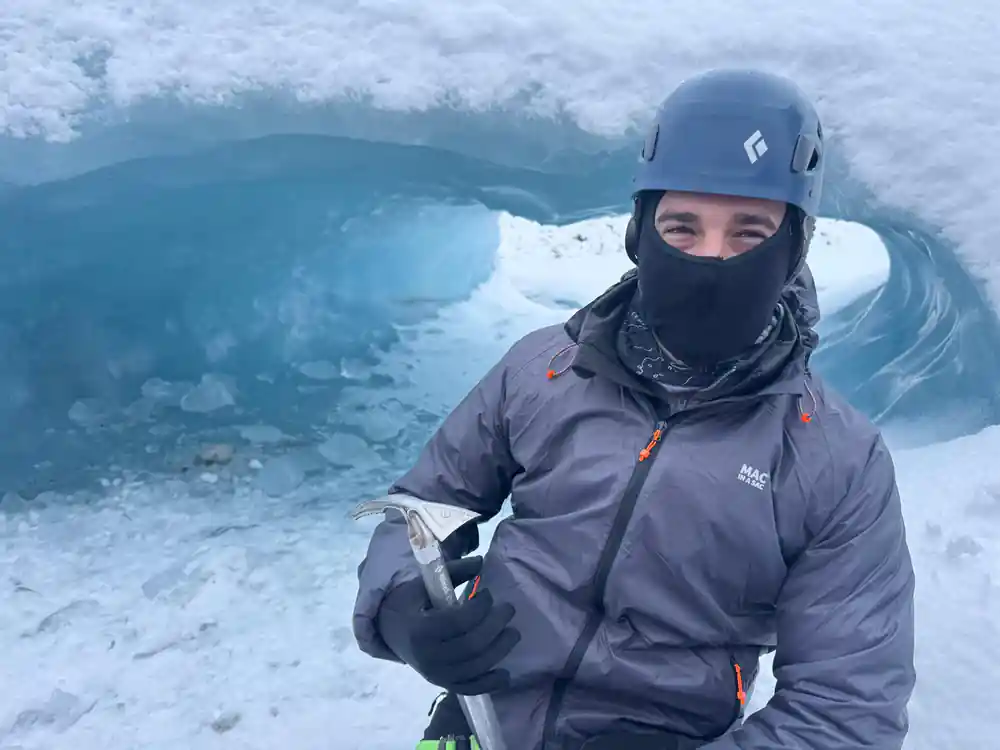
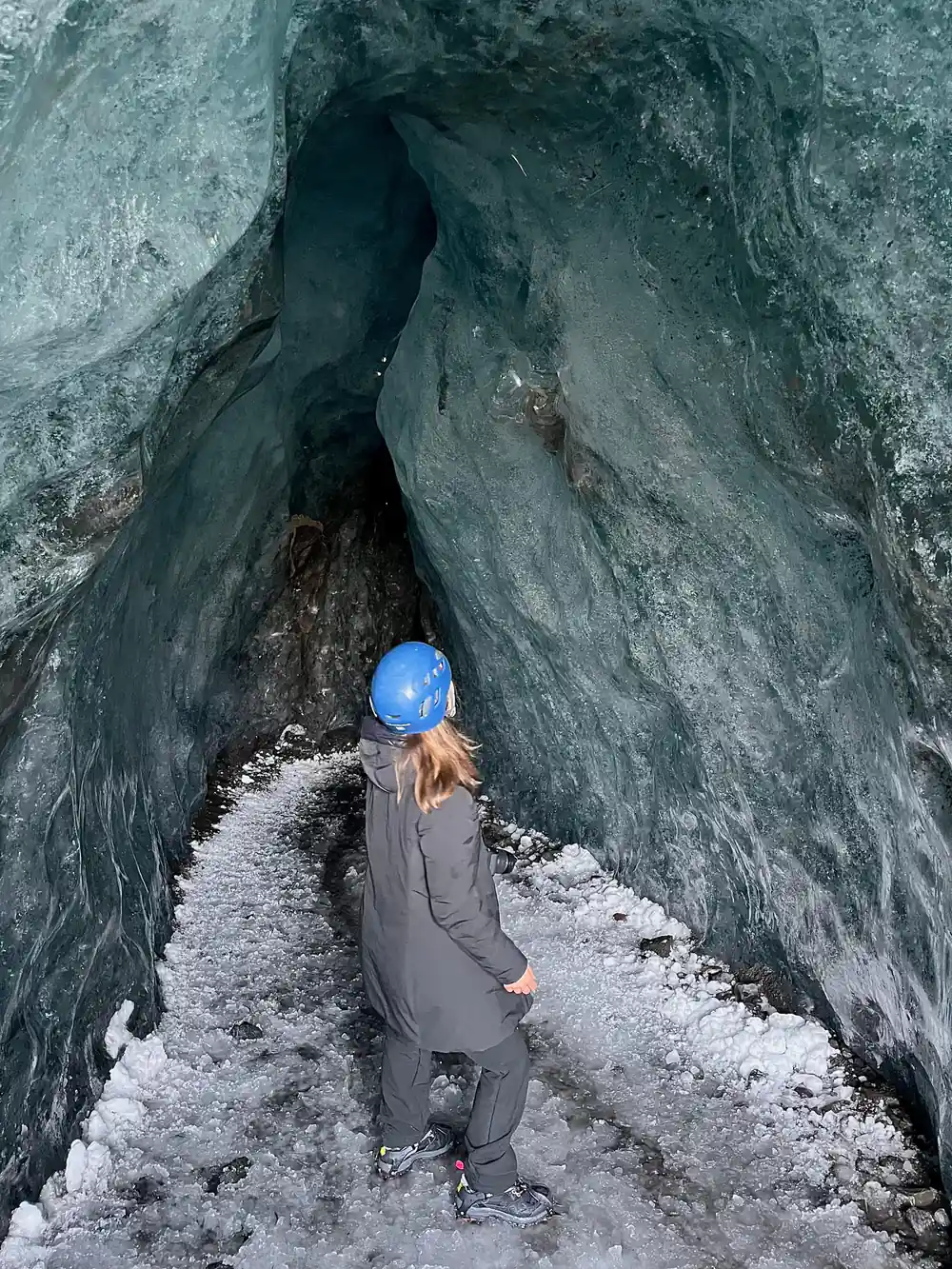
Blue ice, narrow passages and daylight at the cave mouth.
Claustrophobia and the blue ice cave
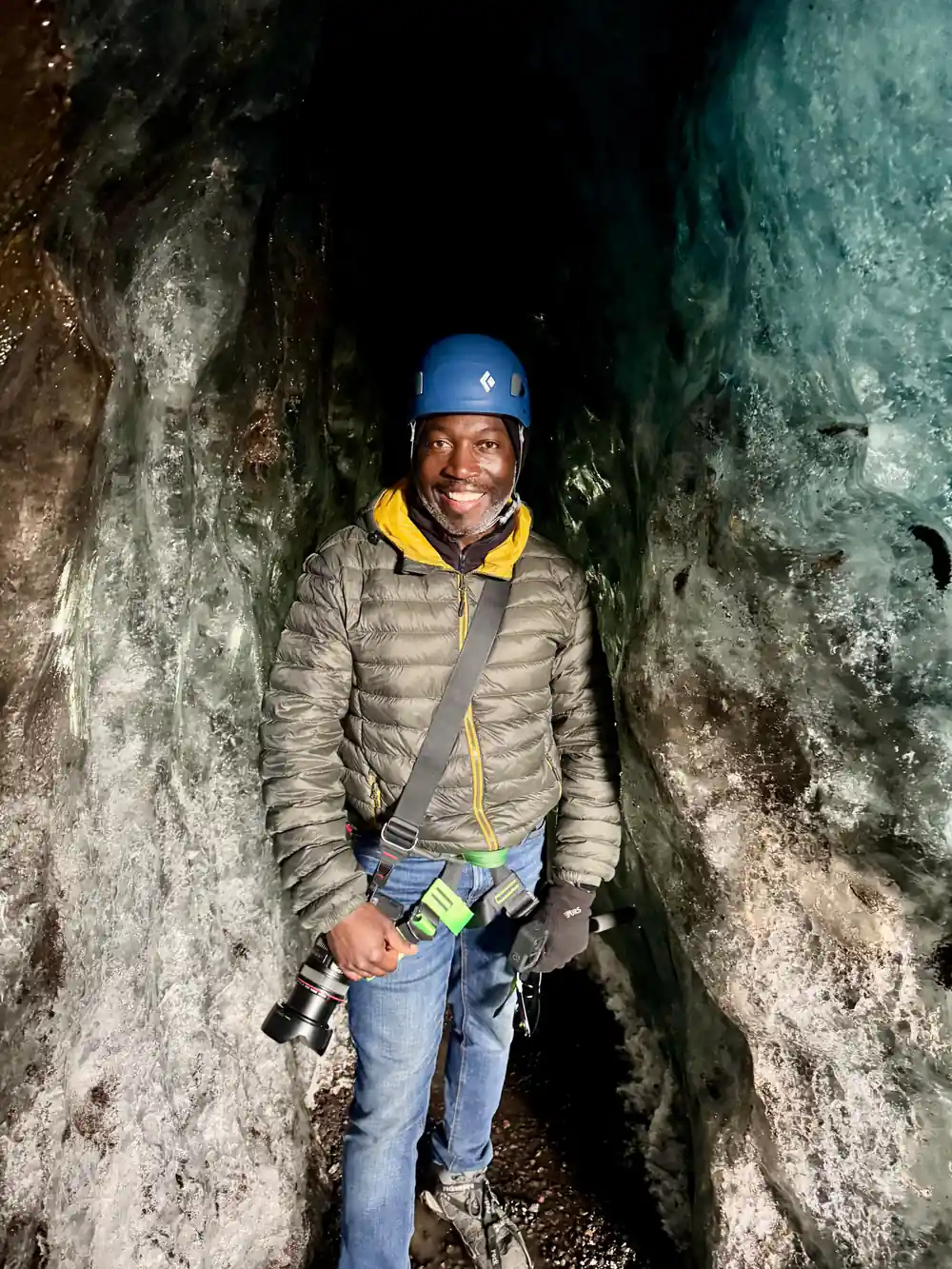
An ice cave is a tunnel or a passage carved and melted inside the glacier, not a wide hall with a ceiling. You walk in single file, duck where the roof drops, brush the walls with a gloved hand, and come out somewhere else. If small spaces make your chest tighten, the moment to decide is before you book, not at the cave mouth.
The caves in Vatnajökull are only accessible during winter months, from November and usually throughout March, depending on the weather.[2] Outside that window the glacier trips stay on the surface, which is a very good day in its own right.
If you are looking for an ice cave in Iceland without a tour, the closest thing is a surface glacier hike. The 4-hour Blue Ice Glacier Hike from US$106 keeps you on the ice above ground,[5] and a 3-hour Falljokull easy group hike limited to 14 participants, also from US$106, does the same.[11] You still get blue ice, crevasses and quiet, with open sky over your head the whole way. If you would rather test a smaller space first, a short walk into a cave mouth and straight back out is easier to handle than a long underground stretch.
Group numbers matter for nerves as much as for safety. With 12 people on the Skaftafell ice cave and glacier hike[3] you are never strung out along a passage on your own, and the guide is close enough to talk you through the tightest few metres.
Knee, back and joint health considerations
Glacier walking is gentler than mountain walking in one way and harder in another. The gradients on a guided glacier walk are mostly modest, but the ground is never regular, and your ankles, knees and hips spend the day making small adjustments they would never make on a path.
Length is the lever you control. There is a 3-hour hike limited to 14 participants from US$106[11] and a 5-hour advanced hike limited to 10 participants from US$164,[13] with the 4-hour tours sitting in between.[3] If the longest option sounds like a stretch, a gentler walk on the same glacier is a real option rather than a consolation prize.
Tell your guide at the start about a knee, hip or back problem. With 12 people on the Skaftafell ice cave and glacier hike[3] there is room to slow the pace, take a longer stop, or turn around earlier. If you use walking poles at home, ask about them when you book, and think about whether your boots are stiff enough to hold an ankle on slushy ice.
from US$167
Skaftafell: Blue Ice Cave & Glacier Hike on Vatnajökull is limited to 12 participants and rated 4.62 from 848 reviews.[3]
Pregnancy and special medical conditions
None of this is medical advice. If you are pregnant, or you manage a heart condition, epilepsy, diabetes or a recent injury, talk to your own doctor first and then to the tour operator before you pay. Cold air, crampons and uneven ice ask more of a body than a flat walk in town, and only you and your doctor know where your limit sits.
Two things make that easier. Tours on this coast run with a live English-speaking guide,[3] so you can explain your situation in plain language at the meeting point rather than through a form. And the Skaftafell listing offers free cancellation up to 24 hours in advance for a full refund,[3] which leaves you room to pull out if the day does not feel right.
Think about the cold as much as the walking. South coast weather turns fast and the glacier is colder than the car park below it. Layers you can add and strip, gloves you can still work a camera in, and a spare hat are the difference between a good day and a shivering one.
Group size, guides and what to expect
The Skaftafell blue ice cave and glacier hike is limited to 12 participants, runs 4 hours and has a live tour guide in English.[3] Its listed route is a bus or coach out, then Vatnajökull, then Falljökull, then the bus or coach back.[3]
Group sizes elsewhere on the same ice vary. A 3-hour Falljokull easy group hike is limited to 14 participants,[11] while an extra-small group glacier hike from US$162 is limited to 8 participants.[14] Smaller groups move at a gentler rhythm, with more stops and more chances to ask the guide what you are looking at.
A typical half day runs like this: meet in the Skaftafell area, collect and fit your kit, travel to the ice, spend your time on the glacier and in the cave, then travel back. Leave slack either side of your slot, because starting times vary by date and the drive from Reykjavík is a long one.[6]
Crevasse risk, rockfall and turning back
A glacier is not a fixed landscape. Routes are chosen on the day, and the ice under your feet is moving, cracking and draining the whole time. Icelandic outlet glaciers have retreated exceptionally fast since the year 2000, and their mass loss is among the highest recorded in the world.[15] Guides read the ice fresh each morning rather than following last week's line.
Weather has the final word. Ice cave access runs from November and usually throughout March, depending on the weather,[2] so a mild, wet spell can change what is safe. Turning around is a normal part of winter on Vatnajökull, and a guide who calls it early is doing the job well.
The setting is worth the caution. The three most famous subglacial volcanoes under Vatnajökull are Grímsvötn, Öraefajökull and Bardarbunga.[16] Hvannadalshnúkur rises to 2110 m (6900 ft) in the same corner of the country,[17] and the national park around you was inscribed on UNESCO's list of World Heritage Sites on 5 July 2019.[18]
How long the Vatnajökull guided tours run
From-prices for guided ice cave and glacier days
From-prices in US dollars taken from the tour listings.[3][4][5][19]
When the ice caves and facilities are open
Know this first
Check the age line
Easy glacier hikes in Iceland list a minimum age of 8 years old, and harder glacier walks may set a higher minimum age.[1]
Match the hours to your legs
The Skaftafell blue ice cave and glacier hike runs 4 hours, while a Falljokull easy group hike runs 3 hours.[3][11]
Book a way out
Pick a listing with free cancellation up to 24 hours in advance for a full refund.[3]
Plan the drive
Skaftafell is about 327 km (203 miles) from Reykjavík by Route 1, a drive of approximately 4.5 hours.[6]
Dress for wet cold
Waterproof outer layers, warm gloves and sturdy boots are the usual kit for a day on Icelandic ice.
Step onto Falljökull and into the blue ice with a small group
from US$167Reserve now & pay later