If you read nothing else
- Ice caves in Vatnajökull are only accessible during winter months, from November and usually throughout March, depending on the weather.[1]
- Skaftafell is about 327 km (203 miles) from Reykjavík via Route 1, a drive of approximately 4.5 hours; Jökulsárlón is a further 35.4 miles (57 km).[2][3]
- A Falljökull ice climb and hike is listed from US$253 with a group limited to 6 participants, and takes 4 hours.[4]
- Kayaking on Jökulsárlón lagoon is listed from US$159 for 1.5 hours, and the Vatnajökull lagoon kayaking tour from US$167.[5][6]
- Vatnajökull has a surface area of approximately 8,100 square kilometres (3,127 square miles) and is the largest glacier in both Iceland and Europe.[7]
| Glacier kayaking | Ice climbing | Ice cave and hike | |
|---|---|---|---|
| From | from US$159[5] | from US$253[4] | from US$167[8] |
| Duration | 1.5 hours[5] | 4 hours[4] | 4 hours[8] |
| Rating | 4.66 from 325 reviews[5] | 4.74 from 79 reviews[4] | 4.62 from 848 reviews[8] |
| Live guide | English[5] | English[4] | English[8] |
| Cancellation | Free, up to 24 hours ahead[5] | Free, up to 24 hours ahead[4] | Free, up to 24 hours ahead[8] |
Both the Glacier Discovery on Sólheimajökull and the Blue Ice Experience on Skaftafell tours are classed as easy glacier hikes with a minimum age requirement of 8 years old. If you are hoping to go on a more difficult glacier walk, the minimum age requirement may be higher.
Is an ice cave, climb or kayak day worth it?
Know this first
On the day
- Wear boots with a stiff sole and good grip; the ice is harder and slippier than it looks
- Layer up with a waterproof shell, a warm mid layer, gloves and a hat for the wind
- Skaftafell to Jökulsárlón is 35.4 miles (57 km), about 50 minutes in normal traffic[3]
- Parking at Skaftafell is 1,110 ISK for a car of 5 or fewer seats[10]
Ice climbing and kayaking at Vatnajökull: how a day works
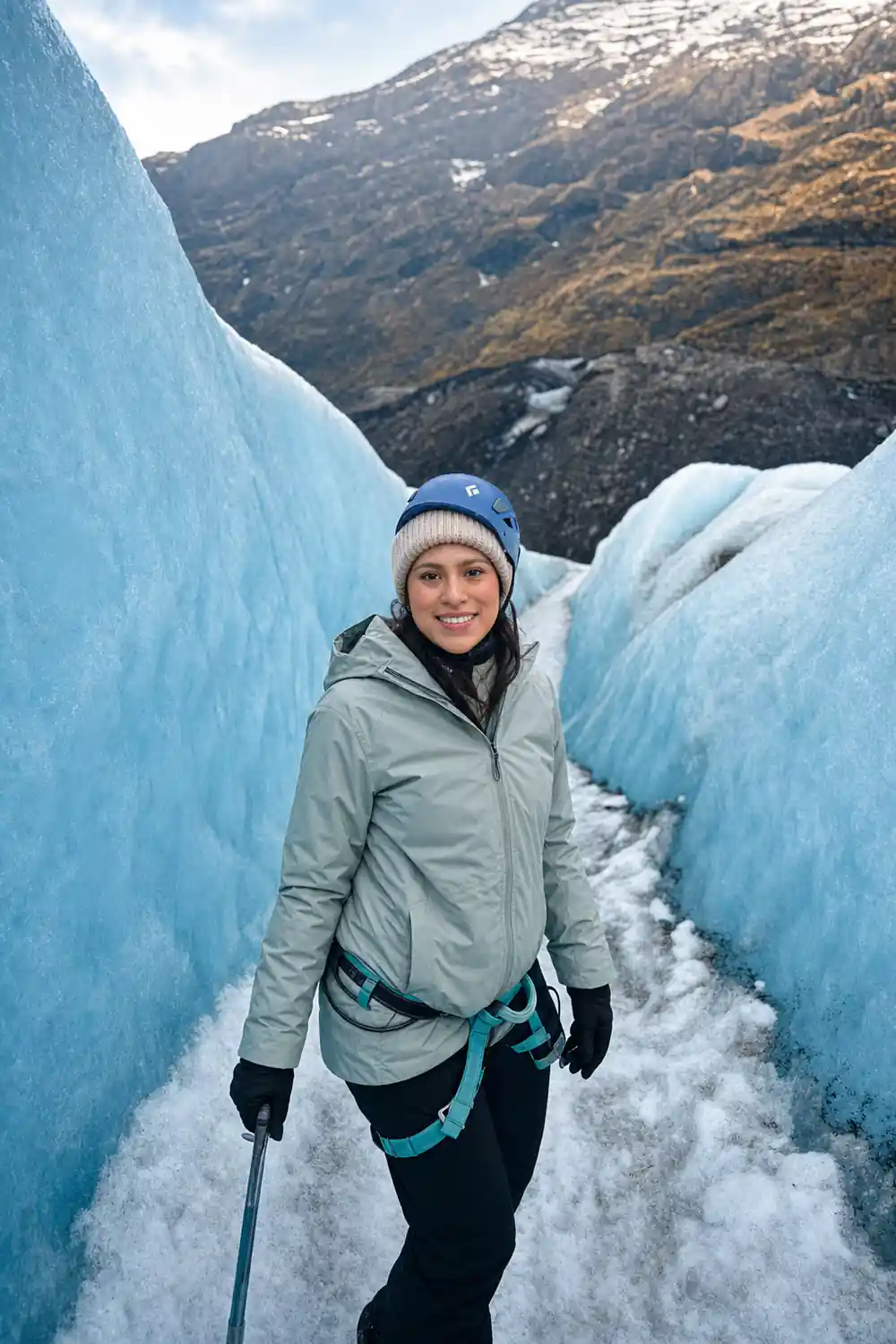
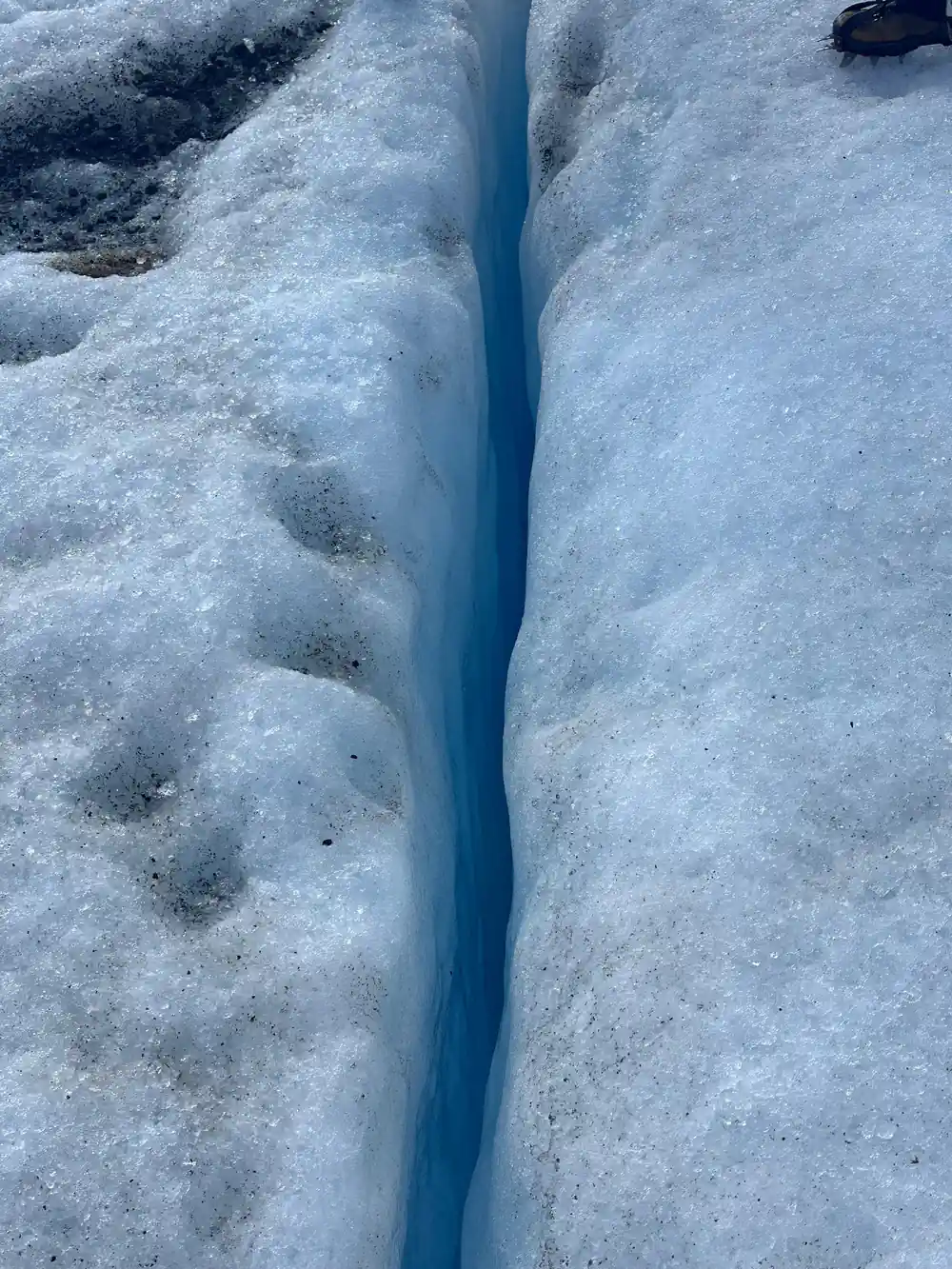
Vatnajökull is a vast expanse of ice, and the adventures on it come in two flavours: climbing on the glacier and paddling beside it. On a guided glacier walk you cross ridges of white and grey ice on foot, passing meltwater channels and crevasses, with a guide choosing a line that suits the group. An ice climbing day adds a rope and an ice axe, so part of the time goes on swinging into a wall of blue ice while your guide holds the line. Kayaking is the quiet option, out among icebergs that have calved from the glacier and drifted into the lagoon.
Most travellers pick one activity for the day. A guided trip takes a good half day once you add check-in, the walk or transfer to the ice, the safety briefing and the time actually spent on the glacier. A morning glacier walk and an afternoon paddle on the lagoon can be paired, but the logistics need care, since the two start from different places and the weather can shift the plan without warning. Otherwise give each one a day of its own and enjoy it properly.
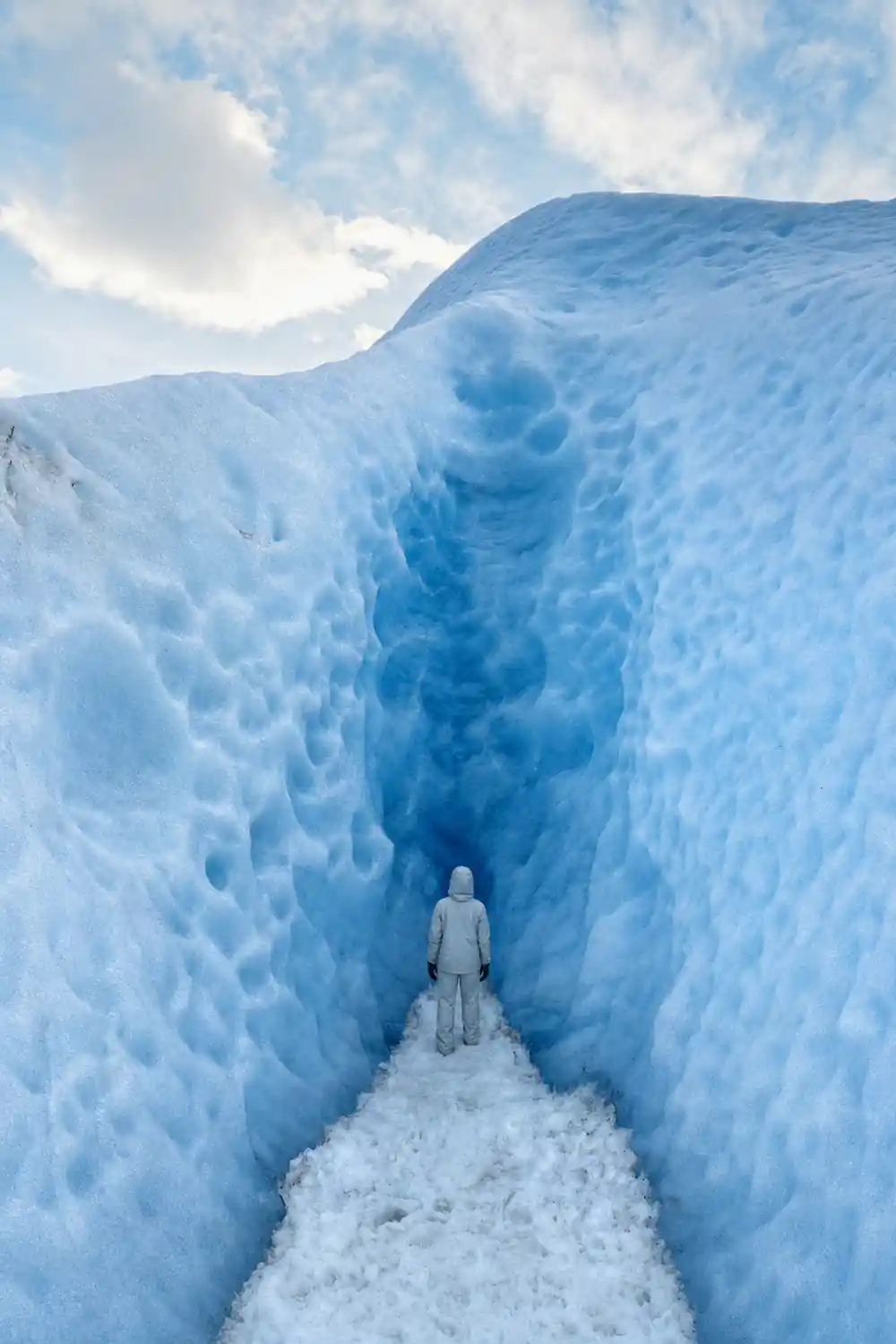
Whichever you choose, expect the day to feel slower and colder than an ordinary hike. You stop often, you wait while ropes are fixed or a route is checked, and the guide talks you through what you are walking on. That pace is part of the appeal. The ice rewards patience: colours shift as cloud moves overhead, and a wall that looks flat grey from the car park turns deep blue when you get close to it.
Skaftafell and Jökulsárlón: where the trips begin
Skaftafell is the main gateway to the glacier, and most hikes and climbs leave from the area around the visitor centre, where there is parking, toilets and a small cafe. It lies about 327 km (203 miles) from Reykjavík by car via Route 1, a drive that takes approximately 4.5 hours.[2] From Skaftafell, Jökulsárlón is 35.4 miles (57 km) further east, about 50 minutes in normal traffic, and that is where the kayaking and many of the ice cave departures start.[3]
The two places are part of one landscape rather than separate stops. The lagoon, its icebergs, the outlet glaciers and the ice cap above them form a single connected system, and the weather decides what runs on any given day. High wind can close a cave or cancel a paddle even when the sky looks harmless, so keep a spare morning in your plan and treat a cancellation as a chance to walk the trails around Skaftafell instead.
Where you sleep shapes your day more than which tour you pick. Stay near Skaftafell or the lagoon and you can be on the ice shortly after breakfast. Base yourself in Reykjavík instead and the same outing becomes a long haul, with the best of the daylight spent behind the wheel. In winter that matters most, when the light is short and the roads can slow you down.
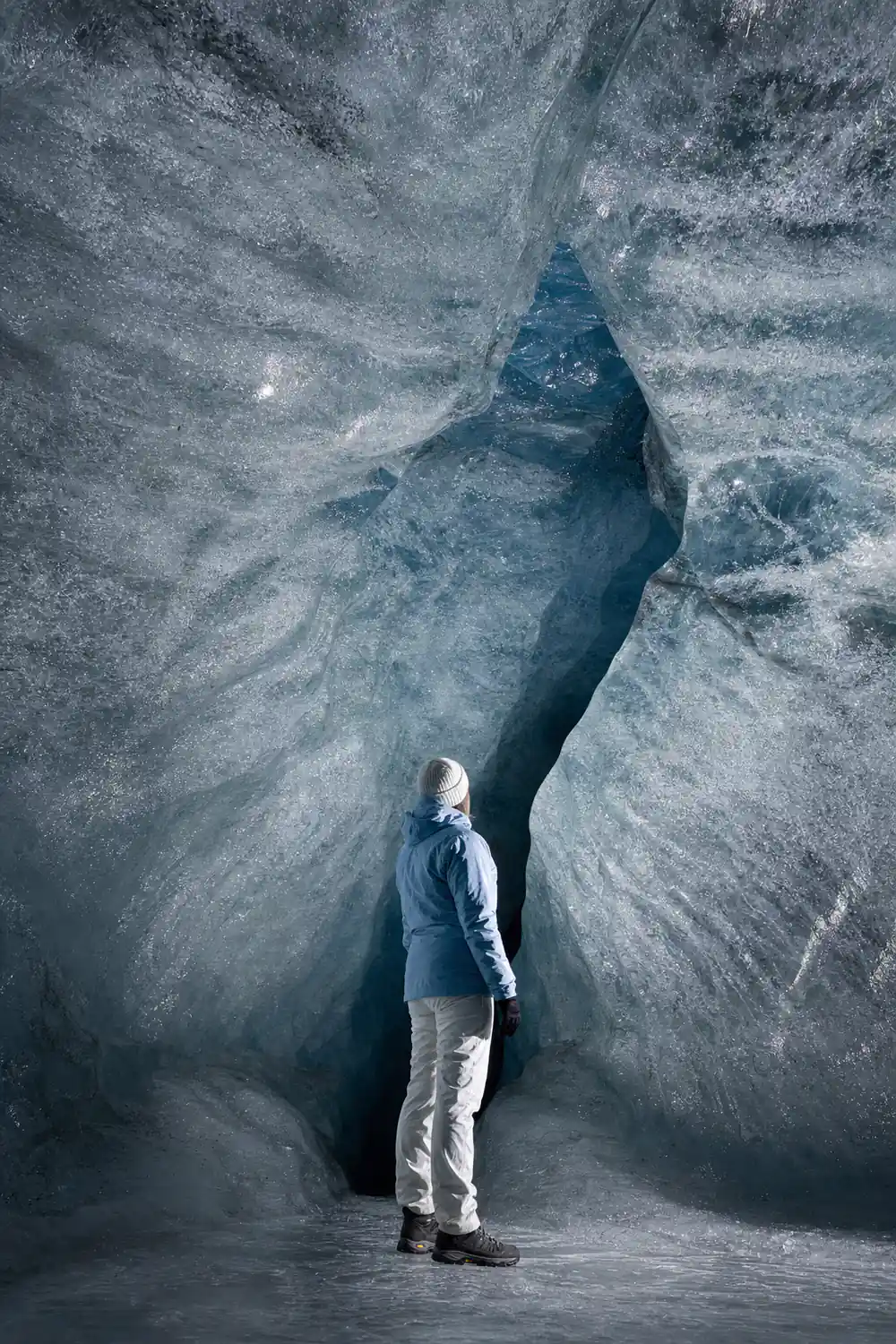
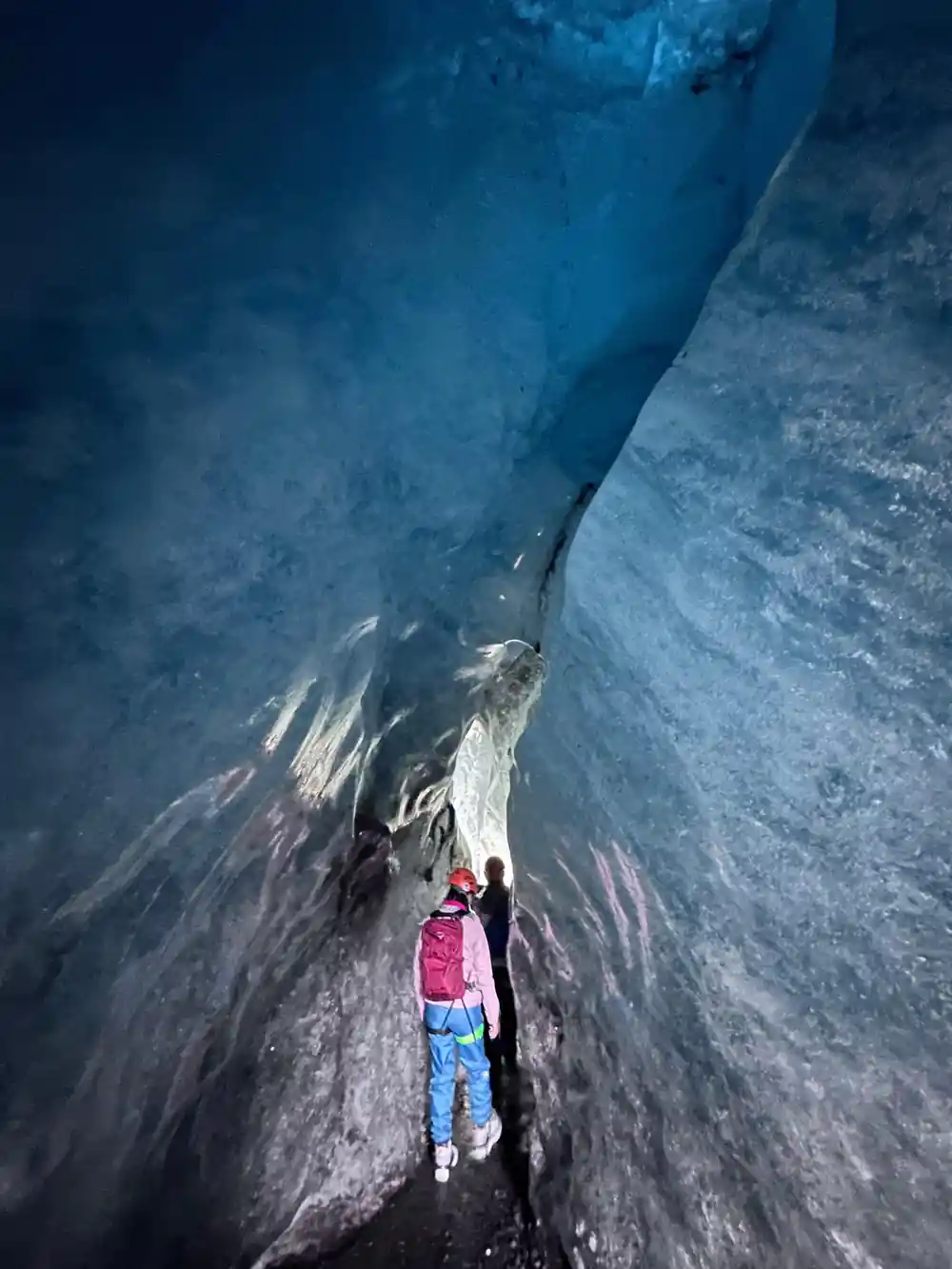
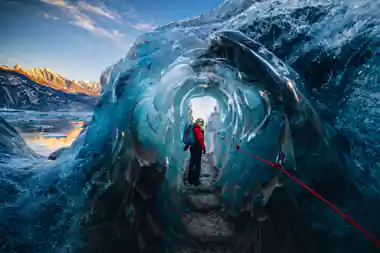
Blue light inside a winter ice cave on Vatnajökull, formed under the outlet glaciers.
The ice itself: a glacier the size of a small country
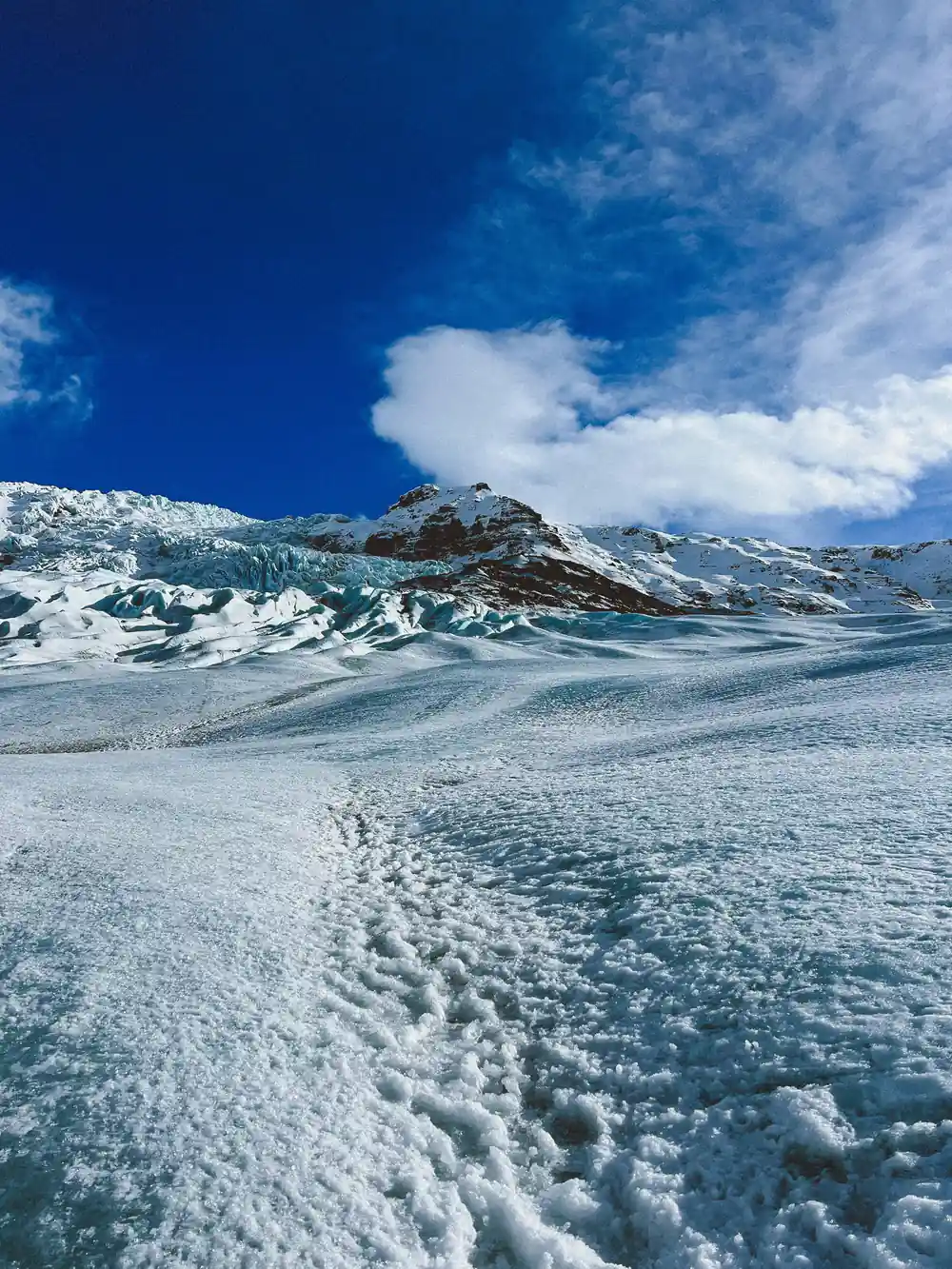
Vatnajökull has a surface area of approximately 8,100 square kilometres (3,127 square miles), and it is the largest glacier in both Iceland and Europe.[7] The ice averages about 380 metres thick, and in places it is almost a kilometre deep.[11] Many of the walks from Skaftafell set off onto Falljökull, a striking outlet glacier of the same ice cap.[12] Outlet glaciers are the tongues that spill from the main cap toward lower ground, and they are where nearly all the guided trips take place.
Underneath all that ice sit volcanoes, the three most famous subglacial ones being Grímsvötn, Öraefajökull and Bardarbunga.[13] The glacier is also changing quickly. Icelandic outlet glaciers have retreated exceptionally fast since the year 2000, and their mass loss is among the highest recorded in the world.[14] Vatnajökull National Park was inscribed on UNESCO's list of World Heritage Sites on 5 July 2019.[15] Fire, ice and constant movement sit in the same view here.
When to come for ice caves, glacier walks and kayaking
Ice caves in Vatnajökull are only accessible during winter months, from November and usually throughout March, depending on the weather.[1] That is the window for the blue cave days. Glacier walks and lagoon paddling run outside it. Winter daylight is short, so an early start gives you the best of the light, and the colours inside the ice look strongest when the sun stays low. It pays to fix those cave dates first and build the rest of the trip around them.
Summer is easier for driving and for long days out. Skaftafellsstofa Visitor Centre opens 9-19 in June to August, 9-17 in March to May, 9-18 in September and October, 9-17 in November, and 10-17 in December, January and February.[16] If you would rather be on the water than on the ice, the amphibian boat tour on the lagoon lasts 30 to 40 minutes.[17]
The shoulder weeks are the compromise. Late winter still offers the caves while the days stretch out. Autumn brings low, clear light and colour on the hills. Whatever month you choose, leave a spare morning if you can, because wind and rain can change what runs at short notice.
from US$167
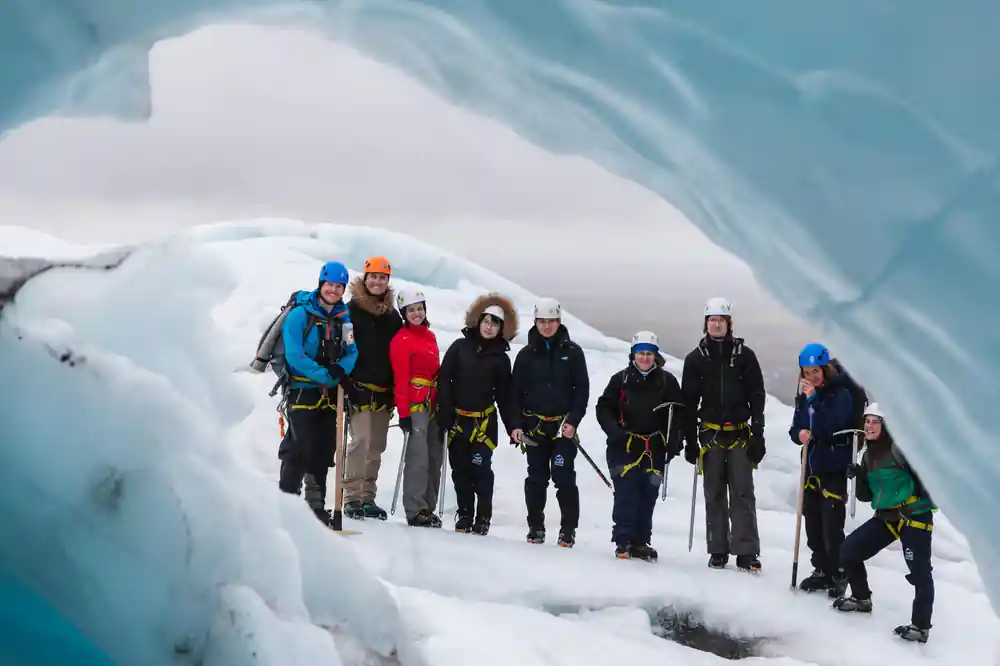
The Blue Ice Cave & Glacier Hike from Skaftafell takes 4 hours, with a group limited to 12 participants and a live English-speaking guide.[8]
Choosing between the cave, glacier and kayak tours
Prices vary a lot, so it pays to compare what you actually get. A Falljökull glacier hike is listed from US$106.[9] The Blue Ice Cave and Glacier Hike from Skaftafell is listed from US$167.[8] A Falljökull ice climb and hike with a group limited to 6 participants is listed from US$253.[4] Over on the water, kayaking on Jökulsárlón lagoon is listed from US$159.[5]
Duration and group size separate the trips as much as price does. The Blue Ice Cave and Glacier Hike takes 4 hours, with a group limited to 12 participants and a live English-speaking guide.[8] The Falljökull ice climb and hike takes 4 hours with a group limited to 6 participants.[4] Both offer reserve now and pay later, and free cancellation up to 24 hours in advance for a full refund.[4][8]
What to wear and how to prepare for the ice
Treat the day as wet, cold and windy whatever the forecast promises. Bring a waterproof shell and trousers, a warm mid layer, gloves, a hat and sunglasses for the glare coming off the ice. Boots need a stiff sole and real grip, since trainers and jeans make for a miserable few hours. Pack water and a snack, keep your phone warm in an inside pocket, and expect some standing around while ropes and routes are sorted.
Two practical details catch people out. Easy glacier hikes at Skaftafell, such as the Blue Ice Experience, have a minimum age of 8 years old, and more difficult glacier walks may set a higher age.[18] Parking at Skaftafell is subject to a regional fee, with a passenger car of 5 or fewer seats charged 1,110 ISK.[10] Bring a card or a phone that works, and sort payment before you walk away from the car.
Where to stay and how to make the drive work
Most people stay near Skaftafell rather than driving out and back from Reykjavík in a single day. Fosshotel Glacier Lagoon is a four-star superior hotel a stone's throw from Skaftafell, with 125 rooms and amenities including free parking, electric car charging points, a gym and a wellness spa.[19] Booking early matters most in winter, when cave season is short.
The drive is part of the trip. From Reykjavík the route runs about 327 km (203 miles) via Route 1, roughly 4.5 hours.[2] Break the journey at the waterfalls and villages along the way, and watch for Hvannadalshnúkur, which reaches 2110 m (6900 ft).[20] Fill the tank when you can, and check road conditions before setting off in winter.
Food and fuel thin out along this stretch of the Ring Road, so fill the tank when you pass a station and carry water and snacks rather than relying on finding a shop at the right moment. In winter, check the road conditions and the wind forecast before you set off, and allow extra time for the sections that cross open ground, where gusts can push a car around.
Group size limits on the ice
Group limits as listed on each GetYourGuide tour:[4][8][21][22][23]
What the ice tours cost, in US dollars
From-prices in US dollars from GetYourGuide listings:[4][5][6][8][24]
When to book, month by month
Planning your glacier day
Book ahead
Winter ice cave departures fill up, and small group trips go first. Reserve now and pay later keeps your plans flexible.[8]
Sort the drive
Skaftafell is about 327 km (203 miles) from Reykjavík via Route 1, roughly 4.5 hours, so an overnight nearby beats a dawn start.[2]
Dress for wet cold
Waterproof shell, warm mid layers, gloves, hat and boots with grip. Wind is what makes the ice feel bitter, so cover up even on a bright day.
Arrive early
Parking at Skaftafell is 1,110 ISK for a passenger car of 5 or fewer seats.[10] Check in well before departure so the briefing is not rushed.
Add the lagoon
If time allows, pair your glacier day with a paddle on Jökulsárlón, 35.4 miles (57 km) east of Skaftafell and about 50 minutes by road.[3]
Ready for a day on the ice above Skaftafell?
from US$167Reserve now & pay later