If you read nothing else
- Vatnajökull is the largest glacier in Iceland and Europe, with a surface area of approximately 8,100 square kilometers (3,127 square miles).[1]
- A south coast glacier tongue that is easier to reach on a short trip from Reykjavík, with guided walks and a year-round ice cave nearby.[2]
- Skaftafell is about 327 km (203 miles) from Reykjavík, a drive of approximately 4.5 hours, and 35.4 miles (57 km) from Jökulsárlón.[3][4]
- Ice caves in Vatnajökull are accessible from November and usually throughout March, depending on the weather.[5]
- Glacier hikes are listed from US$105 at Skaftafell, from US$167 for the blue ice cave hike, and from US$162 at Sólheimajökull.[6][7][8]
| Skaftafell / Vatnajökull | Jökulsárlón ice caves | Sólheimajökull | |
|---|---|---|---|
| From price | from US$105[6] | from US$145[9] | from US$162[8] |
| Tour length | 4 hours[7] | 3 hours[10] | 3.5 hours[8] |
| Small group | limited to 12 participants[7] | limited to 14 participants[11] | limited to 8 participants[12] |
| Traveller rating | 4.62 from 848 reviews[7] | 4.61 from 1,129 reviews[13] | 4.90 from 24 reviews[12] |
| Cancellation | cancel up to 24 hours before[7] | cancel up to 24 hours before[13] | cancel up to 24 hours before[12] |
Regional fee (parking) - Skaftafell and Jökulsárlón Category A - Passenger car, 5 or fewer seats 1.110 ISK
Verdict: which glacier tour should you book?
Know this first
- Book a tour slot and note the meeting point on your voucher
- Check the ice cave season before you fix winter dates
- Small group departures fill up quickly on weekends
- Listings show from prices in US dollars, per person
On the day
- Allow extra time for the drive and for finding the car park
- Wear waterproof layers, gloves and sturdy boots you can walk in
- Follow the guide's crampon and ice axe briefing on the glacier
- Bring sunglasses and sunscreen, glacier light is bright even in cloud
Two glaciers, two very different days out
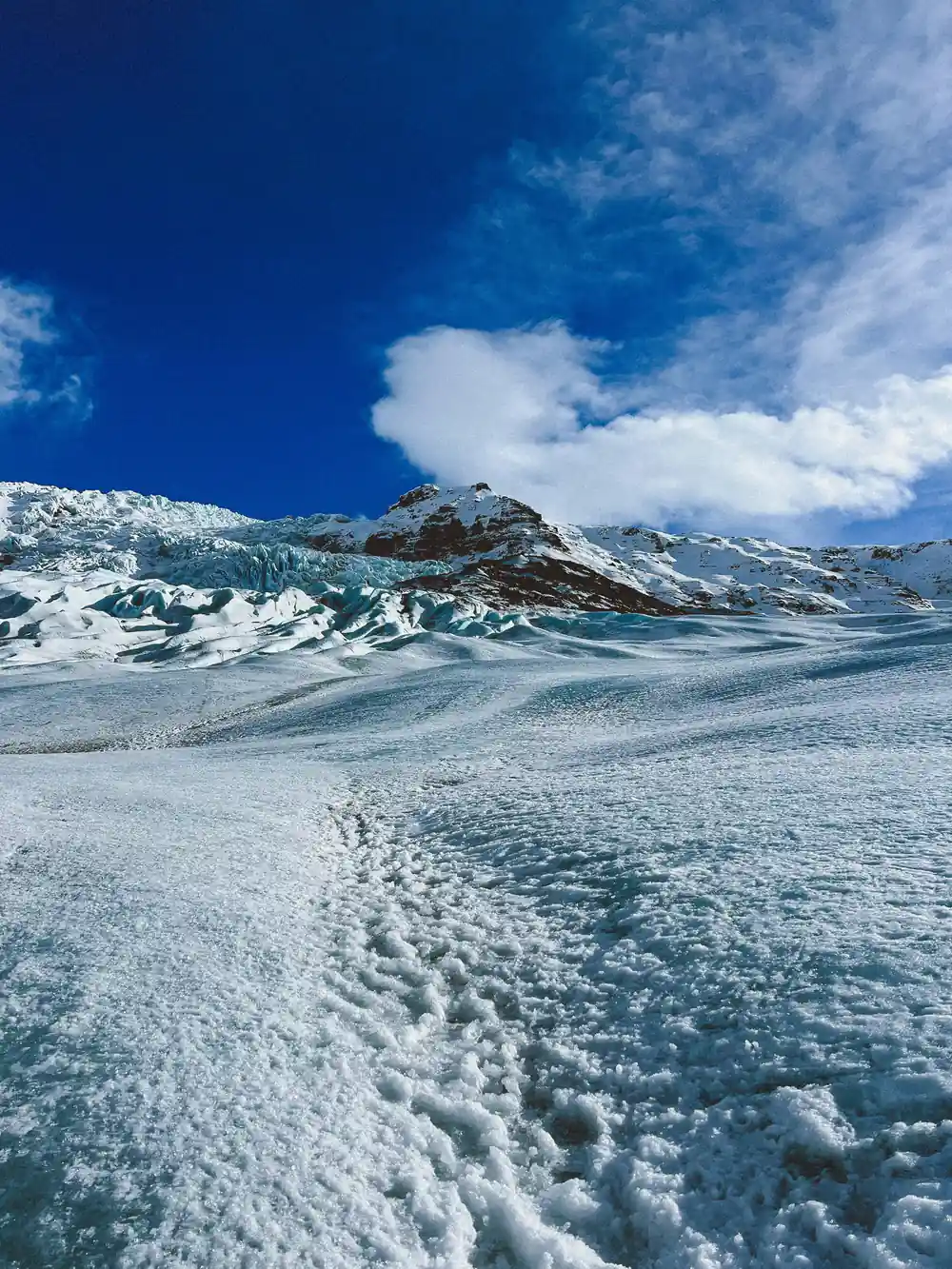
Iceland has plenty of ice, and the two glaciers most visitors end up choosing between sit at opposite ends of the south coast. Vatnajökull is the enormous one, an ice cap that spills down towards Skaftafell and Jökulsárlón in the east. Sólheimajökull is a smaller outlet glacier further west, an easy side trip on the road between Reykjavík and Vík. Both put you on blue-white ice with crampons strapped to your boots and a guide in front of you, and both leave you with the same slightly giddy feeling of standing on something that is moving, very slowly, downhill. The difference is in the journey, the setting and how much of your day the trip takes.
Scale is the first real difference. Vatnajökull has a surface area of approximately 8,100 square kilometers (3,127 square miles), and it is the largest glacier in both Iceland and Europe.[1] Its ice averages about 380 metres thick, though in places it is almost a kilometre deep.[14] Sólheimajökull, by contrast, is a tongue of ice you can walk onto within minutes of leaving the car park, and the landscape around it is easier to read on a short visit. On a trip based in Reykjavík, that convenience often matters more than sheer size. On a longer Ring Road journey the east wins easily, because that is where the ice caves, the lagoon and the enormous glacier views all sit.
Getting to Skaftafell and the Vatnajökull ice caves
Vatnajokull vs Skaftafell is an odd pairing, because Skaftafell is not a rival glacier: it is the valley, visitor area and trailhead on the southern edge of the ice cap, and it is where most guided ice cave tours in the area start. From Reykjavík it is about 327 km (203 miles) by car via Route 1, and the drive takes approximately 4.5 hours.[3] Most travellers break the journey with a night somewhere along the south coast rather than doing it there and back in a single day. Once you are at Skaftafell, tours meet near the visitor centre, where guides hand out crampons, check boots and sort helmets before the group walks or rides to the edge of the ice.
The other cluster of departures is at Jökulsárlón, the glacier lagoon east of Skaftafell. The direct drive between the two is 35.4 miles (57 km) and takes about 50 minutes in normal traffic.[4] That makes it realistic to base yourself at Skaftafell, hike one day and visit the lagoon and the caves at the other end of the road the next. Falljokull vs Vatnajokull is not really a fair comparison, since Falljökull is a striking outlet glacier of the vast Vatnajökull ice cap rather than a rival to it.[15] Above the whole area, Hvannadalshnúkur stands at 2110 m (6900 ft), a landmark you can pick out on clear days.[16]
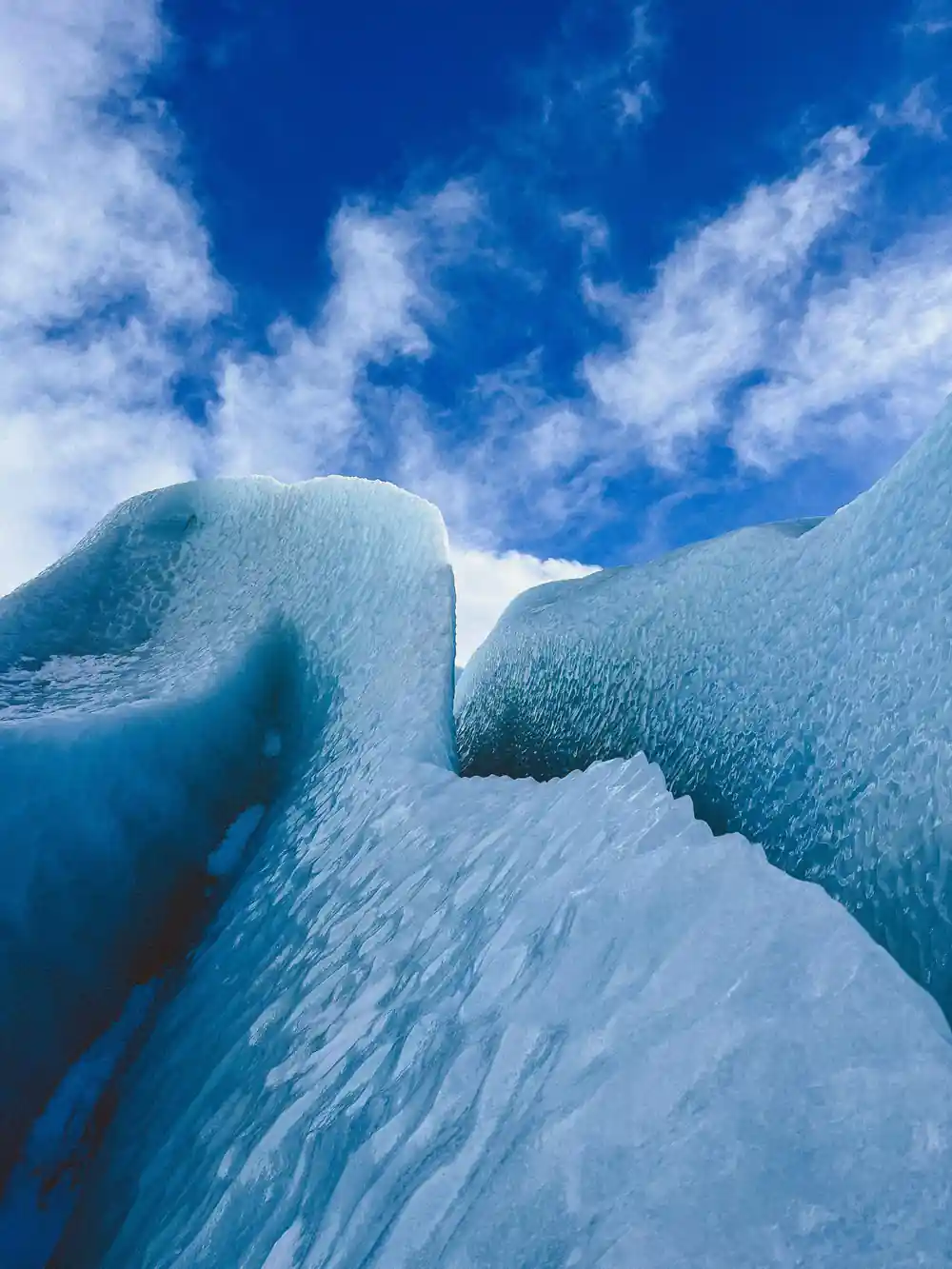
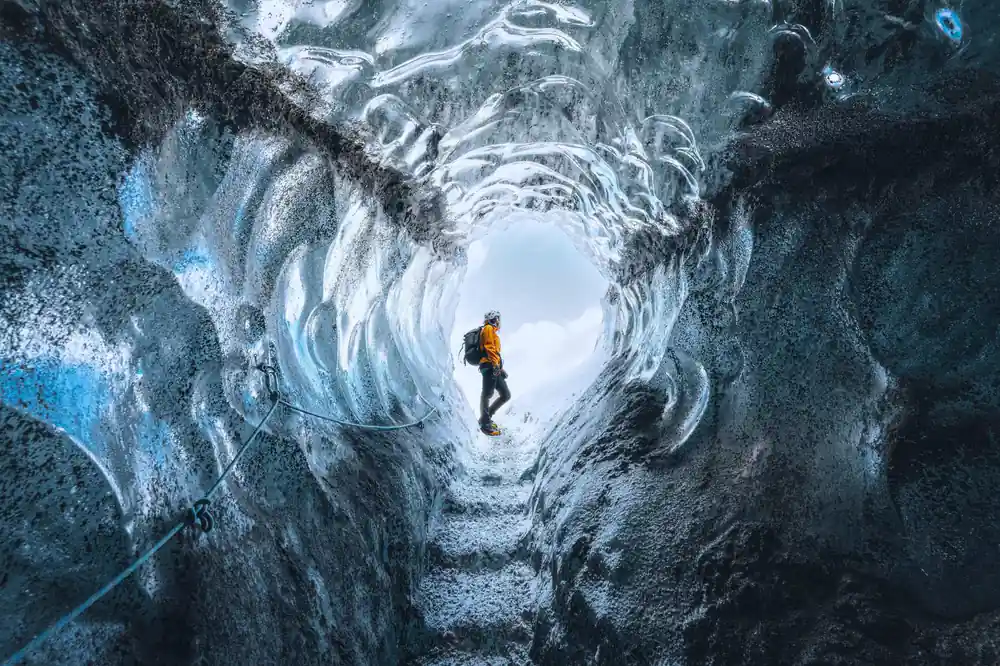
Blue ice inside a cave under Vatnajökull, shaped by meltwater each winter.
Getting to Sólheimajökull on the south coast
Sólheimajökull sits between Reykjavík and Vík, a short detour off the main road down a gravel track, and it is one of the most visited glacier tongues in the country. If your itinerary is built around the Golden Circle, the waterfalls at Seljalandsfoss and Skógafoss and a night in Vík, adding a glacier walk here costs you a few hours rather than a whole day of driving. That is the main reason it appears so often on shorter Icelandic itineraries, and why it suits people who have only a few days and a lot of ground to cover. The trade off is scale: you get ice, crampons and a guided route, but you do not get the vastness of the ice cap in the east.
The glacier itself is an outlet of the Mýrdalsjökull ice cap, and it is a working, changing landscape rather than a static backdrop. Walks here tend to be straightforward out-and-back routes onto the ice, with a guide setting a steady pace and stopping often for photographs. Nearby, the Katla Ice Cave is a natural ice cave in the Mýrdalsjökull Glacier, and it is one of the few ice caves in Iceland that can be visited year-round.[2] That year-round access is the neat trick of this stretch of coast, and it makes the area a sensible pick for travellers visiting outside the coldest months.
What a guided glacier walk actually involves
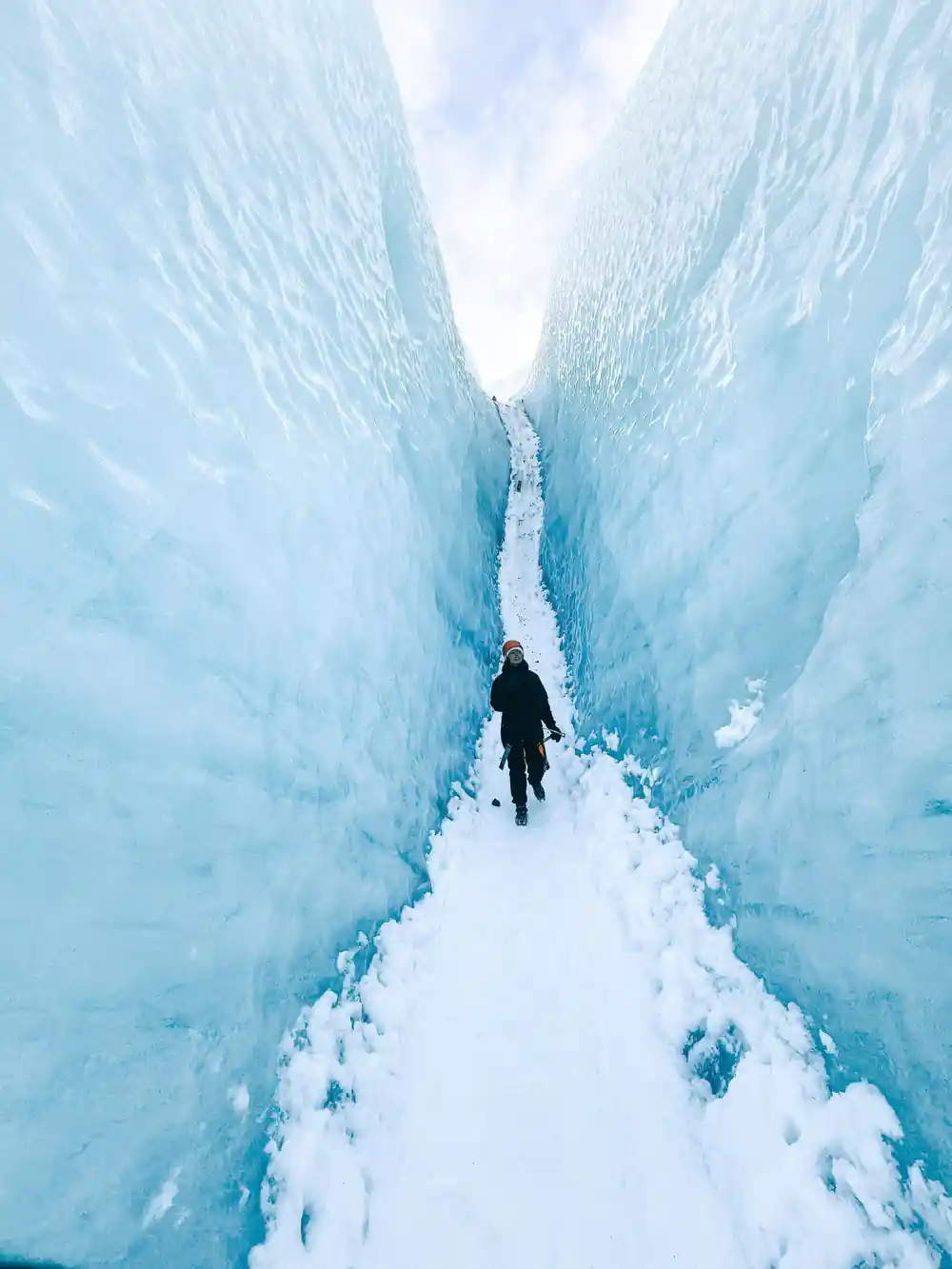
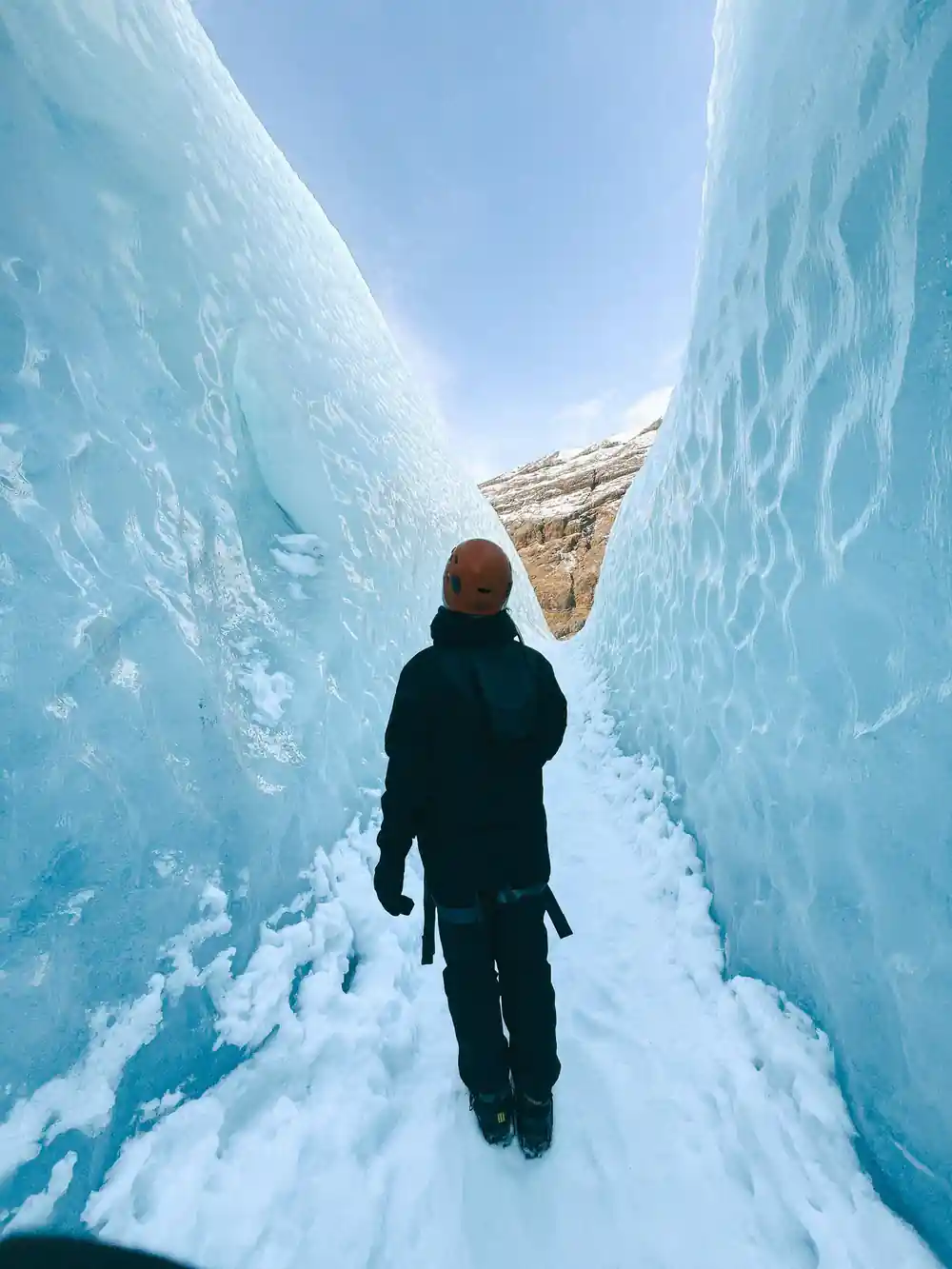
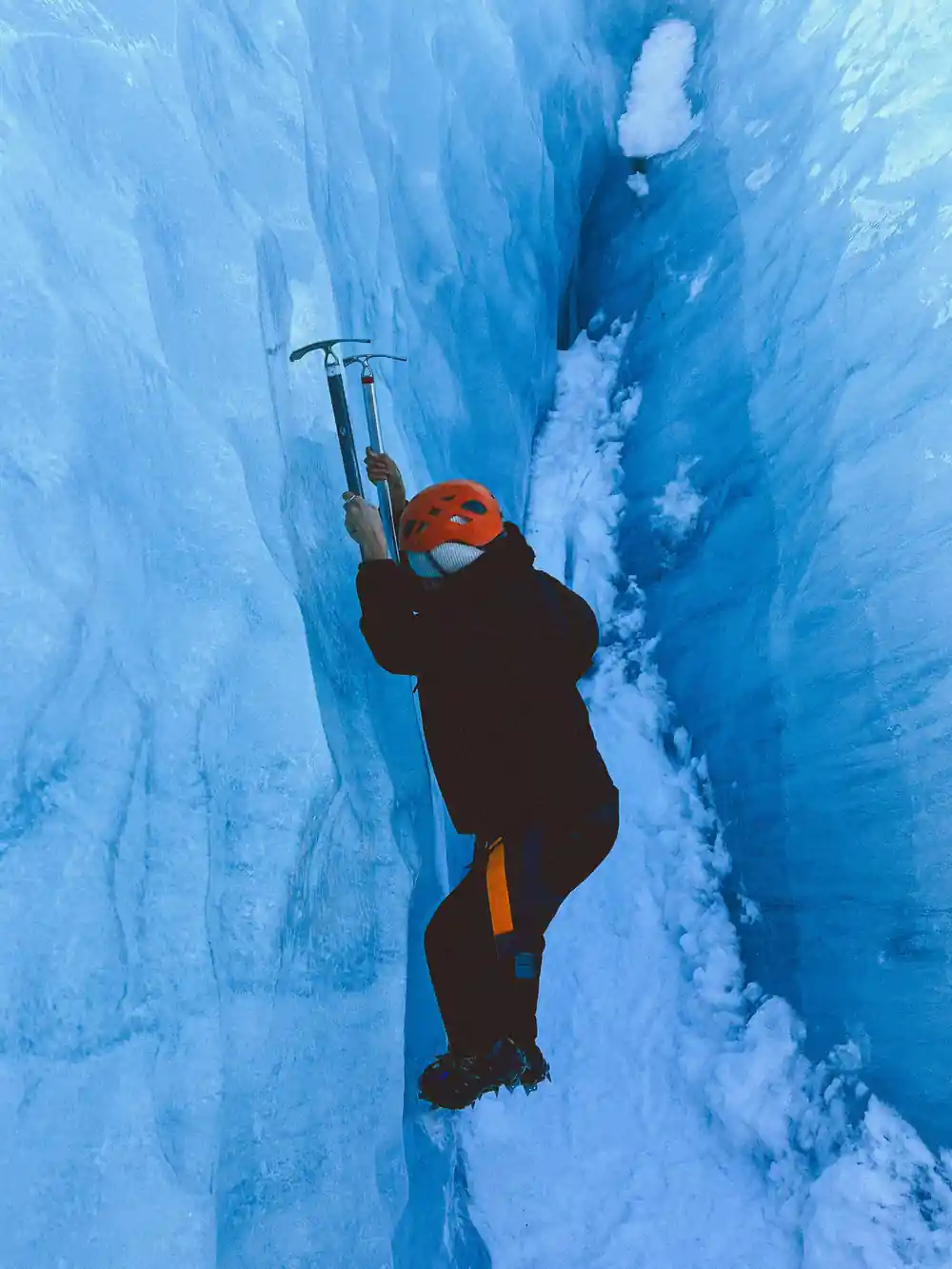
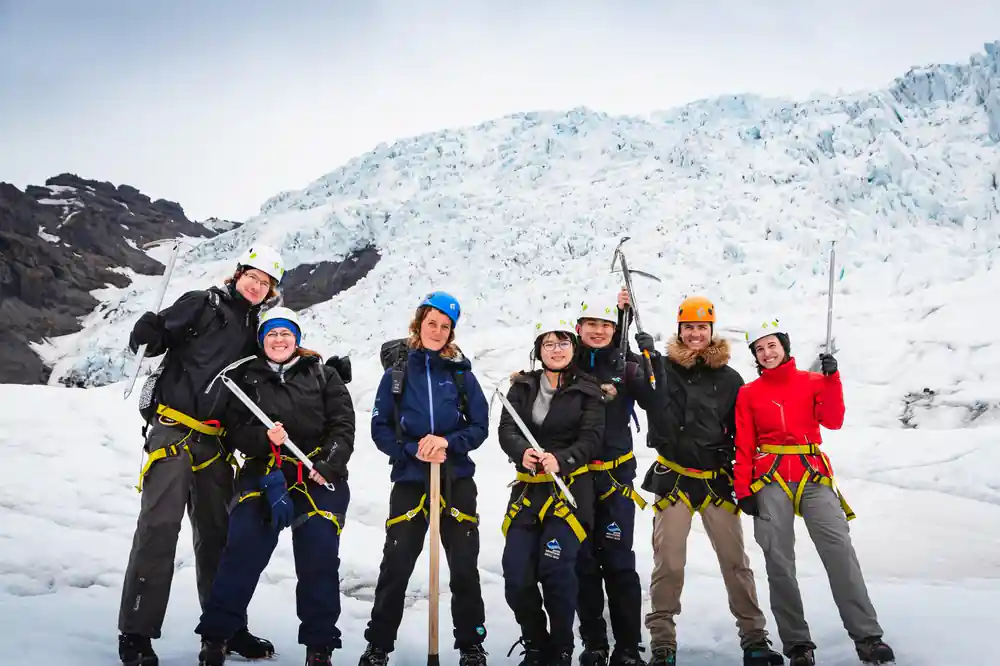
Every guided glacier tour in Iceland follows a similar shape. You meet your guide, get fitted with crampons, take an ice axe, then walk or ride to the edge of the ice. On the ice the group moves in single file, close together or roped depending on the terrain, past crevasses, meltwater channels and ridges of dark debris. On winter ice cave tours the route usually includes time inside a cave, which is the part most people remember, and the light under the ice is unlike anything above it. Guides decide the exact line on the day, based on conditions underfoot.
The effort is real but manageable for anyone comfortable walking for a few hours. You do not need mountaineering experience, and guides are used to mixed groups with very different fitness levels. What you do need is warm, waterproof clothing, gloves and boots with some grip, plus a willingness to follow instructions on the ice. Vatnajökull's ice caves are a winter feature: they are only accessible during the winter months, from November and usually throughout March, depending on the weather.[5] Book for the middle of that window if you can, and treat any cave visit as weather dependent.
from US$167
Skaftafell: Blue Ice Cave & Glacier Hike on Vatnajökull is limited to 12 participants and runs with a live English speaking guide.[7]
Seasons: when each glacier is at its best
Winter is ice cave season, and it is the reason many people come east at all. From November and usually through March, guided groups head under the ice cap at Skaftafell and Jökulsárlón to caves that re-form and change every year, lit through thin blue roofs and sculpted by meltwater.[5] Summer visits focus on the glacier surface itself, with long daylight hours, easier driving and softer light for photographs. If the cave is the point of the trip, come in winter. If the glacier itself is the point, summer and the shoulder months work well, and you will share the ice with fewer people.
These glaciers are changing, and the guided routes change with them. Since the year 2000, Icelandic outlet glaciers have retreated exceptionally fast, and their mass loss is among the highest recorded in the world.[17] Guides re-plan their lines each season, which is a good reason to book with a company that works on the ice every day rather than following a fixed itinerary from an old brochure. It also means no two years of photographs look quite the same, and that a cave you saw in one winter may not exist in the next.
Group sizes, pace and who each tour suits
The tour booked from this site, Skaftafell: Blue Ice Cave & Glacier Hike on Vatnajökull, is limited to 12 participants, lasts 4 hours and runs with a live English speaking guide.[7] Other walks in the area vary: some are longer and more technical, and group limits differ from listing to listing, with one Sólheimajökull glacier and ice cave tour limited to 8 participants.[12] Smaller groups usually mean more time on the ice and a faster pace, so read the description before you book rather than assuming all glacier hikes are the same.
If you want the biggest glacier and an ice cave in one outing, the Vatnajökull departures at Skaftafell are hard to beat, and they fit neatly into a long weekend based in the south east. If your days are already full of waterfalls, black sand and long drives, Sólheimajökull is the one you can add without rewriting the plan. Families often do best on the easier routes: easy glacier hikes with Mountain Guides have a minimum age of 8 years old, while more difficult glacier walks may have a higher minimum age.[18]
Practical planning: parking, hours and where to stay
At Skaftafell, parking is subject to a regional fee, with a passenger car of 5 or fewer seats charged 1,110 ISK.[19] The Skaftafellsstofa Visitor Centre keeps seasonal opening hours: 9-17 in March to May and in November, 9-19 in June to August, 9-18 in September and October, and 10-17 in January, February and December.[20] Use it for maps, toilets and the latest word on conditions before you drive further east.
There is comfortable lodging close to the ice. Fosshotel Glacier Lagoon, a four-star superior hotel with 125 rooms, sits a stone's throw from Skaftafell.[21] Further east around Höfn there is more choice, and the lagoon area has guesthouses and campsites. Wherever you sleep, top up the fuel when you can, carry food and water, and check road and weather conditions before setting out, because the south coast can change quickly and the services are far apart.
From prices per person on these glacier tours
From prices as stated on these GetYourGuide listings:[7][9][12][22].
What a glacier tour costs
Per person from prices in US dollars, as listed:[7][8][12][22].
When to go, month by month
Plan your glacier day
Pick your glacier
Choose between the big Vatnajökull ice cap near Skaftafell and Jökulsárlón, or the closer Sólheimajökull tongue on the south coast.
Match the season
Ice caves are accessible from November and usually throughout March, depending on the weather, so winter suits cave visits.[5]
Book ahead
Small group departures fill up, so book early. The Skaftafell blue ice cave hike offers reserve now and pay later.[7]
Plan the drive
From Reykjavík, Skaftafell is about 327 km (203 miles) along Route 1, a drive of approximately 4.5 hours.[3]
Gear and check-in
Arrive early in warm, waterproof layers and boots you can walk in, and listen closely to the briefing before you step onto the ice.
Book the Skaftafell blue ice cave and glacier hike
from US$167Reserve now & pay later