If you read nothing else
- A stiff sole, a clear heel ledge and ankle support are what crampon straps need. Bring boots already worn in, not straight out of the box.
- Wool or synthetic base layer, fleece mid layer and a windproof shell. Cotton stays wet and stops insulating, so leave it at the hotel.
- Glacier sunglasses with side shields cut the glare from snow and ice, and sunscreen and lip balm handle the light bouncing back from below.
- Ice caves in the outlet glaciers of Vatnajökull are only accessible during winter months, from November and usually throughout March, depending on the weather.[1]
- Skaftafell is about 327 km (203 miles) from Reykjavík by car via Route 1, a drive that takes approximately 4.5 hours.[2]
- Top choice Skaftafell Ice Cave & Hike from US$167 Duration4 hours[3]Group sizeLimited to 12 participants[3]Rating4.62 from 848 reviews[3]CancellationCancel up to 24 hours in advance[3] Check availability
- Blue Ice Glacier Hike from US$106 Duration4 hours[4]Group sizeNot stated on the listingRating4.71 from 1,357 reviews[4]CancellationCancel up to 24 hours in advance[4] See this tour
- Jökulsárlón Ice Cave Tour from US$164 Duration3 hours[5]Group sizeNot stated on the listingRating4.25 from 2,171 reviews[5]CancellationCancel up to 24 hours in advance[5] See this tour
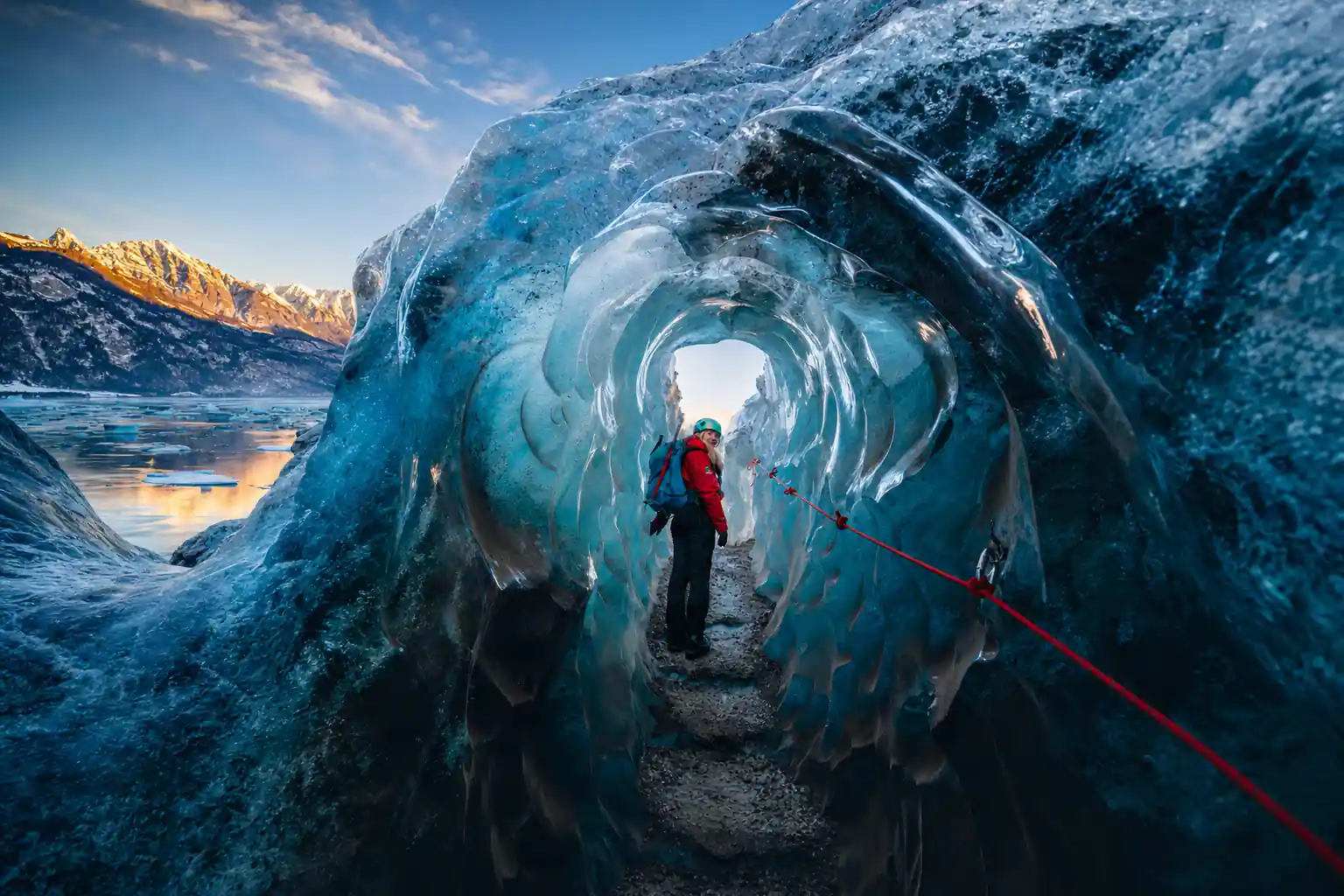
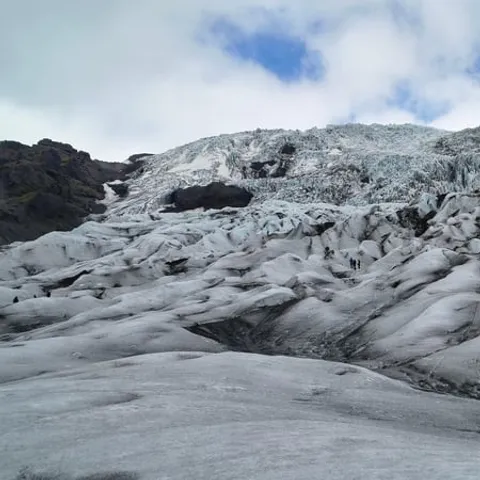
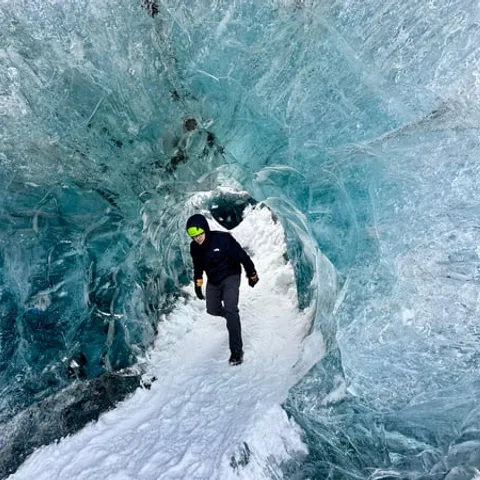
Positioned a stone's throw from Skaftafell in Iceland, Fosshotel Glacier Lagoon is a prestigious four-star superior accommodation providing 125 chic rooms furnished with indispensable amenities, including complimentary parking, electric car charging points, a gym, and a wellness spa.
Our verdict on the Skaftafell ice cave hike
Wear on the day
- Stiff-soled waterproof boots with ankle support, worn in before you travel
- Windproof, waterproof shell jacket over a fleece mid layer
- Glacier sunglasses with side shields, sunscreen and lip balm
- Warm hat, buff, and gloves in a thin liner pair and a warm outer pair
Pack and plan
Why Ankle-Support Boots Are Non-Negotiable
On a glacier hike your boots are the piece of kit that decides how steady the day feels. The sole needs to be stiff enough that your foot does not bend inside it, the heel needs a clear ledge for crampon straps, and the collar should sit above the ankle bone. Waterproofing matters as much as warmth, because snow, slush and meltwater find every seam long before you are back at the bus. Leather or a sturdy synthetic upper both work, as long as the boot keeps water out and you have walked a few kilometres in it.
The Skaftafell Blue Ice Cave and Glacier Hike lists its stops as bus, Vatnajökull, Falljökull and bus again, and it runs for 4 hours in a group limited to 12 participants.[3] Falljökull is an outlet glacier of the Vatnajökull ice cap, which covers about 8,100 square kilometers (3,127 square miles) and is the largest glacier in Iceland and Europe.[8][9] This is not the place for a brand new pair of boots straight out of the box.
Crampon Sizing and Boot Compatibility
Crampons stay on because straps or bindings press against the heel and the toe of your boot. A soft, flexible sole twists under that pressure, so the points lift, skid and work loose, and you spend the walk bending down to re-tighten them. Look for a defined heel ledge, a stiff midsole and laces you can pull tight with gloves on. If you are hiring boots, collect them the day before so you can test the fit with the socks you plan to wear.
Vatnajökull's ice averages about 380 metres thick, and in places it is almost a kilometre deep.[10] You only touch the very surface of that, but it is worth knowing what is under your feet. Boots that are too tight are as bad as boots that are too soft: cold feet, numb toes and a shorter day than you planned for. Mention a rubbing heel or a loose boot to your guide while you are still at the meeting point, where a fix is quick and easy.
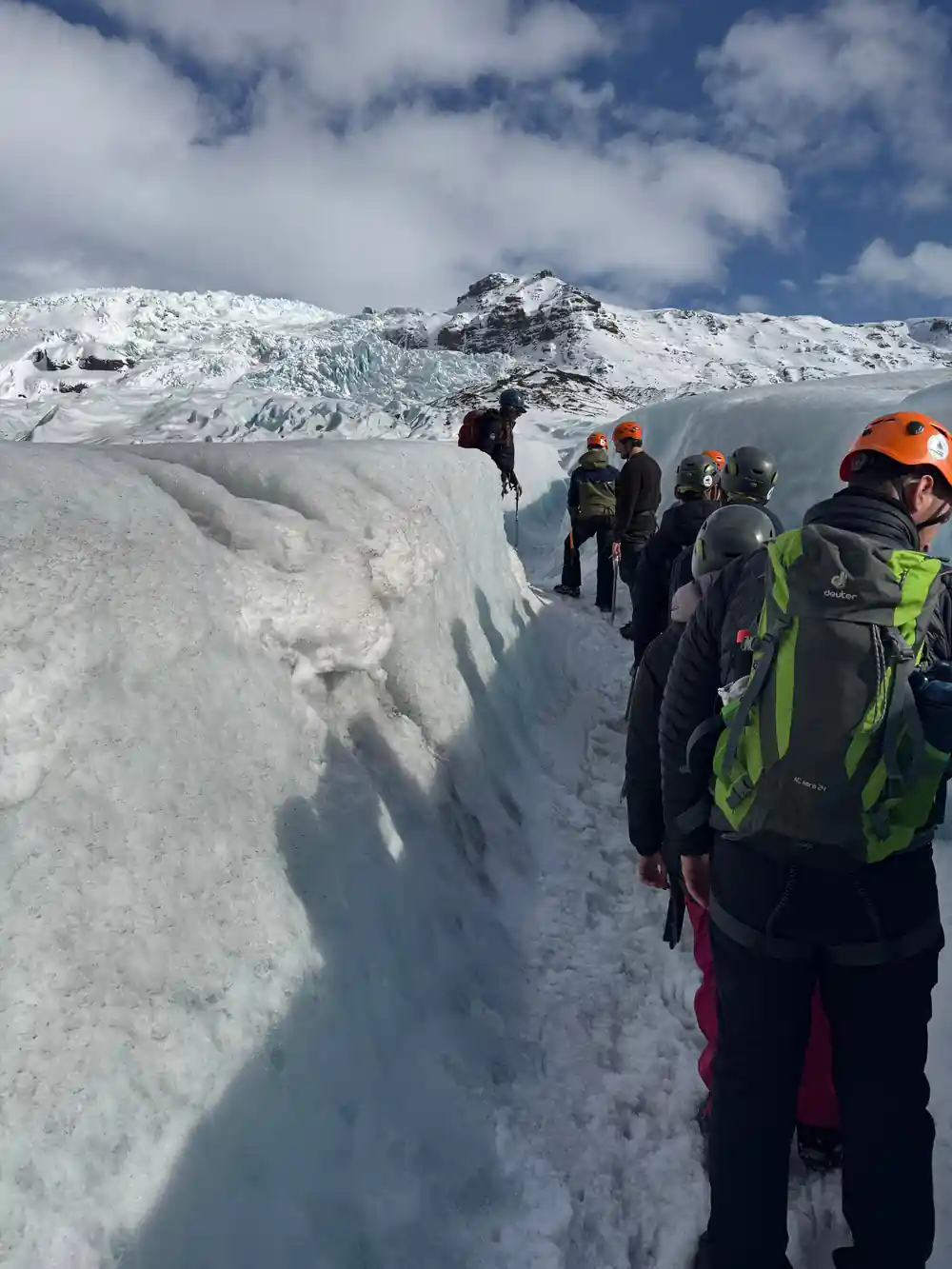
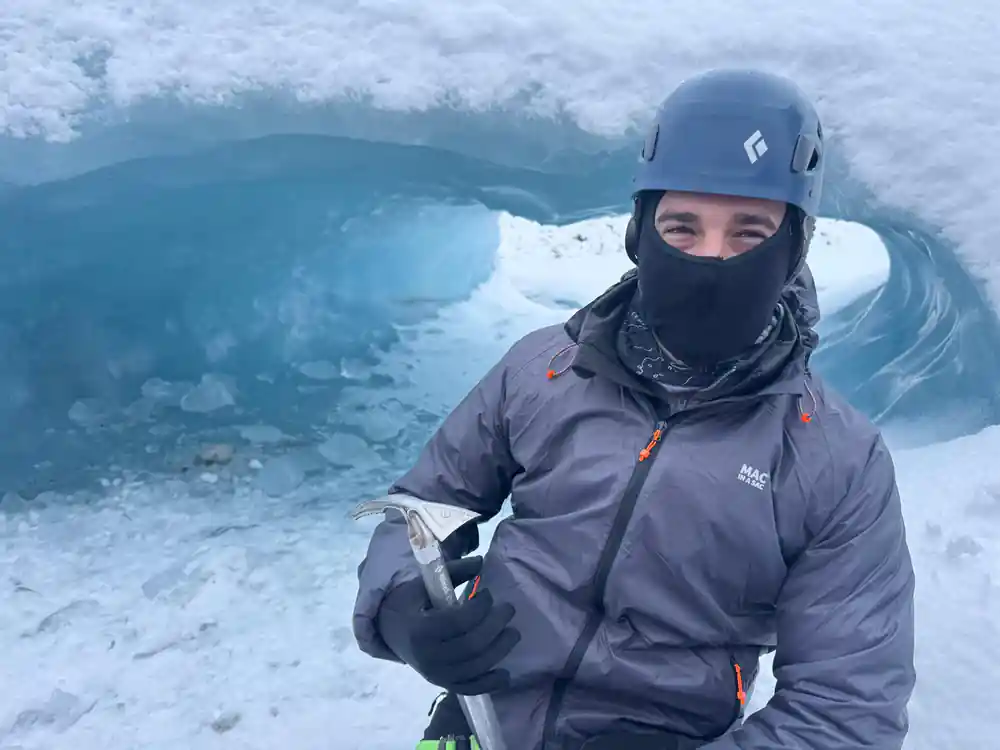
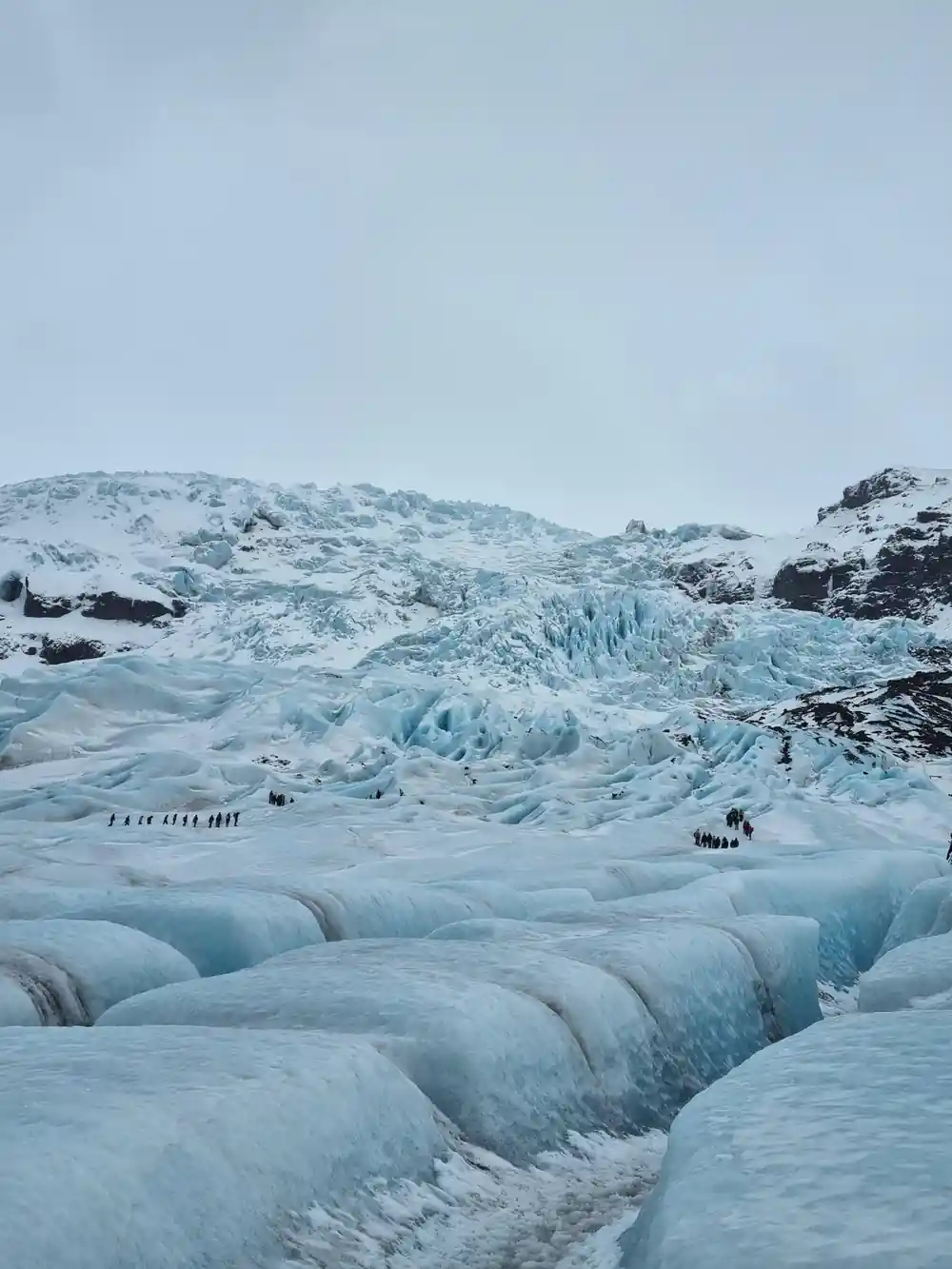
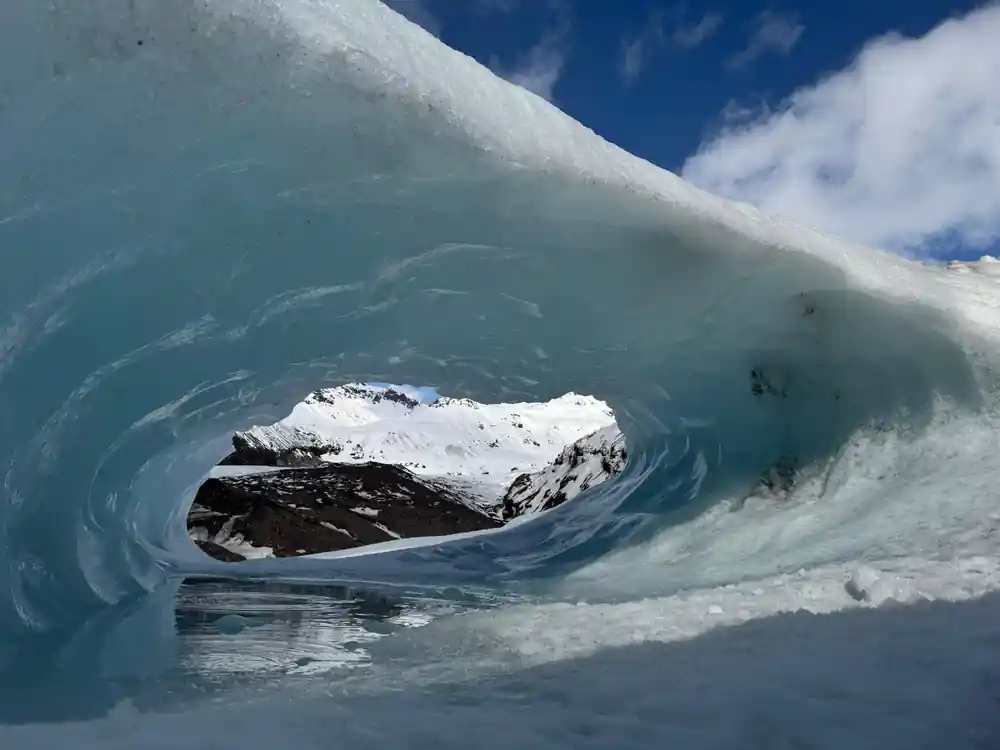
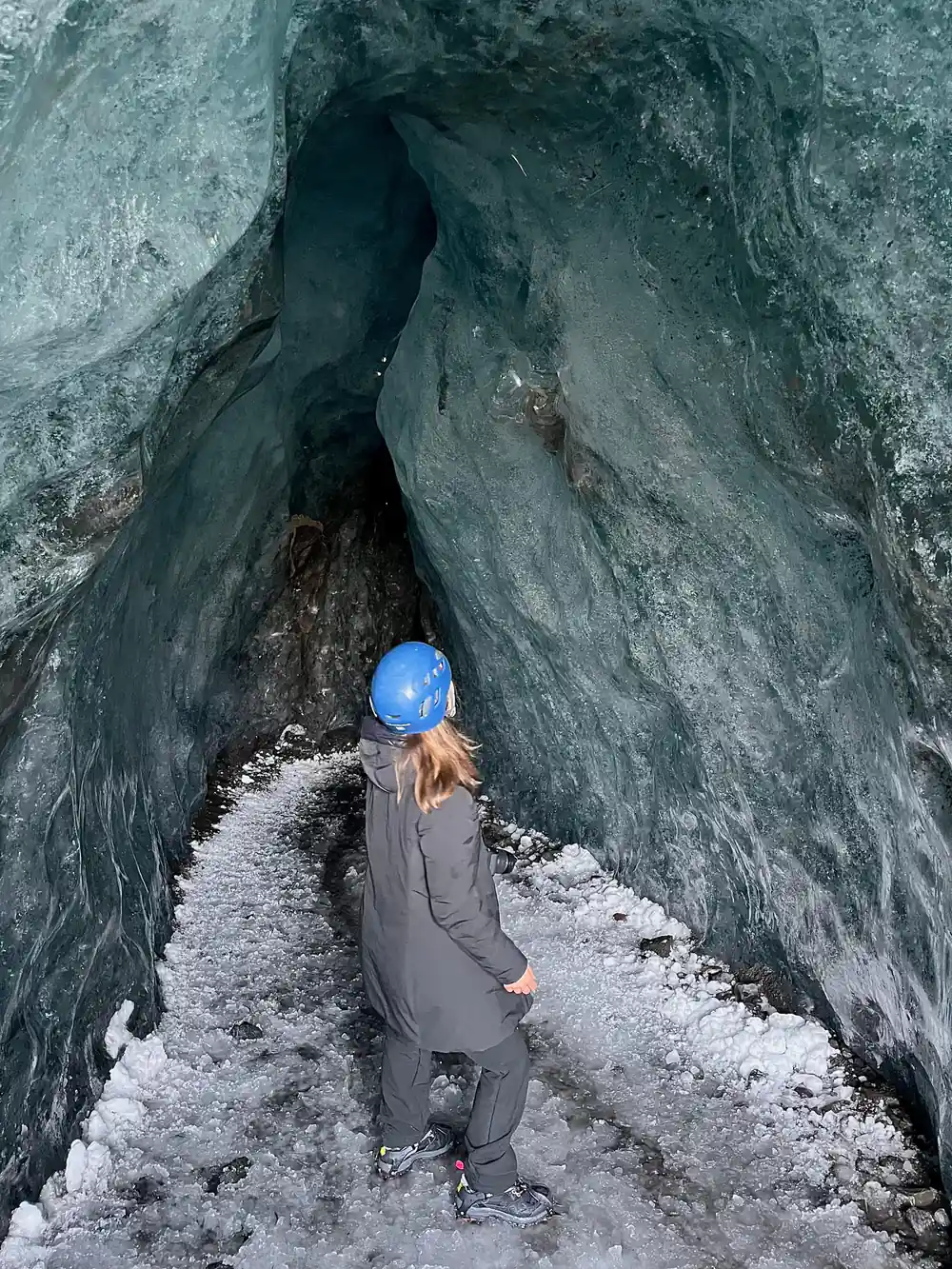
Blue ice, grey meltwater and black volcanic grit share the same glacier on the way up Falljökull.
Layering for Wind and Cold on the Ice
Your layering does almost all the work: a base layer of merino wool or a synthetic fabric against the skin, a fleece or light insulated mid layer, and a windproof, waterproof shell on the outside. Cotton is the one fabric to leave behind, because it holds water and stops insulating once it is damp. On the ice it is usually the wind, not the temperature, that people underestimate. A thin liner sock under a thicker wool pair is a cheap way to add warmth and reduce rubbing.
Skaftafell sits about 327 km (203 miles) from Reykjavík by car via Route 1, a drive that takes approximately 4.5 hours.[2] A car makes a useful base for spare layers and dry boots. Ice caves in the outlet glaciers of Vatnajökull are only accessible during winter months, from November and usually throughout March, depending on the weather.[1] Inside that window, layers you can add and remove quickly are what keep the day comfortable.
Gloves, Hats and Glacier Sunglasses in Bright Light
Hands and face feel the cold first. Take a thin liner pair of gloves for adjusting straps and camera settings, and a warmer waterproof pair over the top. On many winter days you keep the liner on for the whole walk and pull the outer pair on whenever the group stops. A close-fitting hat and a neck buff protect your ears and stop warm air escaping every time you turn your head. Keep the spare pair in a pocket you can reach without taking your pack off.
Snow and ice throw sunlight back from below as well as down from above, so glacier sunglasses with side shields earn their place far more than a fashion pair. Dark lenses and a wraparound shape that stays put under a hat make the biggest difference, and the same reflection reaches your skin, so pack sunscreen and lip balm too. A cloth for the lenses is worth more than you would think.
from US$167
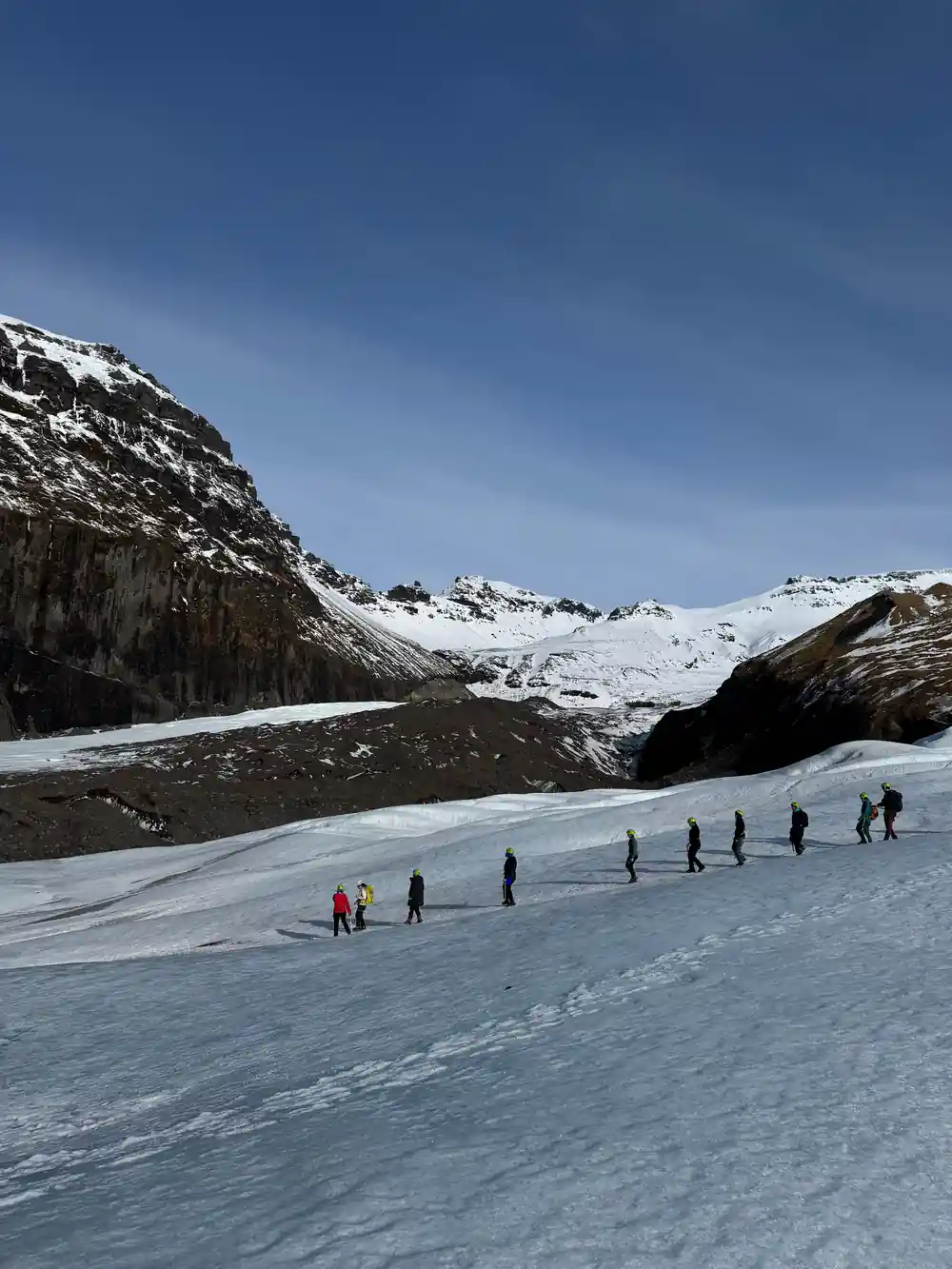
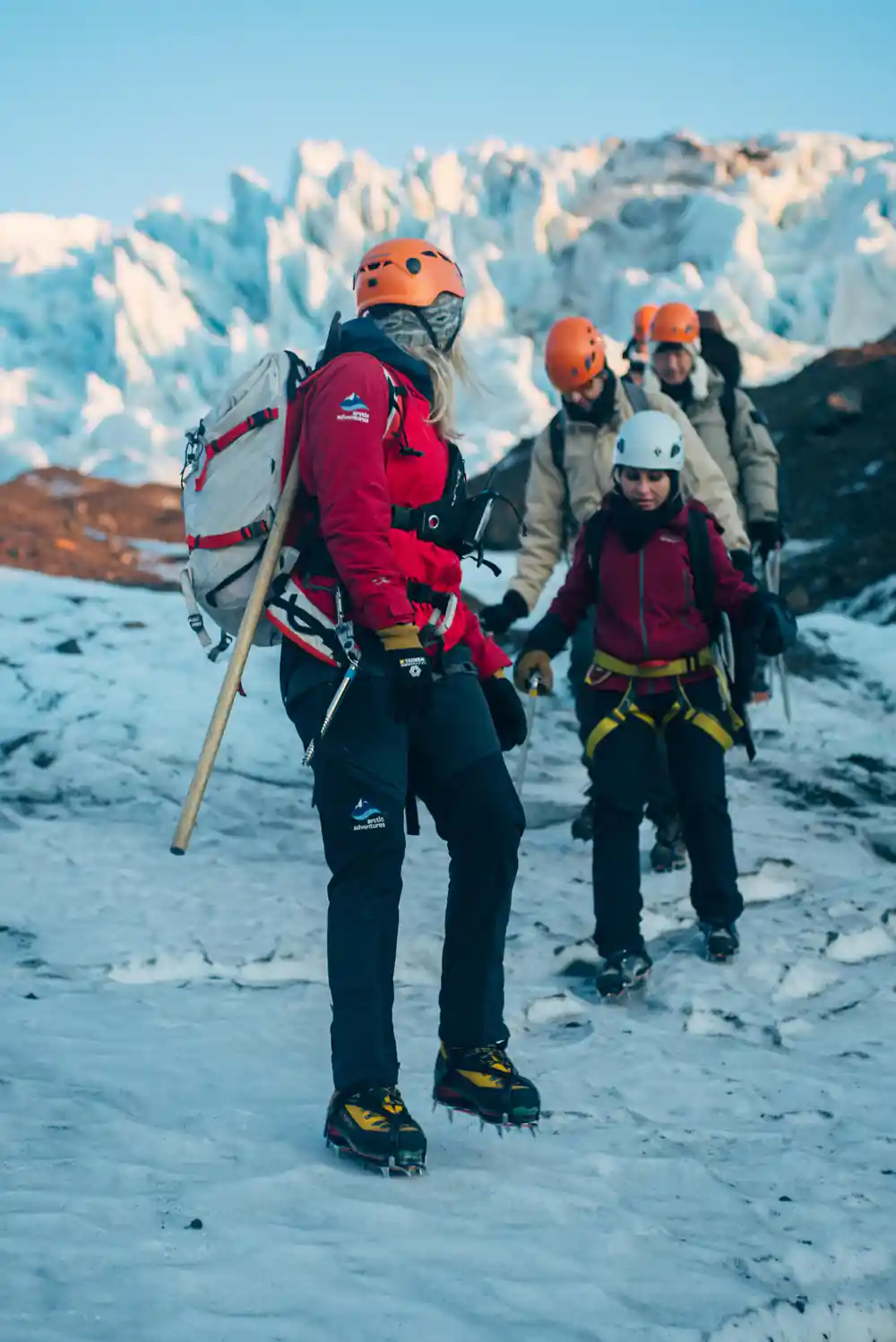
Dress for a 4-hour outing on Falljökull: the Blue Ice Cave and Glacier Hike runs in a group limited to 12 participants.[3]
What to Pack and Bring with You
A small day pack is plenty. Water, a snack, spare socks, a spare warm layer in a dry bag, sunscreen, lip balm, a power bank and a lens cloth carry you through the walk. Everything inside the pack should sit in a dry bag or a plastic bag, because meltwater gets into everything. Add any personal medication, and keep the things you need often in a pocket you can open with gloves on. Leave a full change of clothes and a warm drink in the car for afterwards.
Practical details for the car park. Parking at Skaftafell carries a regional fee, and a passenger car with 5 or fewer seats is charged 1,110 ISK.[7] Skaftafellsstofa Visitor Centre opens 10-17 in January and February, 9-17 in March to May, 9-19 in June to August, 9-18 in September and October, 9-17 in November and 10-17 in December.[6] Skaftafell to Jökulsárlón is 35.4 miles (57 km) and takes about 50 minutes in normal traffic, if you want to add the lagoon to the same day.[11]
Protecting Cameras and Phones from Ice and Spray
Cold drains batteries, and a phone carried in an outside pocket will give up long before the walk is over. Keep it in an inside pocket close to your body, inside a dry bag or a sealed pouch, and carry the power bank the same way. A small silica gel sachet in the bag helps with damp air. When you step back into a heated bus or cafe, leave the camera zipped up for a while so condensation forms on the outside of the bag rather than inside the lens.
The ice is not a static backdrop. Since the year 2000, Icelandic outlet glaciers have retreated exceptionally fast, and their mass loss is among the highest recorded in the world.[12] Under the surface sit subglacial volcanoes, among them Grímsvötn, Öraefajökull and Bardarbunga.[13] Take the photographs your guide points out, keep both hands free while you are moving, and put the camera away on the rougher stretches.
What Not to Wear: Jeans, Trainers and Cotton
Jeans are the classic mistake. They are heavy when dry, heavier when wet, and they go stiff and cold against your legs the moment the group stops moving. Trainers come a close second: they flex, they soak through, and they leave your ankles with nothing to lean on. Long coats and loose scarves are worth rethinking as well, because they catch the wind and tangle with straps. Denim shorts, sandals and bare ankles have no place on the ice, whatever the forecast says for the coast.
This is a protected landscape. Vatnajökull National Park was inscribed on UNESCO's list of World Heritage Sites on 5 July 2019.[14] Stay on the route your guide sets, carry every wrapper back to the car, and wear the kit that lets you do both comfortably. Pack once more the night before: boots, layers, gloves, hat, glacier sunglasses and water. The list matters less than the habit of checking it while your boots are dry and your gloves are where you left them.
How long the main tours run
Glacier hikes and ice cave tours, from-prices
US dollar from-prices of GetYourGuide listings:[3][4][5][15]
When to go and what is open
Getting dressed for the ice
Check your boots
Stiff soles, a defined heel and ankle support. Walk around in them for a few days before you travel.
Test the layers together
Put base layer, fleece and shell on at once, then bend, reach and crouch. Anything that pinches pinches harder on the ice.
Pack for pockets and pack
Spare gloves, a hat, sunscreen and a dry bag for the phone. Water and a snack for the walk back to the bus.
Dress before you step out
Add or drop a layer at the bus, not on the ice, where wind makes changing awkward and hands get cold fast.
Speak up early
Tell the guide about a rubbing boot or cold hands at the meeting point, where it is easy to sort out.
Book the Blue Ice Cave and Glacier Hike from Skaftafell
from US$167Reserve now & pay later